You wake up to a ceiling stain that wasn't there last night, or you come back from work and the hallway carpet squishes under your shoes. The fan is already running, the baseboards are pulled, and someone has told you the “visible damage” is being handled. That's the point where most water claims go sideways, because what you can see is rarely the whole loss.
Water damage is one of the most common and costly property-loss categories in major insurance markets. In the U.S., roughly 1 in 60 insured homes files a water- or freezing-related claim each year, and the average household claim from 2017 to 2021 was about $12,514 according to ConsumerAffairs' summary of water damage insurance claim statistics. That's why the first decisions you make matter so much. If the insurer gets to define the scope before the hidden damage is documented, you can end up paying the gap out of pocket.
A public adjuster for water damage changes that equation by working for you, not the carrier. The job is to document the full loss, prove the hidden damage, and push the claim toward the actual repair scope instead of the first low estimate. For Oregon and Washington property owners, the licensing rules and fee agreements matter too, because you want someone who is properly authorized and transparent before you sign anything.
When Water Damage Hits and the Insurance Clock Starts
A homeowner opens the door to a wet living room, sees a line of stained drywall, and assumes the job is straightforward. Then the restoration crew pulls a few boards, moisture is still trapped in the wall cavity, and the damage keeps unfolding after the first inspection is already over. That is how water claims work. The loss doesn't sit still long enough for a casual review.
The same thing happens in a back office, a church basement, a restaurant storage room, or a nonprofit facility. A slow leak may have been active for weeks before anyone noticed, and by the time the source is found, materials have already softened, warped, or started to deteriorate behind finished surfaces. Those cases are harder than a one-room spill because the insurer is immediately asking two questions, what caused it, and how much of it is still provable.
Practical rule: treat the first day like evidence collection, not just cleanup.
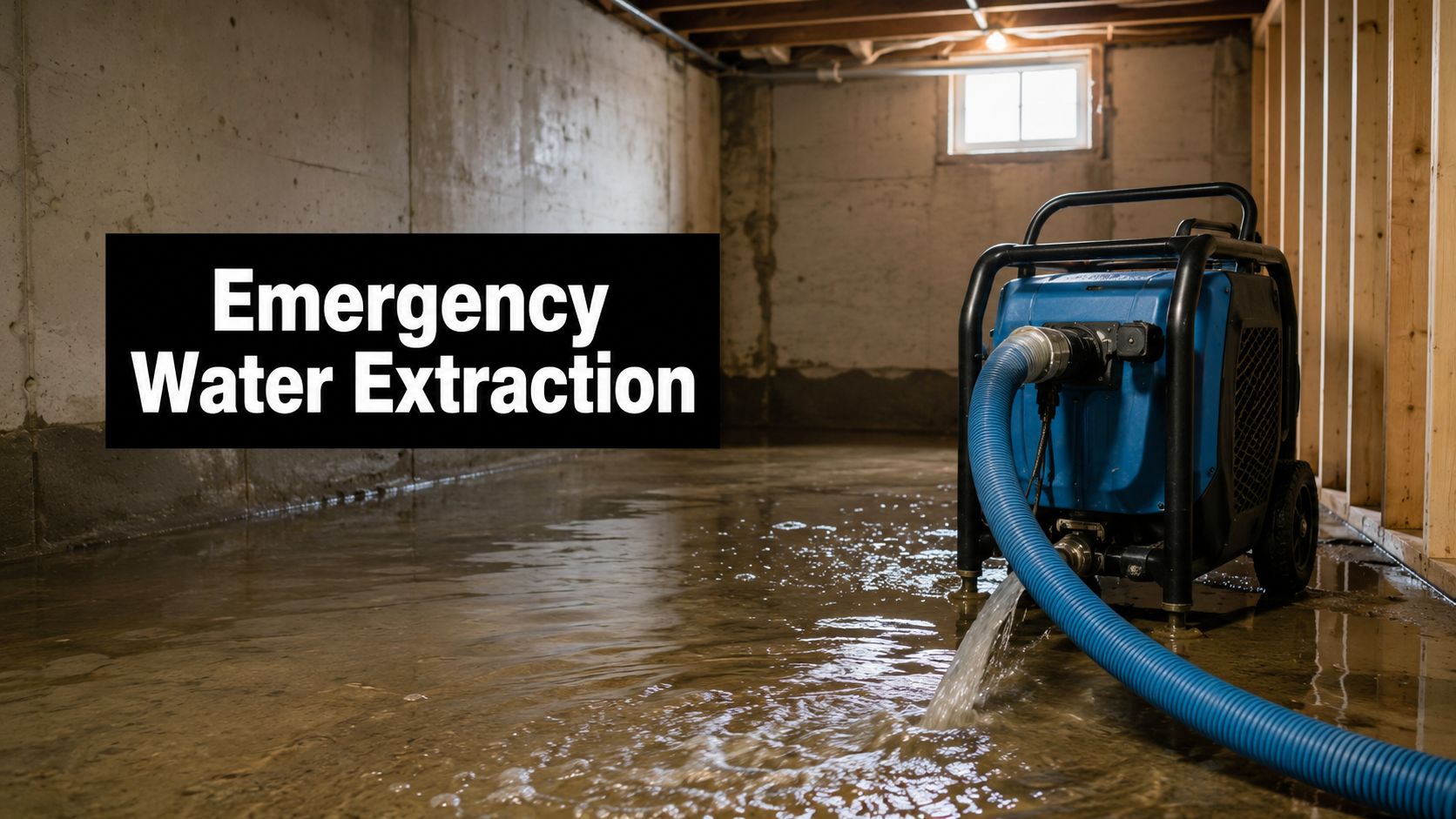
A lot of policyholders lose power because they wait for the scene to “settle down” before documenting it. That's backwards. The earlier the photos, moisture readings, repair notes, and carrier communications are captured, the easier it is to prove what was there before demolition, drying, or replacement changed the scene. If you need emergency extraction fast, start with a qualified response team like emergency water extraction services and make sure the loss is photographed before the structure is disturbed.
What makes water damage different from fire or theft is that the evidence can disappear while the claim is still open. Hidden moisture gets dried out. Materials get removed. Insurers then argue the remaining damage is limited, old, or unrelated. That's why this topic isn't about paperwork. It's about preserving proof before the proof gets erased.
What a Public Adjuster Actually Does for a Water Damage Claim
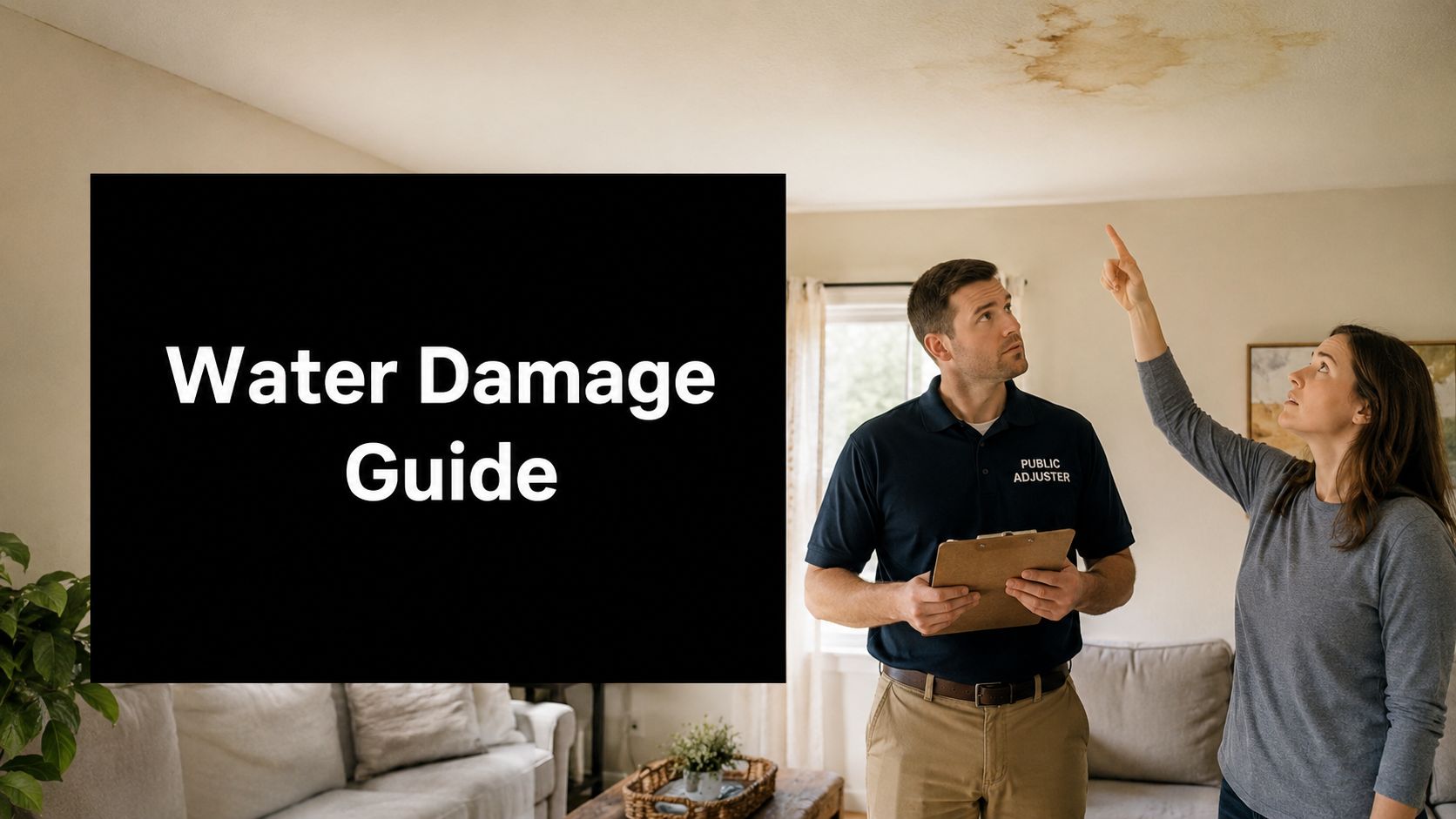
A public adjuster is a licensed claims professional retained by the insured, not the insurance company. That distinction matters. The carrier's adjuster protects the carrier's file. Your public adjuster protects your claim file, and those are not the same thing when hidden water damage is in play.
The work starts with the policy, not the estimate
A competent public adjuster reads the policy first, then inspects the loss against that coverage. In a water claim, that means looking at what caused the loss, what got wet, what had to be opened up, and what the policy may exclude or limit. The goal is to line up the damage with the language before the carrier narrows the story to only what was obvious on day one.
Then comes documentation. That includes photographs, video, moisture readings, contractor estimates, and a written scope that separates visible damage from concealed damage. The adjuster also prepares the sworn proof of loss when the policy requires it, and that document has to match the evidence in the file, not the hopeful version of the repair bill.
A public adjuster does not make repairs, and they are not your lawyer. They build and negotiate the insurance claim.
The practical value is simple. The insurer's first look is often focused on what's immediately obvious. Your public adjuster keeps the claim anchored to the full loss, including the parts you can't easily see. If the carrier underestimates the scope, you need benefits of hiring a public adjuster explained in plain terms before the gap becomes permanent.
If you want the one-sentence version, it's this. A public adjuster turns a damaged room into a documented claim that can survive scrutiny, especially when the actual loss is hiding behind the surfaces.
Why Hidden and Delayed Water Damage Changes Everything
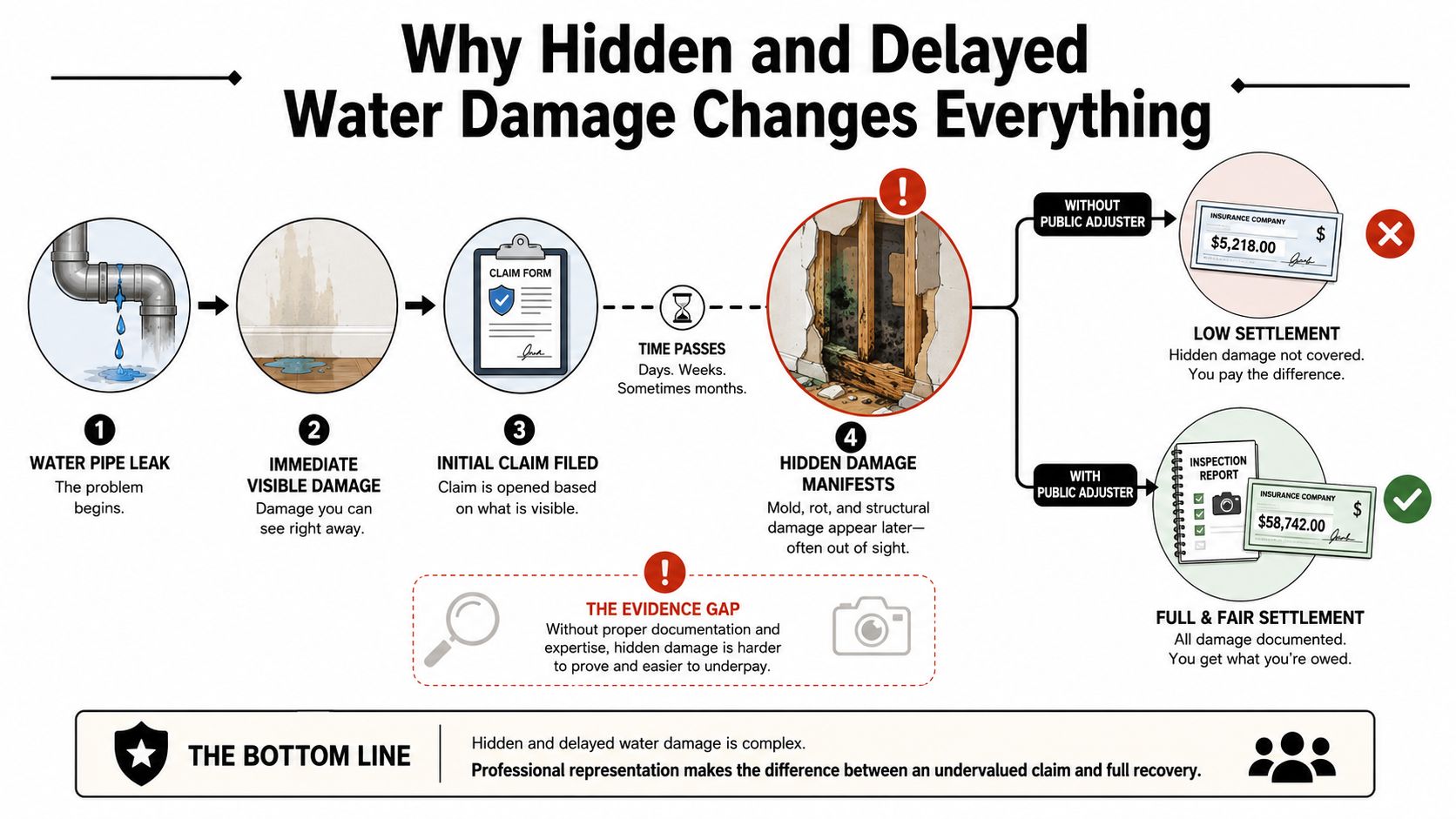
Visible water is the easy part. The main fight starts when moisture migrates behind drywall, under flooring, into cabinets, or into structural assemblies where the casual inspection doesn't reach. That's where underpayments are born, because the insurer can point to the finished room and say the damage looks smaller than the repair invoice.
A homeowner reading up on signs of water damage will often recognize the surface clues, stains, swelling, odors, peeling paint, but those clues are just the beginning. Hidden damage is what turns a nuisance into a scope dispute. The carrier may agree the leak happened and still fight what has to be replaced once the wall is opened or the floor is lifted.
The claim file has to prove what the eye can't see
That's why moisture testing matters. A public adjuster coordinates evidence like moisture meters, thermal imaging, and follow-up inspections after drying to show what was trapped and where it spread. The point isn't to act like a contractor or engineer. The point is to make sure the claim file contains technical support before the scene is altered.
This is also where a lot of policyholders get tripped up. They assume one inspection is enough. It usually isn't. Water damage often gets disputed on scope, not on existence. The insurer may accept the source of the loss, then trim the repair estimate by refusing to include hidden structural moisture, affected cabinets, subflooring, or other concealed deterioration that only becomes clear later.
For a deeper example of how claim presentation gets rebuilt when the first pass was too thin, a useful reference is insurance claim supplement. That kind of supplement work matters because it keeps the claim moving toward the actual repair scope, not the carrier's first draft.
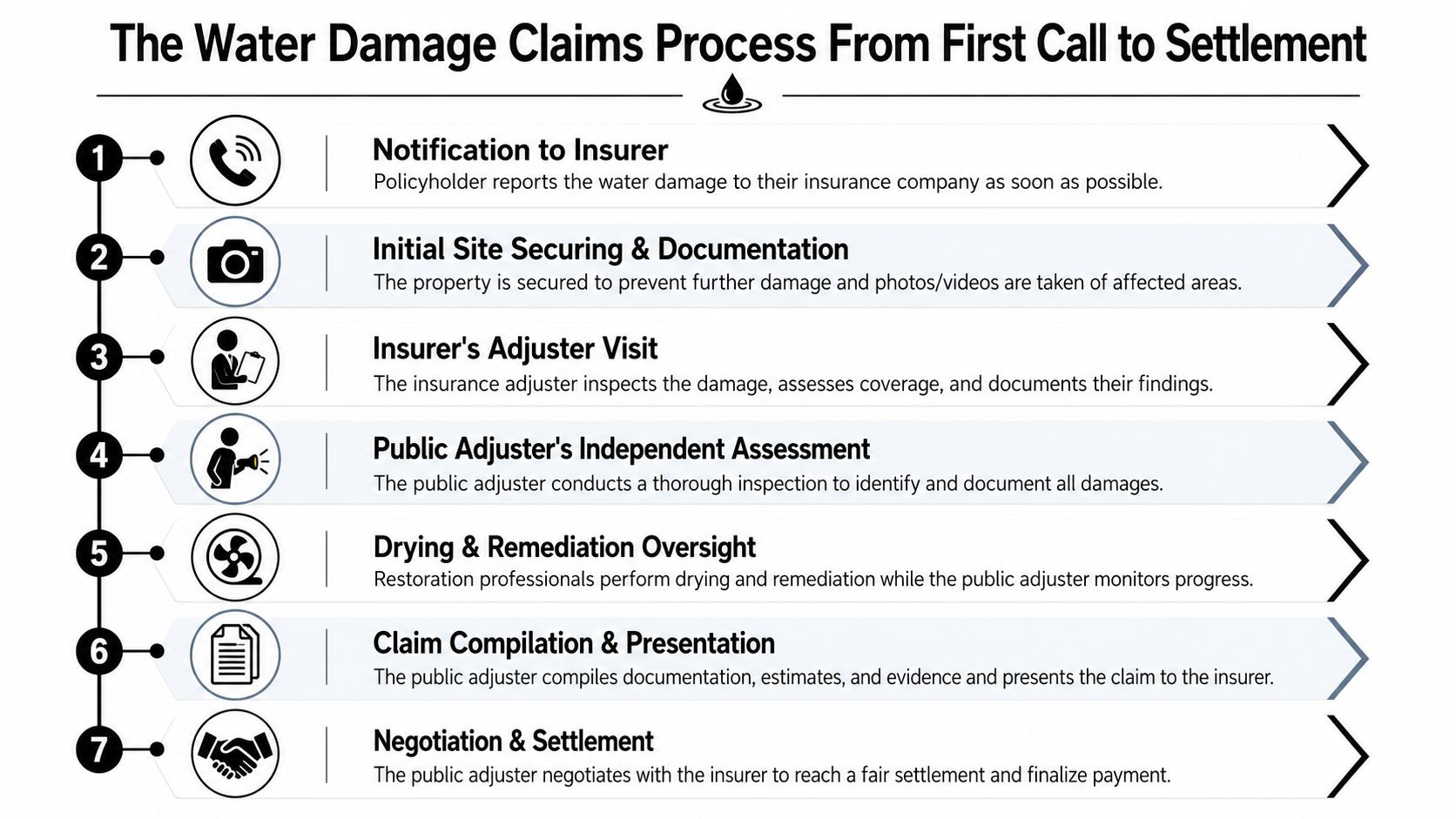
The hard truth is this. If the hidden damage isn't documented before drying, demolition, or partial repair, the insurer has an easier path to deny it, minimize it, or call it unproven. That's why the claim has to be built around evidence, not assumptions.
The Water Damage Claims Process From First Call to Settlement
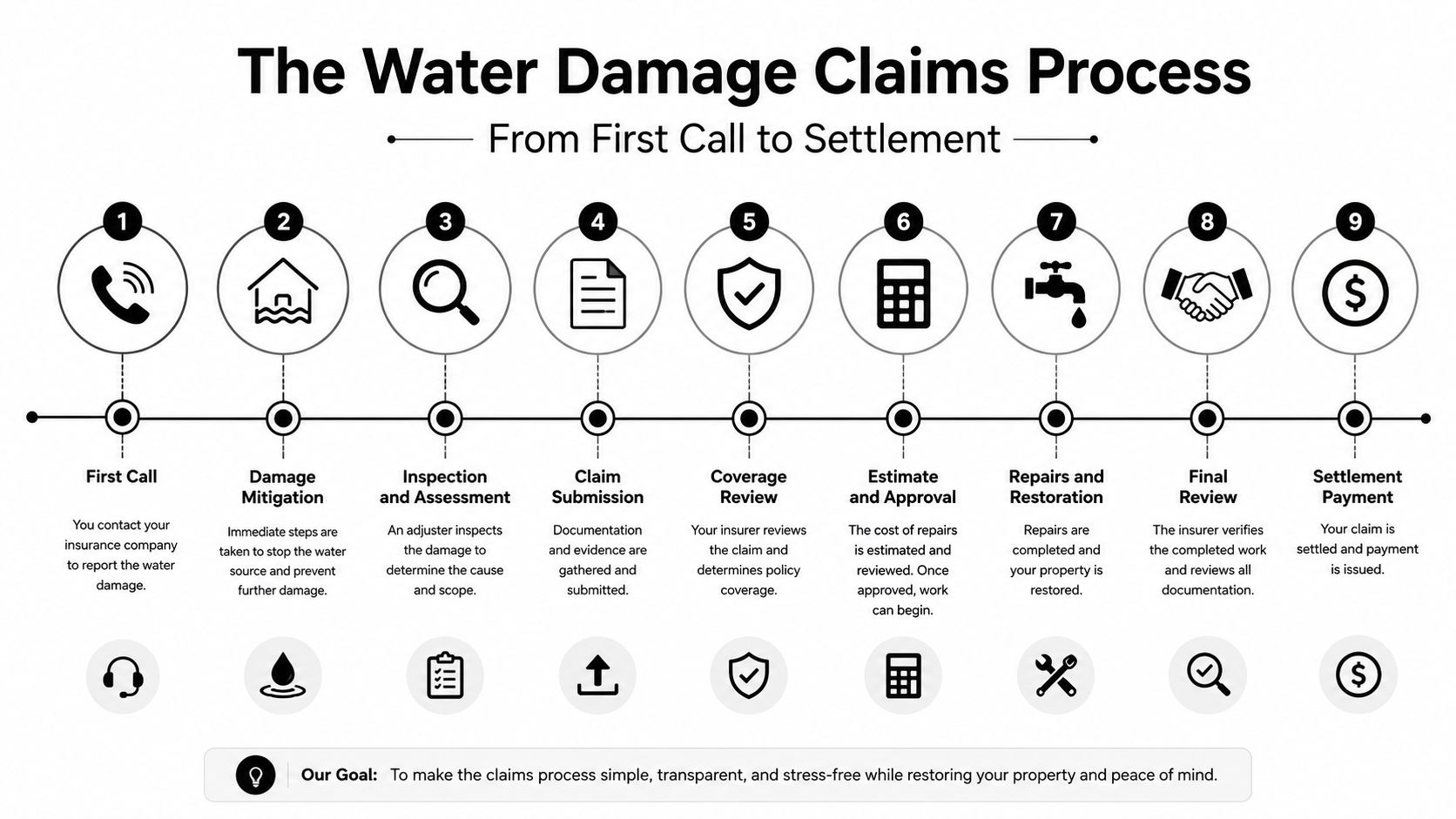
The claims process starts the second you notify the insurer. Once the call is made, the clock is running, and the first inspection is often completed within 24 to 72 hours of loss to preserve evidence before restoration work changes the scene, according to public adjuster guidance on water damage claims. That timing matters because water losses don't freeze in place. They evolve.
The first passes are about preserving the file
The early steps are simple but unforgiving. You report the loss, secure the site, and document what's visible before anything gets removed. Then the insurer sends its adjuster, and the policyholder decides whether to let that first estimate stand on its own or bring in independent help.
That's usually where a public adjuster enters. Sometimes it's before the first carrier inspection, sometimes right after a low offer lands. Either way, the job is to compare what the insurer saw with what the property needs, then fill the gaps with moisture readings, photos, contractor input, and a tighter scope.
Proof of loss is not a formality
Standard property policies commonly require a sworn proof of loss within about 60 days, according to the same public adjuster guidance. Don't treat that deadline casually. The proof of loss is often the document that locks in the claimed amount, so it needs to reflect the actual damage, not the first rough estimate from a hurried walkthrough.
Drying and remediation happen while the claim is being built. That means every changed material has to be tracked. If a base cabinet gets removed, if flooring buckles more after extraction, or if hidden damage shows up on a second inspection, those developments need to be added to the file before the carrier says the original assessment was enough.
For floors specifically, a practical reference is restore water-damaged wood floors. That kind of repair knowledge helps policyholders understand why one part of the house can't be judged as if the water never moved beneath the surface.
Plain advice: don't sign off on a narrow estimate just because the room looks dry.
After that comes negotiation. The carrier reviews the file, may send its own people back, and then issues a revised position or a settlement. A strong public adjuster keeps pressing until the documented scope and the payment line up. That's the whole game.
Oregon and Washington Licensing and Contingency Fee Rules
Oregon and Washington both regulate public adjusters, and that's good news for policyholders. It means you should expect a licensed professional, a written agreement, and clear disclosure of how the fee works. It also means you should verify the adjuster's status with the state, not just trust a website or a doorstep pitch.
What the agreement should make clear
A legitimate public adjuster should give you a written fee agreement before representation starts. That agreement should spell out what the adjuster will do, how the fee is calculated, and when payment is owed. Since the compensation is typically tied to the claim outcome, the firm's incentive should line up with yours, getting the claim documented and settled correctly.
I'm not going to pretend the fee structure is identical in both states, because it isn't something you should guess at from a blog post. Check the current rules with the Oregon Department of Consumer and Business Services and the Washington Office of the Insurance Commissioner before you sign. If you want a licensed firm's position on state-authorized practice, review licensed public adjuster and then confirm the license yourself.
| Topic | Oregon | Washington |
|---|---|---|
| Licensing | Public adjusters are state regulated and must be properly licensed. | Public adjusters are state regulated and must be properly licensed. |
| Fee agreement | Expect a written agreement that explains the compensation structure before work begins. | Expect a written agreement that explains the compensation structure before work begins. |
| Payment method | Typically tied to the claim outcome through a contingency arrangement. | Typically tied to the claim outcome through a contingency arrangement. |
| Consumer protection | Verify the adjuster's license and read the agreement before signing. | Verify the adjuster's license and read the agreement before signing. |
| Best practice | Use the state regulator to confirm current requirements. | Use the state regulator to confirm current requirements. |
The practical point is simple. If someone won't show you their license, won't explain the fee in writing, or pushes you to sign before reviewing the policy, walk away. Good claims work is transparent. Hidden fees and vague promises belong nowhere near a water-damage file.
Documentation Checklist and Questions to Ask Before Signing
Before you sign anything, get the file in order. Start with what exists right now, because once drywall gets cut out or flooring comes up, you can't recreate the original scene perfectly. Your job is to capture the claim before it turns into a repair project only.
What to gather by phase
Before mitigation: take wide and close photos, short videos, and notes on where the water came from, when you noticed it, and what was affected. Save the insurer's claim number, emails, and texts. If you have a plumber's invoice or emergency response report, keep that too.
During drying: keep daily photos of the equipment in place, moisture readings if they're provided, and any notes about areas that stayed wet longer than expected. Save contractor estimates, drying logs, and invoices. If hidden damage appears after walls or floors are opened, document that immediately.
Before the proof of loss: compile a contents list if furniture, electronics, or stored property were affected. Add repair estimates, mitigation bills, and the carrier's correspondence about scope or coverage. For help understanding the form itself, the proof of loss needs to be treated as a sworn claim document, not just another piece of paperwork.
Questions you should ask any public adjuster
- License and standing: What is your license number, and where are you licensed?
- Fee structure: What percentage do you charge, and what does it cover?
- Scope of work: Will you inspect, document, estimate, and negotiate the claim?
- Claim type experience: Do you handle residential, commercial, and nonprofit water claims?
- Denial terms: What happens if the claim is denied or only partly paid?
- Agreement details: Can I review the fee agreement before I decide?
If someone pressures you to sign before reading the policy, that's not confidence, it's a sales tactic.
That's where an adjuster like NW Claims Management fits naturally as one option for policyholders who want a licensed representative to evaluate the file and work the claim on a contingency basis. You don't need hype. You need a clean agreement, a clear license, and a documented plan.
Realistic Examples of How a Public Adjuster Changed the Outcome
A homeowner in a burst-pipe loss thought the insurer had done enough after the first estimate covered drying, some drywall, and paint. The problem was hidden moisture under the flooring and damage in the cabinet bases that didn't show in the initial walkthrough. A public adjuster mapped the wet areas, brought in supporting contractor estimates, and pushed the file until the repair scope matched what had been damaged.
A small restaurant owner had a different problem. The kitchen flood interrupted operations, the first offer focused only on surface cleanup, and the carrier missed the broader business impact and the work needed to restore the space properly. The claim was rebuilt with better documentation, and the additional materials helped capture what had been left out of the first pass.
Neither case is unusual. They're what happens when the first review is too narrow and the policyholder doesn't push back. The insurer's first number is not the final truth. It's just the first number.
Next Steps and How to Engage NW Claims Management
If you're dealing with a hidden-damage water loss, or a commercial or nonprofit claim with business interruption exposure, get the policy reviewed before you accept the carrier's first scope. Gather the policy, the claim number, photos, and every message from the insurer, then document the property before further demolition changes the evidence.
NW Claims Management offers free claim evaluations, contingency-based representation, and licensed public adjusting support for residential, commercial, and nonprofit policyholders across Oregon and Washington. If you want a straight answer on whether your file needs help, go to NW Claims Management and request an evaluation now.