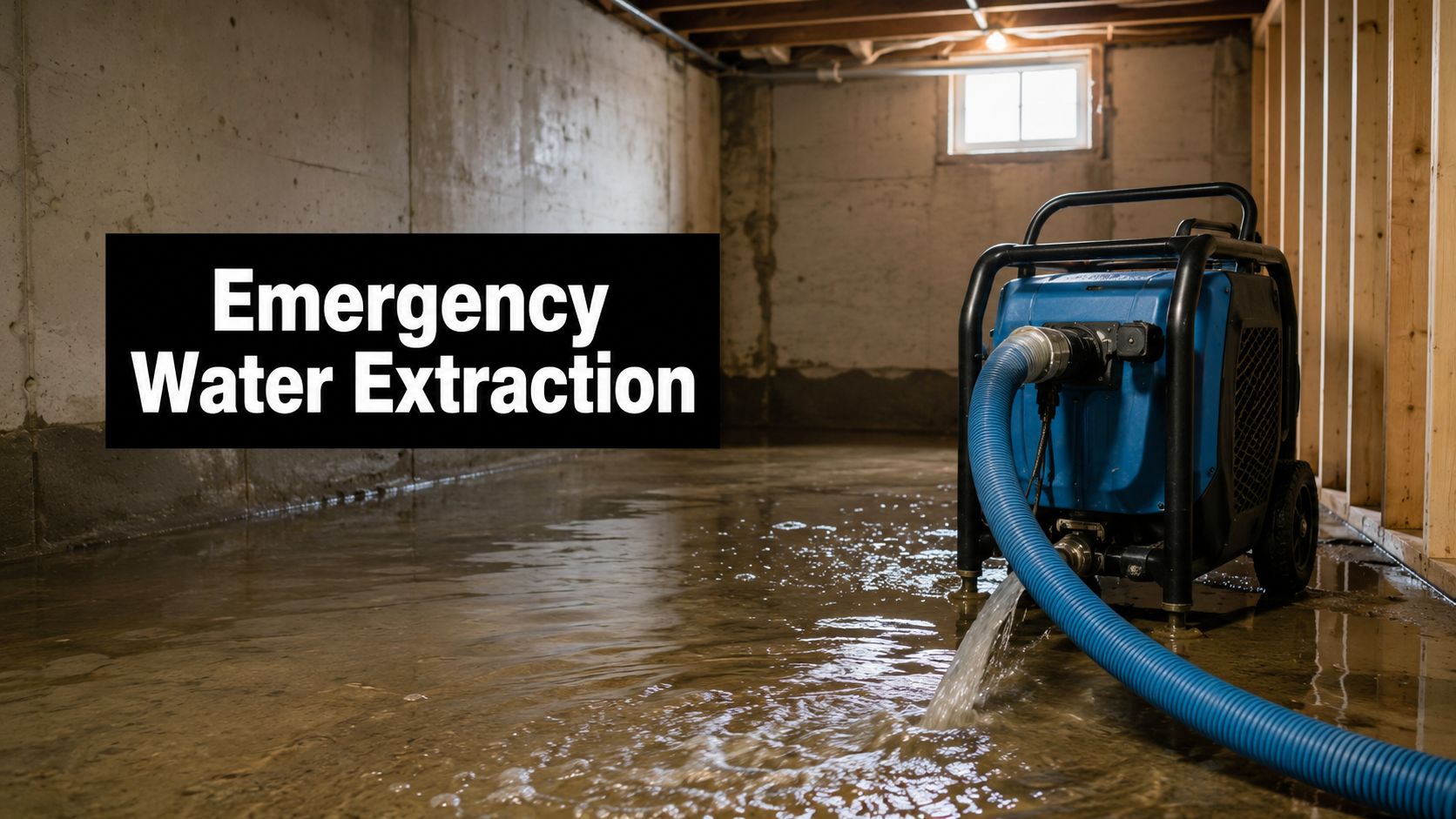
A soaked basement floor in Portland can turn a normal morning into a scramble. You notice water creeping under stored boxes, the furnace area feels damp, and every minute matters because the longer standing water sits, the more it can move into walls, subfloors, and contents. In that first rush, the right move is not to “wait and see.” It's to treat the loss like a time-sensitive property claim and start emergency water extraction services fast.
Understanding Emergency Water Extraction Services
A homeowner in Southeast Portland might first spot a wet carpet after a storm, then realize the water has already spread under the trim and toward the mechanical room. That's where emergency water extraction services differ from ordinary cleanup. This isn't just mopping up what you can see, it's rapid mitigation meant to stop water from becoming a bigger structural and insurance problem, which is why professional guidance treats the first hours as the critical window for inspection, assessment, and standing-water removal emergency water extraction guide.
The phrase emergency matters here because standing water changes the situation quickly. Professional restoration guidance describes technicians being dispatched within 60-90 minutes, with the initial response window running 0-4 hours for inspection and removal, and the extraction phase typically falling within 4-24 hours so crews can remove 90-95% of the water before drying begins emergency water extraction guide. In plain language, fast action keeps water from traveling farther into the building and makes the claim easier to document.
If you're trying to separate a real emergency from a routine mess, think of it this way, visible water is only the first clue. Hidden saturation is what turns a small incident into a larger loss. For a related overview of damage evaluation, see this property damage assessment resource.
Immediate Actions After a Water Emergency
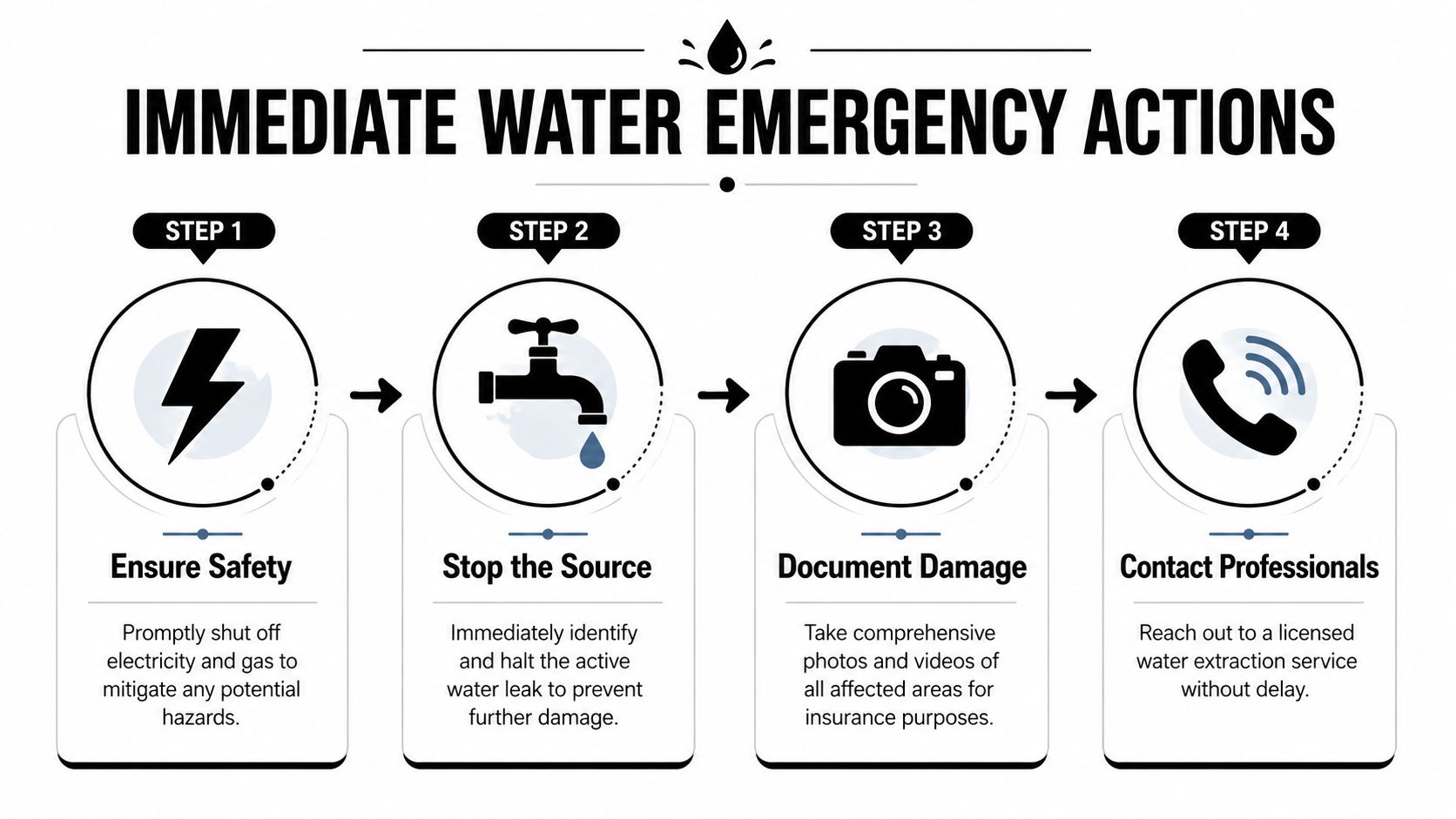
The first 15 minutes set the tone for the rest of the claim. Safety comes first, because wet floors, energized outlets, and active leaks can create hazards that are bigger than the original water loss. Shut off electricity and gas if you can do so safely, then stop the source of the leak or close the supply valve if it's accessible.
What to do first
Start with the space you can control, not the space you hope will dry on its own.
Practical rule: if you can't touch an area without risking shock, collapse, or contamination, step back and let professionals handle it.
- Ensure safety: Kill power and gas only if the shutoff points are reachable without entering standing water.
- Stop the source: A broken supply line, appliance feed, or roof intrusion keeps feeding the damage until it's controlled.
- Document everything: Take photos and short videos before items are moved, because claims are easier to explain when the original condition is recorded.
- Call a licensed team: Industry standards describe dispatch within 60-90 minutes, with initial emergency response in 0-4 hours and bulk extraction in 4-24 hours to remove 90-95% of standing water emergency water extraction guide.
That documentation step is more important than it might seem. Insurers usually need a clean story of what happened, what was affected, and what was saved, especially when the loss crosses into flooring, drywall, cabinets, or contents. A simple inspection checklist can help keep that first walkthrough organized, and a property inspection checklist is useful when you're under pressure and don't want to forget a room, closet, or mechanical area.
What to leave alone
Don't pull up flooring, start ripping out walls, or throw away damaged items before documenting them. That can make it harder to show the full scope of loss later. If the damage involves wood surfaces, this expert guide to water damaged floors is a helpful reference for understanding why surface drying and hidden moisture are not the same thing.
Professional Extraction and Drying Workflow
The best crews don't start by guessing where the water went. They begin with moisture mapping, using meters and thermal imaging to find wet areas that aren't obvious at floor level. That's important because water often moves like a slow leak in a pipe, it travels into cavities first, then shows up later as swelling, staining, or odor.
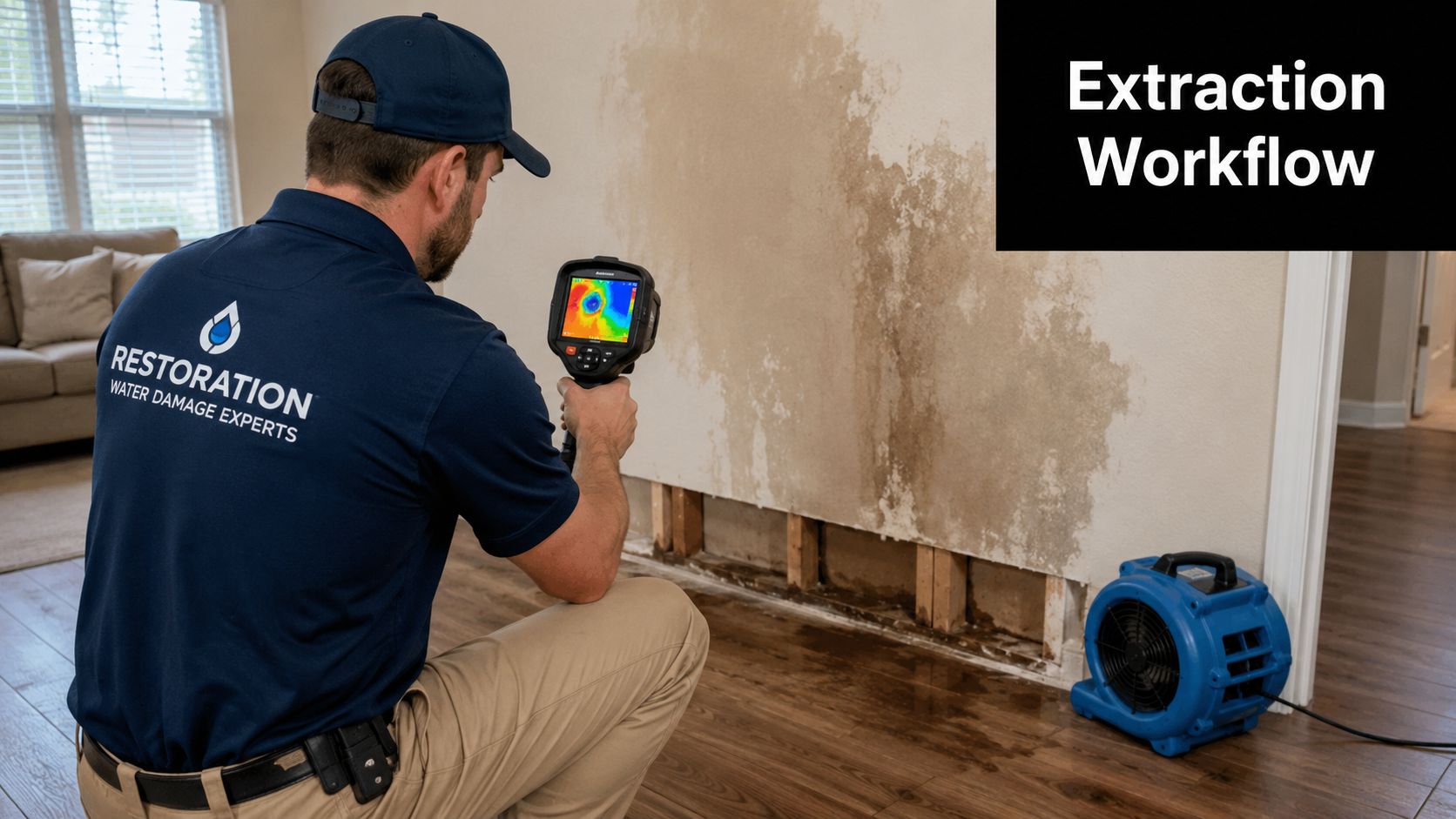
The sequence professionals follow
A proper workflow usually starts with source control, then shifts to bulk water removal, specialty carpet and pad extraction, and then structural drying. Truck-mounted extractors matter because they're described as operating at 200 inches of water lift or greater, which helps pull water from porous materials and subfloor cavities rather than only from surfaces professional water extraction services.
That order matters. If a technician dries a room before removing the free water, trapped moisture can stay under floors or behind finishes and keep feeding hidden damage. It's a bit like flushing a clogged pipe before checking for leaks. You clear the blockage first, then verify the system.
A concise way to think about the workflow is:
- Map moisture so the wet areas are identified, not guessed.
- Remove bulk water with high-lift extraction equipment.
- Target wet materials like carpet and pad when they can hold moisture in place.
- Dry the structure using controlled airflow and dehumidification.
- Verify readings to confirm the materials are back to baseline.
That final verification is not paperwork fluff. It's the evidence that drying worked. If readings are skipped, the loss can be left half-resolved, and that creates problems for both the building and the claim. For local context on large-loss response, this Bellingham water damage restoration resource shows how regional restoration work often overlaps with insurance documentation and access issues.
Emergency Water Extraction Costs and Response Times
Cost pressure is one reason people delay calling. That delay usually makes things more expensive, not less. U.S. pricing references commonly place water removal and drying at $4 to $12 per square foot, while broader restoration averages $2,000 to $6,000 and can reach $100,000 in severe events water damage restoration cost.
| Water Extraction Cost Comparison | Cost per Square Foot | Average Total Cost |
|---|---|---|
| Clean water | lower end of the category range | included in the broader restoration range |
| Contaminated black water | higher end of the category range | included in the broader restoration range |
The table above is intentionally simple because the main cost driver is not the label, it's the cleanup burden. Contaminated water requires more protective gear, disinfection, and disposal work, so the job naturally costs more. For owners trying to judge whether a quote is in range, the most useful question is whether the estimate reflects the actual source and extent of loss.
Why time changes the bill
Response speed affects both drying efficiency and claim size. Industry guidance describes initial extraction in about 2 to 6 hours and complete drying in 3 to 5 days, depending on the volume of water and the size of the affected area professional water extraction equipment explained. The same guidance notes that extraction can remove 90% to 95% of accessible water before dehumidification finishes the job professional water extraction equipment explained.
If a quote feels low but the crew can't explain the drying plan, that's a red flag.
For property owners watching the economics closely, a construction cost inflation reference can help frame why labor, materials, and restoration scope often shift during a claim, even when the water source seems straightforward.
Insurance and Claim Process in Oregon and Washington
Claims work gets messy when water shows up in walls, under flooring, or across multiple rooms. In Oregon and Washington, the smart move is to document everything early, then file the claim as soon as the source is controlled and the initial damage is visible. Keep moisture logs, photos, written notes about where the water entered, and a list of impacted contents, because those records help tie the emergency work to the policy loss.
The claims file should tell a complete story. That means showing when the loss happened, what was stopped, what was extracted, and what remained wet afterward. A clear homeowners insurance claim filing guide can help policyholders organize that sequence before they speak with the carrier.
Where a public adjuster adds value
A public adjuster works for the policyholder, not the insurer. In Oregon and Washington, that matters because claim disputes often turn on how damage is characterized, whether drying is considered necessary mitigation, and how much of the interior needs restoration versus simple cleanup. A licensed adjuster can translate the technical work from the extractor into policy language the carrier can evaluate.
That role is especially useful when the damage crosses rooms or includes business interruption issues for commercial, municipal, or nonprofit sites. Insurers often focus on the visible first loss. A public adjuster looks at the chain behind it, including hidden saturation, removed materials, and any documentation gaps that could reduce payment later.
One practical rule holds across both states. Don't wait until the carrier questions the scope to organize your file. By then, missing photos and incomplete moisture readings can be harder to recreate. Good claim documentation makes the extraction record part of the settlement proof, not just a cleanup receipt.
How to Choose an Extraction Service Provider
Not every water loss needs the same equipment or level of containment. A clean supply-line leak is different from a gray-water intrusion, and both are different again from floodwater. Some companies market a one-size-fits-all response, but that approach can miss the specialized gear and disposal steps the source requires emergency water extraction near me fast reliable help when you need it.
What to compare
Look at the provider's response model, not just the phone answer.
- Source-specific handling: Ask how they treat clean water versus gray water versus floodwater.
- Moisture-mapping tools: Confirm they use meters and thermal imaging, not just visual inspection.
- Documentation practices: Ask whether they provide photos, readings, and a written dry plan.
- Equipment depth: Verify they have extraction equipment suited to porous flooring and subfloor cavities.
- Availability and licensing: Make sure they can respond fast in your area and work within state rules.
A cleaner or general handyman may handle surface water, but a specialist knows how to protect the building from hidden moisture. That difference often shows up later, when floors start cupping, baseboards swell, or a claim needs proof that the structure was dried to baseline. The best provider answers detailed questions without hedging.
Emergency Water Extraction Checklist and FAQ
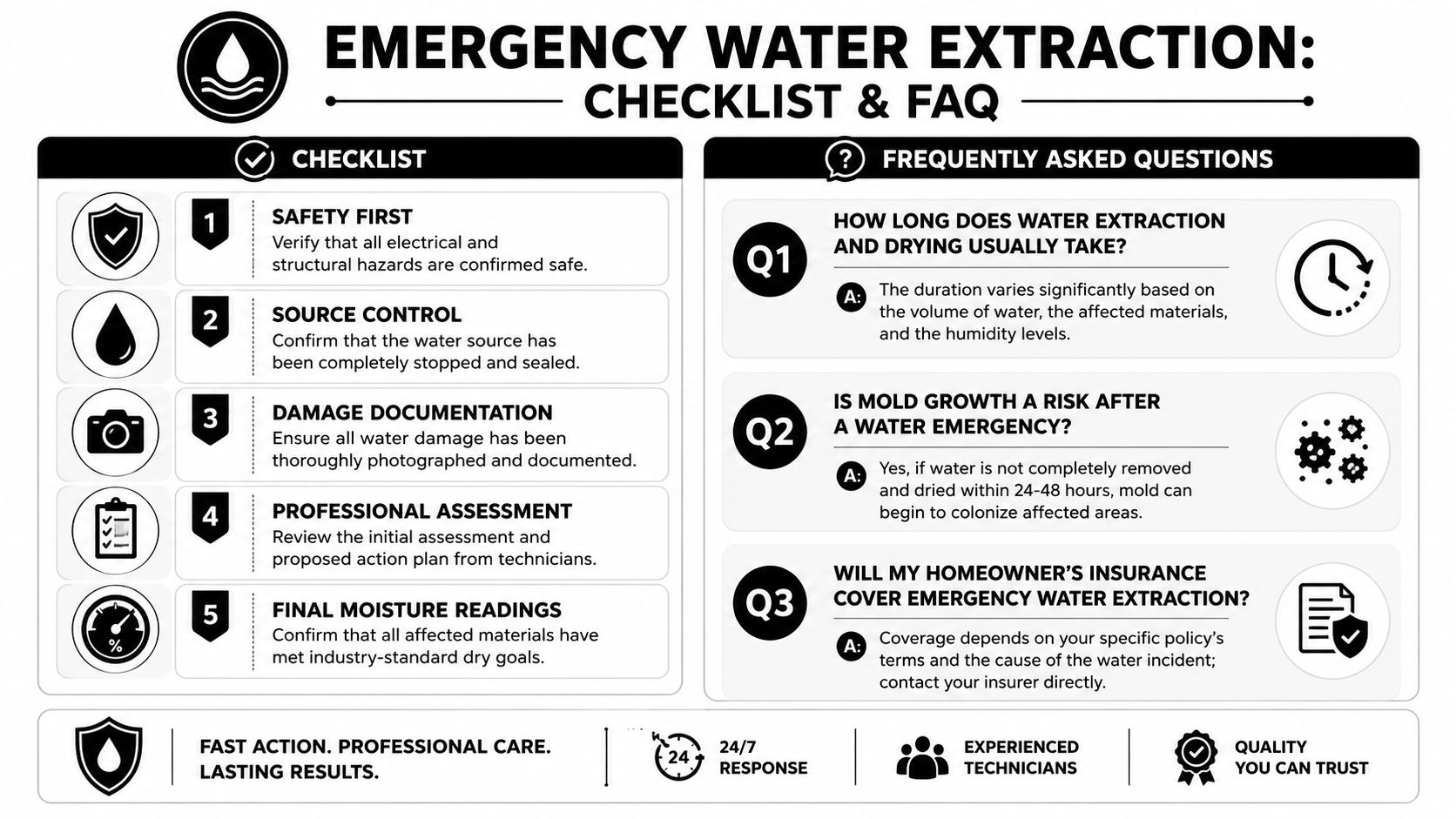
Quick checklist
- Safety first: Confirm electrical and structural hazards are safe before anyone re-enters.
- Source control: Make sure the water source is fully stopped and sealed.
- Damage documentation: Photograph every affected room, item, and surface.
- Professional assessment: Review the initial inspection and drying plan.
- Final moisture readings: Confirm the affected materials have reached dry goals.
FAQ
When is DIY extraction not enough?
When water has reached walls, subfloors, insulation, or multiple rooms, or when the source may be contaminated. In those cases, professional extraction and verification readings are the safer path professional water extraction equipment explained.
Is mold a concern after a water emergency?
Yes, if water isn't fully removed and dried promptly, mold can become a problem. That's why the extraction phase and follow-up drying need to happen quickly professional water extraction equipment explained.
Will insurance cover the service?
Coverage depends on the policy terms and the cause of the water event, so the claim file has to show what happened and what was mitigated.
If you're dealing with a current water loss in Oregon or Washington, don't wait for the damage to spread through hidden cavities. Contact NW Claims Management now for help documenting the loss, organizing the claim, and protecting your position before the carrier starts its own investigation.