A furnace quits in Portland on a damp January morning, the house cools fast, and the first question is always the same. Is this a normal homeowners claim, an equipment breakdown claim, or a denial waiting to happen? In Oregon and Washington, that question matters because the policy language decides whether you're paying out of pocket for a sudden internal failure or whether the endorsement steps in and covers the repair, the downtime, and the mess it caused.
Equipment breakdown cover is built for exactly that kind of failure. It is not fire insurance, not wind insurance, and not a maintenance plan. Munich Re's equipment-breakdown guide says the coverage applies to specified mechanical, electrical, and pressure equipment and can respond to property damage, business interruption, and spoilage when a covered accident or electronic circuitry impairment triggers the loss, which is why the concept moved from old boiler coverage into a much broader equipment category (Munich Re guide).
If you're trying to decide whether a failed furnace, heat pump, or refrigeration system belongs in this lane, start by comparing the loss to a standard property claim. A frozen-pipe claim, for example, sits in a different part of the policy than a sudden breakdown of the machine itself, which is why policyholders should read both forms carefully. This NW Claims Management guide on frozen pipe coverage is a useful contrast point.
Why Your Furnace Failing in February Is a Different Problem
A Portland homeowner wakes up to a dead furnace in February. The house is cold, the technician finds an internal failure, and the carrier starts asking whether this was age, neglect, or a covered breakdown. That question matters because a homeowners policy often treats outside damage very differently from a machine that quits because something inside it failed.
The point of the endorsement
Equipment breakdown coverage exists for sudden internal failures. It sits in a different lane from fire, theft, and storm damage. Munich Re's equipment-breakdown guide describes the coverage as designed for mechanical, electrical, and pressure equipment, and for losses tied to a defined accident or electronic circuitry impairment. That matters in the Pacific Northwest, where homes lean hard on furnaces, heat pumps, well pumps, water heaters, refrigeration, and control boards.
The endorsement is added to a homeowners or commercial package because it fills a gap, not because it replaces the policy. Standard property insurance is built around different perils. Equipment breakdown is the add-on that says, “If the machine itself fails from the inside, treat that loss on its own.”
Practical rule: if the loss starts inside the unit, and the unit failed suddenly, ask whether equipment breakdown belongs in the claim before you accept a flat denial.
If you are in the middle of a winter failure, the first move is not arguing coverage on the phone. Preserve the failed parts, the service report, and the timeline. The carrier will use those details later.
A furnace failure can also raise a separate service issue, which is why homeowners sometimes end up searching for emergency hot water repair Melbourne while they are still sorting out the rest of the loss.
Why the endorsement matters in claims handling
That endorsement status changes how the claim gets adjusted. The insurer may send a loss-control engineer, request the failed component, and test whether the problem was a covered breakdown or excluded wear and tear. If you treat it like a generic homeowners claim, you usually give the carrier too much control over the framing.
For a practical comparison with another common loss scenario, the policy logic behind equipment failure is different from plumbing-related water damage, and the claim handling should be different too. A frozen pipe loss sits in a separate coverage analysis, and this NW Claims Management guide on frozen pipe coverage is a useful contrast point.
The Core Idea Behind Equipment Breakdown Coverage
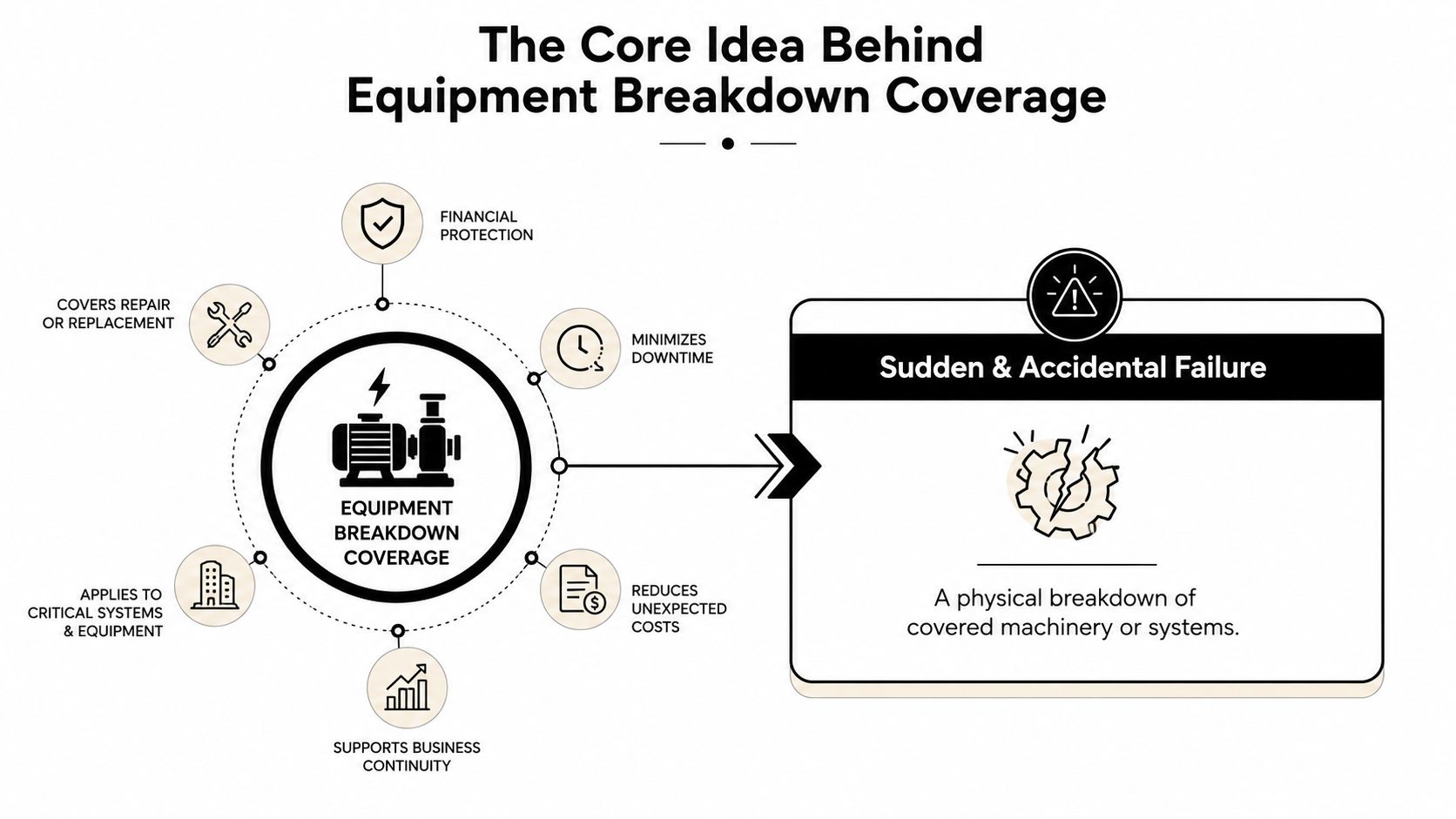
Equipment breakdown coverage is the modern form of boiler-and-machinery insurance. The old policy was built for steam-era equipment, pressure vessels, and industrial systems. The current version follows the machinery people use now, including motors, controls, HVAC, refrigeration, and electronics.
The trigger is a physical breakdown, not routine decline
The coverage responds to a sudden and accidental physical breakdown of covered machinery or systems. It does not respond to wear and tear, corrosion, or deferred maintenance. That line is where most claim fights start, and it decides whether the carrier owes money or shuts the file down.
Carriers want a clean trigger. Policyholders need proof that the equipment failed abruptly, not that it was limping along for months. If the compressor burned out, the control board shorted, or the pressure system failed, the endorsement may apply. If the unit was old, noisy, and overdue for replacement, the carrier has a much easier denial argument.
The four types of breakdown that matter
The policy wording usually tracks four core categories, even when the exact wording shifts from one form to another.
- Mechanical breakdown: moving parts fail, seize, misalign, or break.
- Electrical breakdown: a short, surge, arcing, or burnout takes out powered equipment.
- Pressure-systems failure: boilers, tanks, and other pressurized equipment rupture or fail.
- Electronic circuitry impairment: control boards and other electronic components fail in a way the policy treats as a covered accident.
That framework reflects how the coverage moved from boiler protection into a broader equipment form. It also fits Pacific Northwest buildings, where HVAC systems, refrigeration, pumps, and digital controls are the equipment most likely to create a claim.
For a plain-English comparison of policy gaps, read this NW Claims Management guide on insurance coverage gaps. It shows the places carriers use to turn a claim away.
Why the policy is narrower than people think
A lot of policyholders hear “equipment breakdown” and assume it means any equipment problem. It does not. The coverage is narrower, more technical, and built around the idea of an abrupt internal failure. If the machine failed from inside, start with this coverage. If the loss came from fire, flood, or another external peril, you are in a different coverage lane.
That is also why a separate repair issue can sit outside the equipment breakdown claim. A homeowner chasing a cooling failure may even end up looking at Bear Valley's home insurance AC tips, but the policy analysis still turns on the cause of loss, the wording, and the exclusions.
What the Claim Data Says Is Really Covered
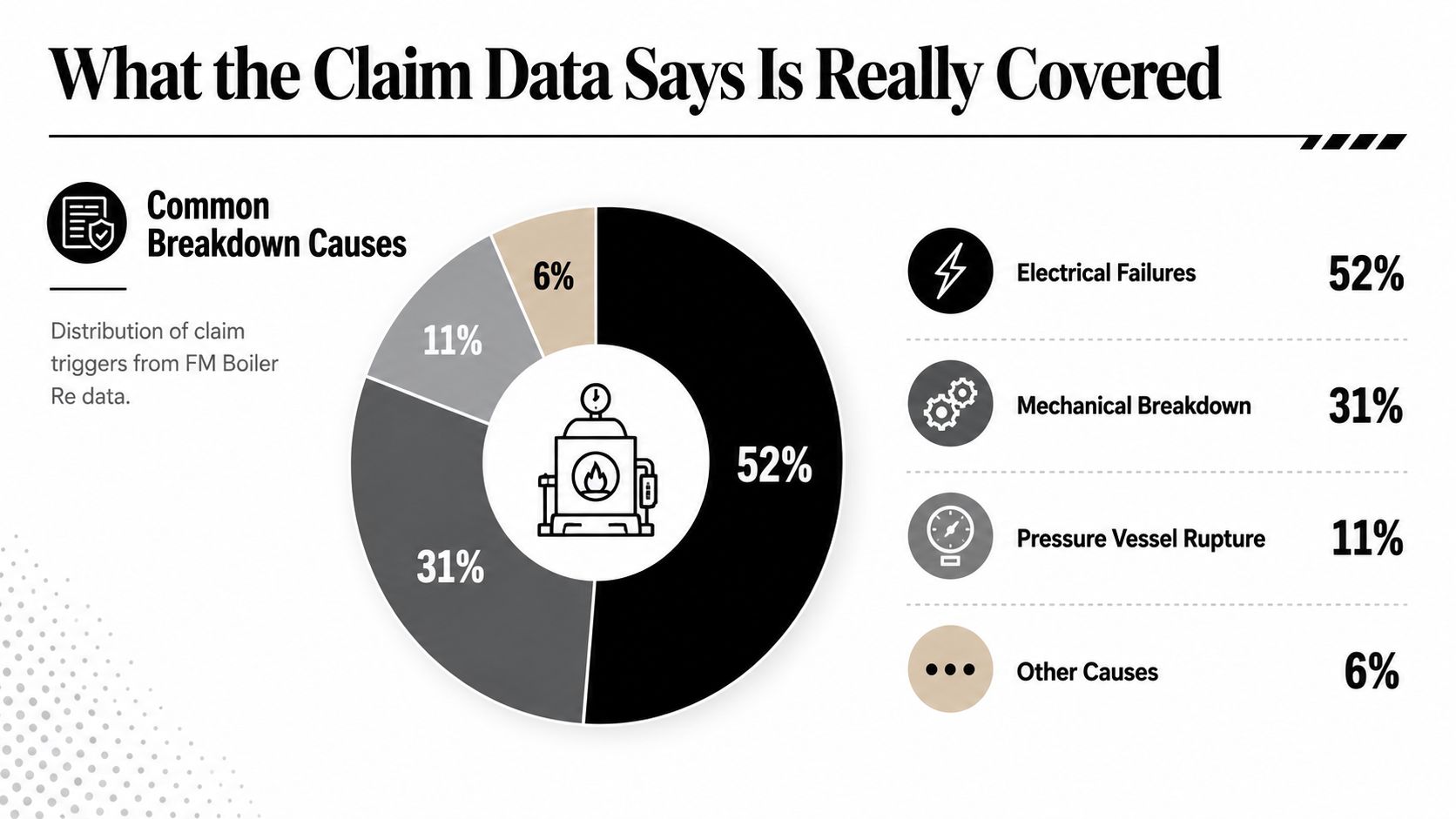
The claim mix tells you what equipment breakdown coverage pays for. FM Boiler Re reports that electrical breakdown accounts for 52% of all equipment breakdown claims, compared with 36% for mechanical breakdown and 12% for pressure-systems losses (FM Boiler Re claim data summary). That's not a boiler story. That's a powered-systems story.
Electrical failures drive the real-world claims
In Oregon homes, that means the claim is far more likely to involve a furnace control board, a heat pump component, a well pump issue, or a refrigeration fault than a dramatic pressure event. In Washington commercial properties, the same pattern points straight at HVAC, refrigeration, elevators, and production motors. If your claim is electrical, document the burn marks, the failed board, the breaker behavior, and the tech's diagnosis immediately.
The endorsement was made for systems that fail from the inside, and the data backs that up. Electrical issues dominate because modern buildings run on power-hungry equipment and control systems, not just on pipes and pressure vessels.
Homeowners usually miss the claim shape
A homeowner often assumes the fix is only the broken part. That's too narrow. If the failed system damaged nearby components or caused temporary loss of use, those secondary losses may matter just as much as the main repair. That's where equipment breakdown starts to look like a meaningful endorsement instead of a minor repair benefit.
For homeowners trying to sort out mechanical damage, this homeowners guide to plumbing insurance is a useful reminder that a water problem and an equipment problem are not always the same claim.
Don't overhype pressure-system claims
Pressure-system losses exist, but they're the smallest share of the claims mix in the verified data. That's why you shouldn't shop or buy the endorsement as if it's mostly about steam explosions or old boiler drama. The practical value is in electrical and mechanical failures, especially where the shutdown stops daily life or business operations.
Electrical and mechanical claims are the ones to prepare for first. If you're protecting a home, restaurant, clinic, or small shop in the Pacific Northwest, that's where the real exposure lives.
A Real Equipment Breakdown Claim Walked Through
A homeowner in Seattle loses a heat pump compressor on a cold week. The technician confirms an electrical failure, the auxiliary pan overflows during the shutdown, and nearby ductwork needs repair. A freezer in the garage warms up too, and the food inside starts to spoil. That's a better picture of equipment breakdown than any brochure gives you.
How the loss stacks up
The first layer is the failed unit itself, the compressor and the related repair work. Under the verified data, equipment breakdown policies typically cover repair or replacement costs, lost income during downtime, deterioration of stock, and extra expenses needed to keep operations running while repairs are made (Munich Re guide). In a home claim, that may mean temporary equipment, emergency service, and food spoilage.
The second layer is the resulting damage. If the failed system caused water damage to surrounding finishes or other property, that consequential damage may also sit within the claim. That's why the file needs more than a single repair estimate. It needs a full inventory of what failed and what failed because of it.
A carrier will still look for exclusions
The carrier will test the cause. If it can reframe the problem as age, neglect, or maintenance failure, it will try to move the claim out of equipment breakdown and into a denial. That's why a clean inspection report matters so much. You want the technician's observations locked down before parts disappear and memories fade.
For a practical look at how carriers argue the air-conditioning side of these claims, this Bear Valley Plumbing & Heating AC article is worth reading before you file. It reinforces the point that the evidence trail matters as much as the policy form.
A commercial version is uglier
In a small grocery or café, the same kind of electrical failure can shut down refrigeration, spoil inventory, and create downtime losses all at once. That's where the endorsement earns its keep. Repair the equipment, document the spoiled stock, track the interruption, and preserve every invoice tied to the emergency response.
A useful benchmark from the verified data is the common homeowner-market structure, which includes limits around $100,000, deductibles around $500, and annual premiums in the $25 to $50 range for some plans (FMIC policy example). Those figures explain why the endorsement is often used as a relatively low-cost gap filler.
Where Equipment Breakdown Stops and Other Coverage Starts
Equipment breakdown overlaps with property insurance, business income, and spoilage coverage, but it doesn't replace them. It sits in the middle and pays for the internal failure plus certain consequences that standard property coverage often misses. That's why the endorsement is useful, and why it gets messy when the policyholder doesn't know which bucket applies to which loss.
What usually gets paid
The verified data says these policies can cover the failed unit itself and consequential losses such as damage to surrounding property, food spoilage, data restoration, and utility-interruption-related losses (FMIC policy example). In a commercial claim, that can also extend into business income and extra expense if the downtime stops operations.
That's the part many overlook. They focus on the broken machine and forget the chain reaction. The policy is often more valuable because of what the breakdown disrupts, not just because of the part that failed.
| Equipment Breakdown Coverage at a Glance | Typical Range | What It Means |
|---|---|---|
| Failed equipment | Repair or replacement | The broken unit itself may be covered |
| Consequential property damage | Depends on policy wording | Nearby property damaged by the breakdown may be included |
| Spoilage | Depends on policy wording | Perishable stock lost during the shutdown may be covered |
| Business income | Depends on policy wording | Lost income during covered downtime may be part of the claim |
| Extra expense | Depends on policy wording | Temporary fixes and workaround costs may be reimbursable |
For businesses that need help understanding the “extra cost” side of a shutdown, this NW Claims Management guide on extra expense coverage gives a practical framing.
What usually gets denied
The common exclusions are straightforward. Wear and tear, corrosion, rust, scale, and gradual deterioration are not what this coverage is for, and the policy may also exclude certain ordinance-or-law upgrade costs. That is where a lot of claim fights start, because the carrier tries to place a sudden failure into a slow-decline narrative.
If the repair report reads like a maintenance story, expect a coverage fight. If it reads like a sudden failure story, press harder.
The practical reading of the policy
Read the endorsement as a gap filler. Property insurance handles external perils. Equipment breakdown handles sudden internal failures. Business income and extra expense may catch the fallout if the endorsement includes those sections. If you know those three moving parts, you can usually tell where the claim belongs before you send the first notice.
Documenting and Filing an Equipment Breakdown Claim
The claim is won or lost in the first day or two. If you throw away the failed part, let the repair shop control the narrative, or fail to document the surrounding damage, the carrier gets a cleaner denial file than you do. Oregon and Washington policyholders need to treat this like evidence preservation, not a casual service call.
Start with the failure scene
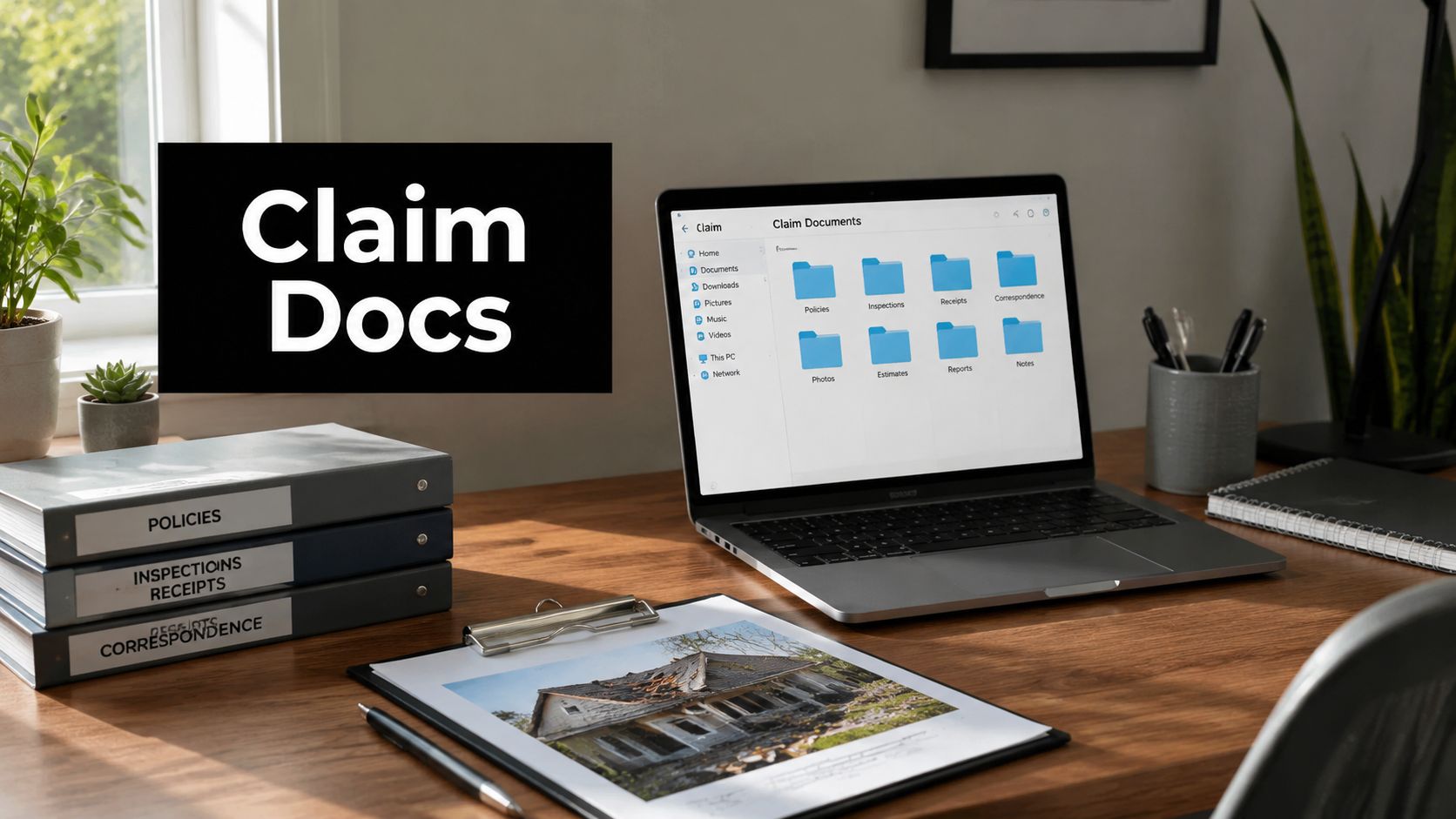
Photograph the equipment before anyone moves it. Get wide shots of the room, then close-ups of the failed unit, breakers, scorch marks, leaks, pooling water, or visible damage around the system. Save the technician's report and ask for the inspection findings in writing.
Your goal is to prove sudden and accidental breakdown with contemporaneous evidence. Don't rely on a verbal explanation from the first service call. The carrier will want documentation that shows what failed, when it failed, and how the failure caused the rest of the damage.
Keep the carrier from controlling the record
Request and preserve the equipment inspection report from the insurer's loss-control engineer. That report can become the backbone of the denial or the backbone of the payment, depending on what it says. If the insurer says wear and tear, ask exactly what physical observations support that position.
The proof process matters just as much as the cause. This NW Claims Management article on proof of loss is a helpful reference if the insurer starts asking for formal documentation.
Track every dollar tied to the outage
Keep receipts for emergency repairs, portable equipment, temporary refrigeration, and any other mitigation expense. If the breakdown affects a business, maintain a disruption log that records lost sales, closed hours, canceled services, and spoilage. That log makes the business income portion of the claim harder to dodge.
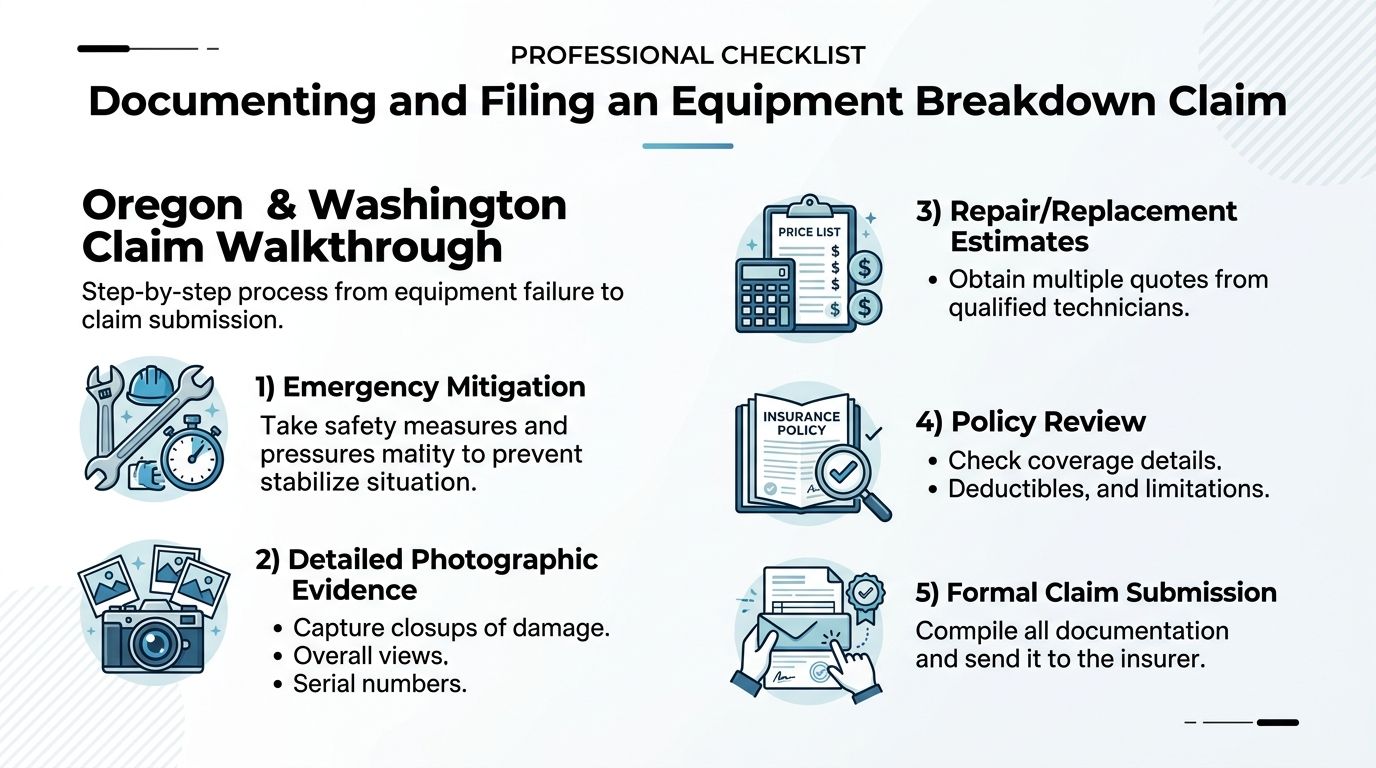
Use this sequence:
- Emergency mitigation. Stop the damage and protect the property.
- Photographic evidence. Record the equipment, the surroundings, and the secondary damage.
- Repair estimates. Gather written estimates from the people who touched the loss.
- Policy review. Match the facts to the endorsement language before the carrier frames the claim.
- Formal submission. File the claim with the evidence, not just with a phone call.
A weak file invites a wear-and-tear denial. A clean file forces the carrier to answer the facts.
When a Public Adjuster Changes the Outcome
Some equipment breakdown claims are easy enough to handle yourself. Small losses, clear cause, cooperative adjusters, and little or no downtime usually don't need outside representation. But once the claim crosses into business income, spoilage, utility interruption, or disputed causation, a public adjuster starts earning their fee fast.
When to handle it yourself
If the repair is straightforward, the carrier accepts the cause, and the payout is limited to a known equipment replacement, DIY can work. That's especially true when the documentation is clean and the issue doesn't spill into multiple coverages. Don't hire help just because the loss is annoying.
When to bring in a public adjuster
If the insurer is arguing wear and tear on a sudden electrical failure, delaying the inspection report, or undervaluing the secondary damage, you have a dispute, not a routine claim. That's where a licensed Oregon or Washington public adjuster can take over the documentation, policy analysis, and negotiation.
NW Claims Management's role is to represent policyholders, not insurers, and to handle claim evaluation, documentation, and settlement negotiation on that side of the table. If you want to see how a public-adjusting engagement is framed in practical terms, their benefits of hiring a public adjuster page lays out the service structure plainly.
The economics are simple
In Oregon and Washington, public adjusters commonly work on contingency, so the fee is tied to recovery rather than an hourly bill. That means the question isn't whether you like hiring help. It's whether the disputed portion of the claim is large enough, or technical enough, to justify bringing in someone who lives inside policy language every day.
If the carrier's engineer is already steering the file toward denial, don't wait. A public adjuster is most useful when the claim is consequential, the timeline is stretching out, or the business interruption piece is bigger than the repair bill.
Practical Takeaways for Oregon and Washington Policyholders
What does equipment breakdown cover? It covers sudden internal failures of mechanical, electrical, pressure, and electronic systems, plus some of the damage and disruption those failures create. It does not cover wear and tear, corrosion, or routine maintenance problems, and it won't magically pay code-upgrade costs just because the unit broke.
The mistakes are predictable. People assume the standard homeowners policy already handles a failed furnace. They throw away the inspection report. They accept a wear-and-tear denial without challenging the facts. They also forget to claim the downtime loss when a business has to slow or shut down.
Before the next failure, read the equipment breakdown endorsement line by line and know your deductible, your limit, and who the carrier's loss-control engineer is. That prep work is cheaper than fighting from behind after the unit is already dead.
If you're dealing with a denied equipment breakdown claim, a disputed electrical failure, or a business interruption loss that the carrier is trying to shrink, NW Claims Management can step in on the policyholder's side and handle the documentation, negotiation, and settlement push. Visit NW Claims Management to request a claim review and get a direct read on whether your equipment breakdown loss should be paid, challenged, or escalated.