You're mopping up water at the back door, opening the shop in the morning, or noticing a cracked sidewalk, a broken display case, or a customer who says they slipped outside. In that moment, the question is simple. Will your insurance respond when someone else says your business caused injury or damage?
For property owners and business operators in Oregon and Washington, general liability insurance coverage answers those third-party claims, the ones that can turn an ordinary day into a legal and financial mess. The policy only responds to what its language says, so the details matter before a loss, not after. A claims-focused review of your property exposures, much like conducting facility risk assessments, can help you spot weak points before a visitor, vendor, or passerby turns them into a claim.
If you want a broader review of your own exposure stack, a risk management assessment can help you sort out what is already in place and where the gaps may sit.
Your First Line of Defense Against the Unexpected
A customer slips near the entrance of a café in Portland and leaves with more than a sore wrist. The owner is now looking at medical bills, a demand letter, and questions about the floor mat, the warning sign, and the cleaning routine. That is the kind of third-party claim general liability insurance is meant to address, because the loss belongs to someone outside the business.
Why this coverage matters when the claim lands
The policy comes into play when someone says your business caused bodily injury, property damage, or certain personal and advertising injuries. It does not respond to the business's own setback. It responds to an outside person who says your premises, operations, products, or work caused harm.
A claims review from Verisk's 2025 General Liability Executive Insights showed that claim severity has been rising, which helps explain why these files can become expensive quickly. The point is simple. General liability claims are rarely minor once lawyers, medical treatment, or repair demands enter the picture, and that pressure can affect how carriers handle defense and settlement.
Practical rule: if a person outside your business says you injured them or damaged their property, general liability is the policy to review first.
Oregon and Washington owners often carry this coverage because a landlord, client, or venue asks for proof before handing over keys or signing a contract. That requirement is only the starting point. After an incident, the policy language decides whether the claim fits, and that is where the fine print starts to matter.
For a claims-minded owner, the better question is, “What does this policy do on the day something goes wrong?” A risk management assessment can help you compare that answer against the exposures already sitting in your operation.
What General Liability Insurance Actually Covers
A commercial general liability policy is built on three core protections, bodily injury and property damage, personal and advertising injury, and medical payments. In a claims file, each part answers a different question. Did someone get hurt? Was someone else's property damaged? Did a business statement or ad create a liability issue? That structure is easier to follow than the policy wording, and once you separate the parts, the coverage starts to make sense.
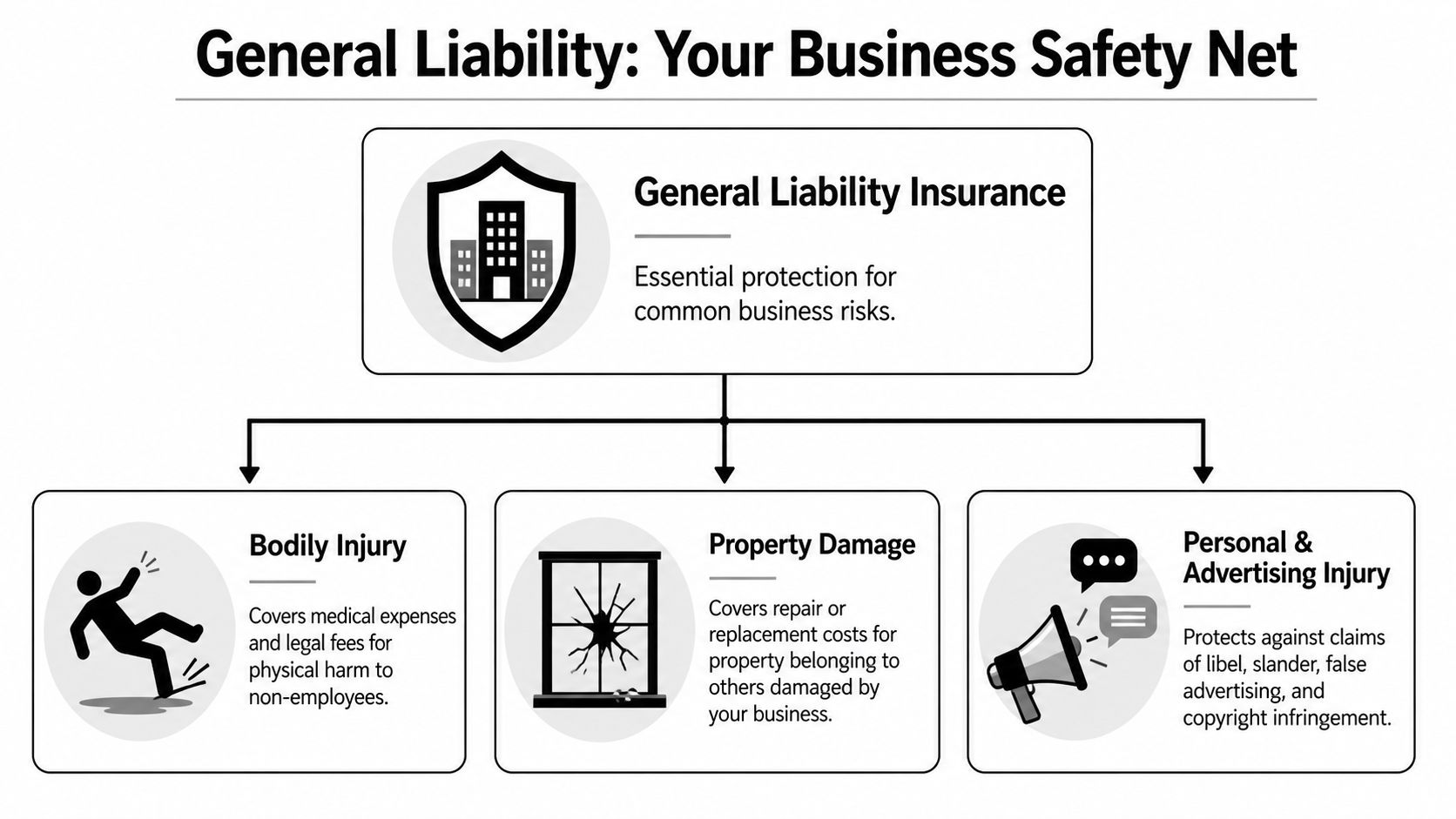
The three coverage parts in plain English
Coverage A is the main layer. It applies to bodily injury and property damage tied to premises, operations, products, or completed operations (Liability Insurance Authority on CGL structure). If a customer slips in a Salem retail shop, or a contractor accidentally cracks a client's window in Tacoma, this is the part a claims adjuster reviews first.
Coverage B addresses personal and advertising injury. That can include claims tied to libel, slander, or certain misuse of advertising content. A business that posts marketing copy, uses images, or publishes comparisons needs to know this part exists, because a liability claim can start with words as easily as with a broken object.
Coverage C is medical payments for minor on-premises injuries, and it works on a no-fault basis within the policy structure. It is the quick-response layer for small injuries that might otherwise turn into a larger dispute, especially when a guest is hurt but the facts are still being sorted out.
Policy wording matters more than the brochure description. Claims are decided by how the loss fits the coverage part, not by how badly the owner wants it covered.
How the claim gets matched to the right part
The cause of the loss usually points to the right coverage part. A customer's injury on a wet lobby floor points to bodily injury. A misdirected cart that dents a neighbor's vehicle points to property damage. A false statement in an ad or on a website points to personal and advertising injury.
That distinction is easier to see in a side-by-side explanation of public liability insurance and professional indemnity, where one policy line stops and another begins. The same point is also explained clearly in protect your Florida business from liability, which is useful if you want a second plain-language reference for how this coverage is usually described.
For owners in Oregon and Washington, the practical lesson is straightforward. General liability is not one vague promise. It is a set of specific responses, and each response starts with a specific kind of third-party harm.
Common Gaps and What Your Policy Excludes
A lot of owners hear “general liability” and assume it sounds broad enough to catch almost anything. That's the dangerous part. The policy is broad within its lane, but it's not a catch-all business policy, and claims often get denied because the loss belongs under a different line of coverage.
The biggest misconception to drop
General liability does not usually respond to employee injuries, auto accidents, or professional mistakes. Those losses are typically handled by workers' compensation, commercial auto, and professional liability or E&O policies (MoneyGeek on what general liability covers). If an employee in Eugene is hurt unloading inventory, that's not a third-party claim. If a service van backs into a gate in Vancouver, that's not a premises liability loss. If a consultant gives bad advice that costs a client money, that's not ordinary bodily injury or property damage.
| Scenario | General Liability | Professional Liability (E&O) | Workers' Compensation |
|---|---|---|---|
| Customer slips in your lobby | Usually yes | No | No |
| Your advice causes a client financial loss | No | Usually yes | No |
| An employee hurts a shoulder lifting boxes | No | No | Usually yes |
| Your installer cracks a client's window | Usually yes | No | No |
The table makes the split easier to see because the policy lines are built around different kinds of harm. General liability protects against third-party injury and property damage. Professional liability handles mistakes in advice, design, or service. Workers' compensation handles job-related employee injuries.
Where businesses get surprised
One of the most common traps is assuming a claim tied to your work is automatically covered just because you were doing business when it happened. That's not how the policy works. The question is what kind of harm occurred, and who suffered it.
Contract-heavy businesses get caught in this all the time. A contractor in Portland may think the CGL policy will handle every defect issue after a job is finished, but if the dispute is really about workmanship or professional error, the claim may live elsewhere. The same goes for businesses with offices, jobsites, and client visits. They need the right mix, not just a single policy with a familiar name.
If you want a deeper look at where insureds often assume too much, the page on insurance coverage gaps is a useful reminder that the biggest loss is often the one that falls between policies.
The safest mindset is simple. General liability is one tool in a larger risk stack, not the whole toolbox.
Real-World Claims in Oregon and Washington
A wet winter sidewalk in Bend, an icy loading area in Spokane, a leak from completed work in Portland, these are the kinds of everyday situations that create liability claims in the Pacific Northwest. The details change, but the pattern stays the same. Someone outside the business says the business caused harm, and the policy has to be measured against the facts.
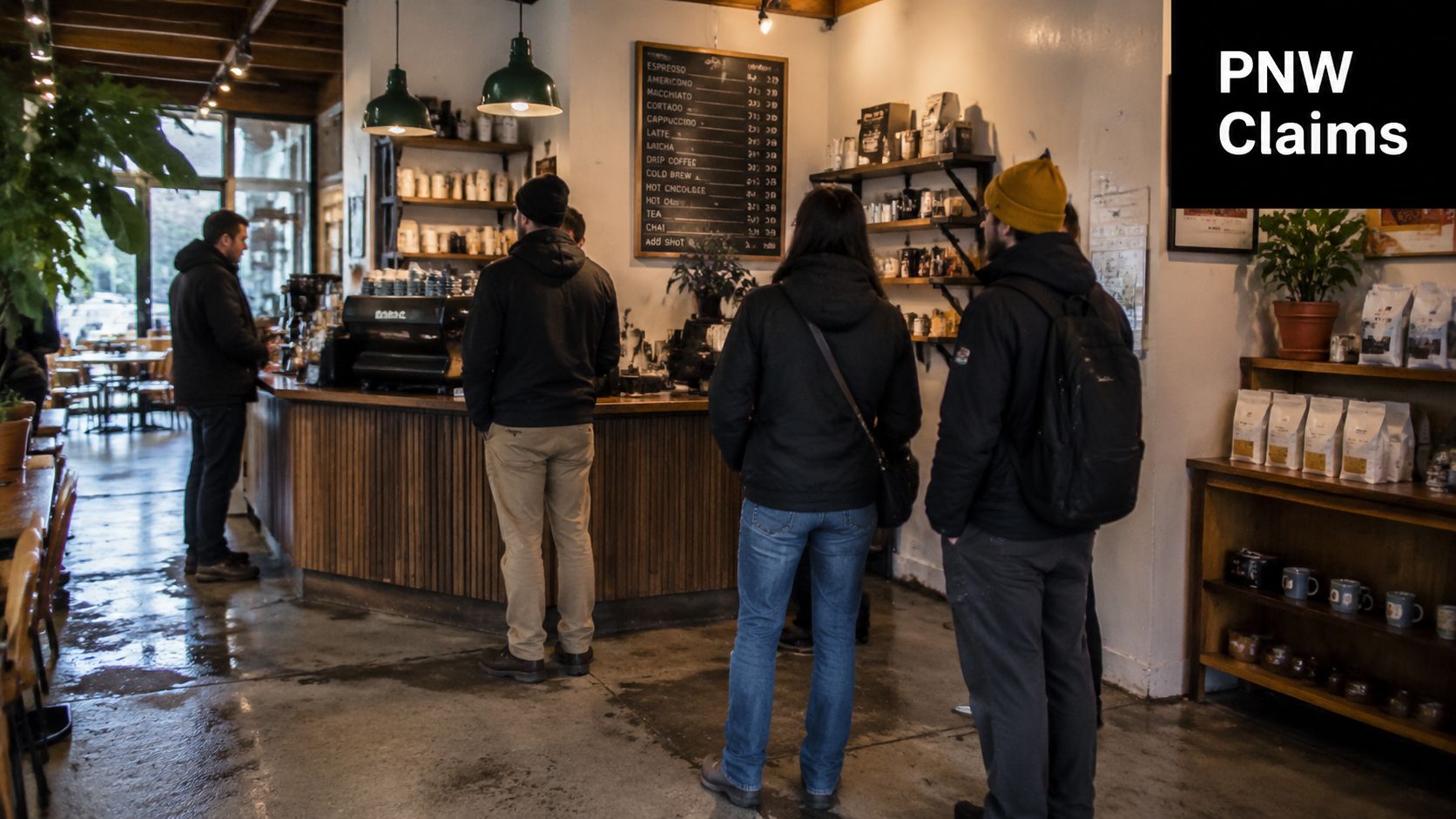
A coffee shop fall in Portland
A café owner mops the entryway before the morning rush, but a customer still slips and falls as they come in from the rain. The owner calls for help, documents the scene, and later gets a claim letter asking for medical costs and legal fees. That is the kind of bodily injury claim general liability is designed to review.
The insurer looks at the floor condition, the warnings in place, the cleaning routine, and whether the injury fits the policy terms. If the customer's harm is covered, the policy can respond to defense costs and damages. If the file is poorly documented, the owner may spend weeks arguing about what happened instead of keeping the business moving.
A contractor's completed work in Tacoma
A contractor finishes a bathroom remodel in a Tacoma condo. Weeks later, a leak appears, water spreads into adjacent materials, and the unit owner says the completed work caused the damage. That claim sits in the completed operations part of the policy discussion, and the insurer will want to know whether the loss traces back to the work that was done.
Claims like this move fast from repair issue to coverage issue. One disputed seam, one missed connection, or one hidden defect can turn a routine job into a file full of photos, invoices, and expert opinions. For owners trying to understand how limits shape that process, the breakdown in insurance policy limits explained helps show why the amount available under the policy matters just as much as the fact that coverage exists.
The history matters here because these are not rare, low-stakes issues. Analysts at Verisk found that general liability losses continue to be driven heavily by bodily injury, which is one reason ordinary-looking claims can become expensive files. That pattern matters to contractors, café owners, and property managers in Oregon and Washington because a small incident can grow once the claim enters the adjustment process.
A Washington property owner after a windstorm
A tree on a Vancouver property falls during a wind event and damages a neighbor's fence or patio structure. The owner's first instinct is often to say, “That's just weather.” The claim process is less forgiving. If a neighbor alleges the property owner should pay for the damage, the insurer has to examine the facts, the property location, and the policy language before deciding how the loss fits.
These claims are stressful because they mix emotion, evidence, and timing. Photos, witness statements, maintenance records, and quick notice to the carrier all matter. The policy may be standard, but the claim handling never is.
Understanding Your Policy Limits and Endorsements
Coverage isn't just about whether the policy applies. It's also about whether the limits are enough and whether the endorsements match the actual contract or lease language. A policy can be technically in force and still leave you underinsured for the way you operate in Oregon or Washington.
Limits are the ceiling, not the promise
Many standard general liability policies are written with $1M per occurrence and $2M aggregate limits (NEXT Insurance on general liability surprises). Per occurrence is the most the carrier will pay for one claim. Aggregate is the most it will pay across the whole policy period. If you have multiple losses, the aggregate limit becomes the primary pressure point.
That's why business owners should read the declarations page like a map, not a formality. If you run a contractor business, host events, or sign leases that require additional insured wording, the limit number alone won't tell you whether the policy fits.
Endorsements can matter as much as the base policy
Landlords often want to be listed as additional insureds. Contracts may demand primary and non-contributory language. Businesses that host events may need alcohol-related endorsements if they serve drinks at company functions. Each of those add-ons changes how the policy responds when a claim lands.
Claims note: if your contract says something specific, don't assume your certificate of insurance is enough. The endorsement language has to match the requirement.
For a practical breakdown of how policy caps affect recovery, the guide on insurance policy limits explained is worth reviewing before you sign a lease or renew a contract. Many owners only find the gap when a claim is already open, and by then the endorsement request is no longer a paperwork issue.
The bottom line is simple. A policy with the wrong limit or the wrong endorsement can behave like a locked door with the key hanging inside the building.
Navigating a Claim and When to Call a Public Adjuster
Once a liability claim starts, the carrier opens a file, asks for documents, and begins evaluating what happened. That part sounds routine, but the process can get difficult fast because the policyholder has to prove the facts, track the paperwork, and respond to questions from a company that is also managing its own payout exposure.
What usually happens after notice of loss
The insurer will want incident reports, photos, witness names, repair records, correspondence, and any contracts involved. If the claim involves a bodily injury or property damage allegation, the carrier may also ask for medical details, maintenance logs, or work records tied to the event. Every missing document slows the file down.
Owners often find their position weakened. They often know the claim is legitimate, but they don't know how to present it in the language the carrier expects. They also don't know which part of the policy matters most, so they answer questions without realizing they're narrowing the claim.
Why advocacy changes the outcome
A licensed public adjuster works for the policyholder, not the insurer. In a disputed or high-stakes claim, that matters because the policy language, documentation, and negotiation strategy all shape the settlement. NW Claims Management is one licensed option for Oregon and Washington policyholders who need someone to evaluate the claim file, document the loss, and push back when the carrier's offer doesn't reflect the damage or the policy terms (NW Claims Management licensed public adjuster).
The value isn't in drama. It's in documentation, persistence, and knowing how to read the policy against the facts. That's especially helpful when the insurer is trying to sort a bodily injury claim, a property damage allegation, and a contractual obligation at the same time.
If you're staring at a liability claim and don't know whether the insurer is giving you the full picture, get a fresh set of eyes on it. NW Claims Management offers a free claim evaluation, and you can start that conversation at NW Claims Management.