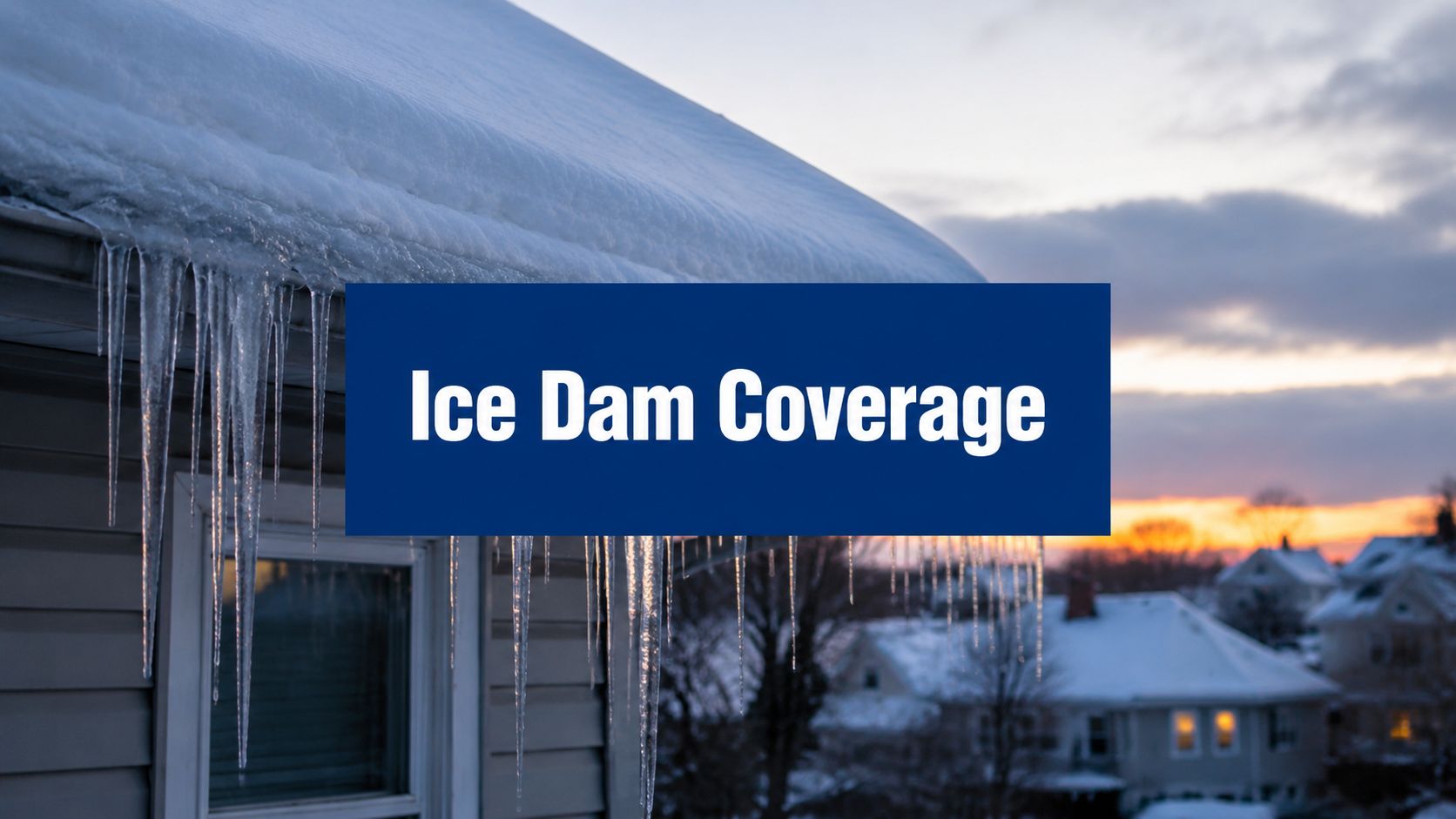
You've got the kind of winter problem that starts with a stain and turns into a fight over language. A ceiling spot after a snow event feels simple at first, but ice dam damage insurance often hinges on a harder question, whether the water intrusion came from a sudden storm condition or from a roof issue the insurer can call maintenance related. That distinction matters because it can change a covered loss into a partial payment, a reduced payment, or a denial.
What Ice Dams Are and How They Damage Your Home
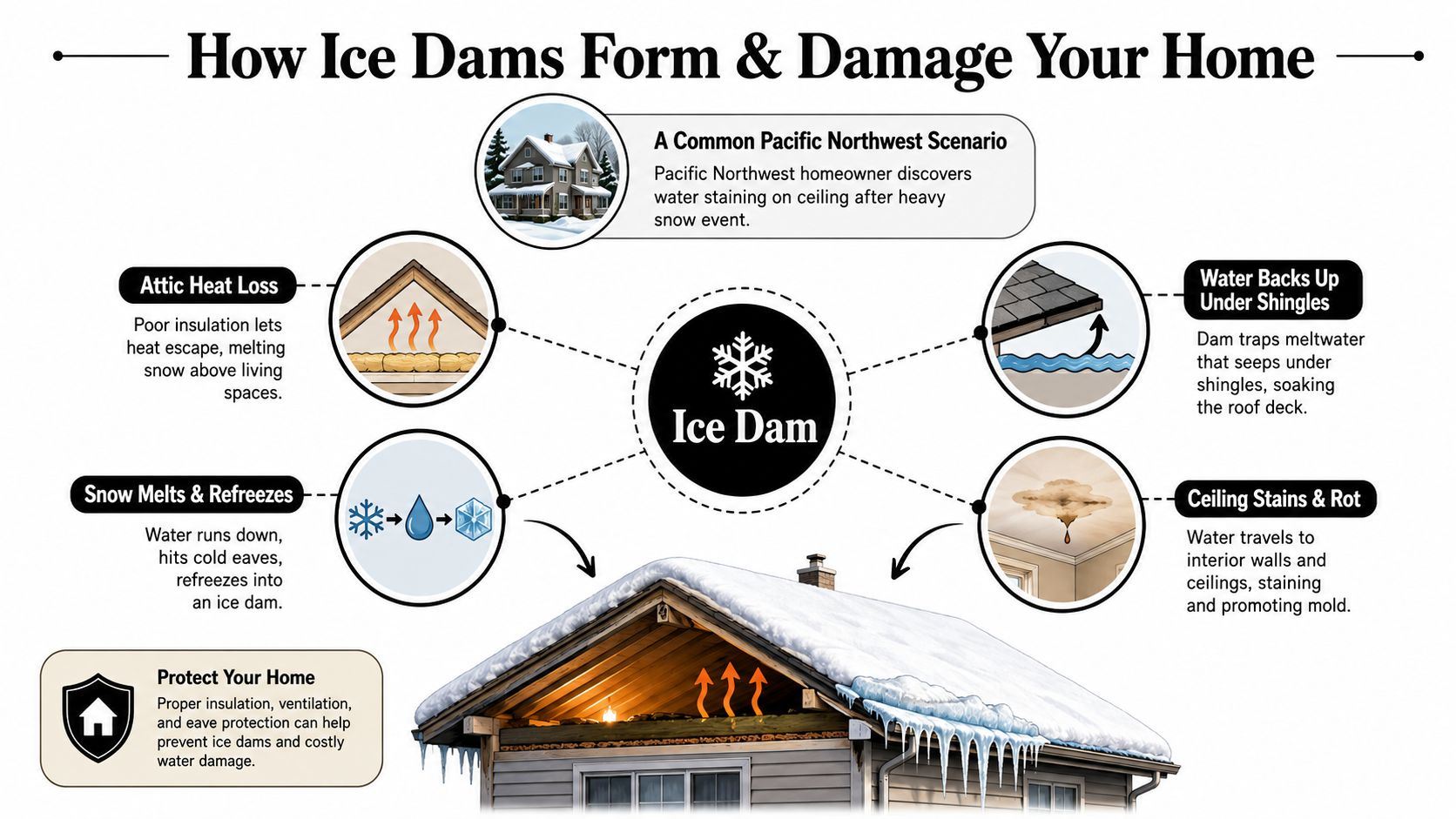
A homeowner in the Pacific Northwest often notices the problem the same way. The snow has been on the roof for a day or two, the weather warms a little, and then a brown stain appears on a ceiling or a wall line that used to be clean. By then, the damage is usually already moving beyond the surface.
How the ice ridge starts
Ice dams form when snow on a sloped roof melts on warmer upper roof sections, then runs down to colder eaves and overhangs, where it freezes into a ridge that blocks drainage. That ridge makes meltwater back up under shingles and into the roof assembly, where it can reach walls, ceilings, and insulation. Expert guidance also notes that ice dams can form with as little as 1 to 2 inches of snow when the temperature swings are right, which is why many homeowners miss the threat until the leak is visible. The Horton Group's explanation of ice damming lays out that melt-refreeze cycle clearly.
The physics are simple, but the damage path is messy. Heat escaping from the attic warms the roof deck above living space, while the eaves stay colder, so water moves, freezes, and builds pressure at the edge.
What the water does after it gets inside
Once water gets past the roofline, the damage is rarely cosmetic. Wet insulation loses effectiveness, drywall swells and separates, and moisture can spread through framing cavities before anyone sees the source. If water reaches electrical components, the problem turns from a repair issue into a safety issue fast.
Practical rule: the stain on the ceiling is not the whole claim. The path the water took, and what got soaked along the way, matters just as much.
For a visual on roof damage patterns that often show up alongside ice dams, the Bulls Eye Repair shingle guide is a useful reference point. If the intrusion reaches deeper than the surface finish, a structural inspection like this type of damage review can help show what was affected and what may still be hidden.
What Ice Dam Damage Insurance Covers
A homeowner filing a claim after a winter storm usually asks one simple question, “Does the policy cover the leak?” Standard homeowners coverage answers more narrowly than that. It usually responds to the resulting sudden water damage, not to the ice dam itself or to the roof condition that let the water in. Progressive's coverage guidance makes that distinction directly, and it is the rule adjusters use when they divide a claim into covered and not covered pieces. Progressive's ice damage explanation is a good baseline for that rule.
The policy usually pays for the aftermath
That typically means repairs to damaged ceilings, walls, insulation, and interior finishes, along with water extraction and drying when those steps are needed to stop more loss. Temporary roof protection can also fit inside the claim if it is necessary to limit further water intrusion. The policy is often paying for the consequence, not the cause.
If worn brakes contributed to an accident, the policy may cover the crash damage, but it will not pay to fix the brake wear itself. Ice dam claims work the same way. The insurer may cover the interior water damage while still pushing back on the roof problem or on repairs tied to long-term deterioration.
Two conditions matter right away
The first is timely notice. Homeowners need to report the loss promptly after discovering it, because delay can make it harder to separate fresh water damage from older issues.
The second is causation. The claim has to show the loss came from a sudden event, not from known roof failure, gradual wear, or neglected maintenance. That is where many claims get narrowed. A carrier may accept some water damage as covered while excluding the roof itself, and in some files the disagreement expands into insulation, mold, or emergency repair costs.
Keep the claim focused on the loss mechanism, not just the damage pattern. Insurers care how the water entered, not only where it ended up.
For homeowners comparing claim scope to roof repair issues, the roof damage insurance coverage guide can help frame what usually sits inside a dwelling claim and what often gets challenged.
Why Causation Drives the Payout in Ice Dam Claims
The hardest part of ice dam damage insurance is the argument over why the stain exists. Insurers often label these losses as maintenance related when they can connect the damage to pre-existing roof defects, inadequate attic conditions, or a pattern of deterioration that should have been corrected earlier. A claim that looks obvious from the kitchen floor can turn into a causation fight once the file is opened.
Why causation changes the payout
United Policyholders has flagged disputes involving pre-existing damage, construction defects, and the scope of necessary repairs in ice dam claims, and that matches what homeowners see in practice. An insurer may accept that water entered during a weather event, then deny parts of the file by saying the roof was already vulnerable. The same storm can lead to a partially covered claim.
That partial coverage outcome is the part many homeowners miss. The carrier might agree that interior water intrusion was sudden and accidental, but still refuse roof replacement, attic insulation saturation, or mold-related work by characterizing those items as maintenance or mitigation issues. The result feels inconsistent because it often is. The visible damage is the same, but the policy treatment changes once the cause analysis starts.
What adjusters look for
Adjusters look at attic ventilation, insulation layout, roof age, prior leak history, and whether the home showed signs of ongoing deterioration before the storm. If they can build a narrative that the roof failed because of neglect, the claim becomes much harder to win. If the file shows a clean chain from snow event to ice dam to sudden water intrusion, the homeowner has a stronger position.
A roof that has been caring for water poorly for years gives the carrier room to argue about maintenance. A roof that was holding up until a specific freeze and thaw cycle gives the claim a different shape.
The first photos and notes often matter more than the final repair estimate. Claims are won or lost on the story the file tells.
That is why the coverage fight usually starts on day one, not after the contractor bids come in. The coverage dispute resource helps homeowners understand why two losses that look similar on the surface can end very differently.
Oregon and Washington State-Specific Insurance Factors
Pacific Northwest homeowners deal with a weather mix that sets up ice dams fast. Mountain snow, fluctuating temperatures, and repeat freeze-thaw cycles create exactly the conditions that push meltwater toward eaves and under shingles. That's why the issue feels regional, not random.
Why claims can be bigger here
State Farm reported that from January 2024 through June 2025 it received more than 20,000 claims tied to frozen conditions and paid over $628 million in losses, with an average claim payment of more than $30,000. In that same period, Oregon and Washington were among the five states with the highest total claim costs. Those figures matter because they show frozen-condition losses are not a niche problem, they're a major claims category in the region. Carrier Management's report on State Farm's frozen-condition losses gives the clearest snapshot of that exposure.
The regional takeaway is practical. Pacific Northwest homes often face larger restoration bills because water moves into insulation, drywall, framing, and finishes before the leak is discovered. The restoration market here also has its own labor and material realities, so a claim that sounds modest on paper can still become a long repair job.
Setting expectations the right way
A lot of consumer content mentions average ice dam settlements of about $8,000 for interior damage alone, but that kind of number can mislead homeowners if they assume every claim lands there. The broader frozen-condition claim average reported by State Farm was more than $30,000, which is a reminder that severity varies sharply based on how far water traveled and how much had to be torn out and rebuilt. Use those figures as context, not as a promise.
For homeowners who want a better sense of claim timing and insurer response obligations, the time payment of claims provision is worth reviewing. Policy deadlines and claim handling pace can shape negotiations just as much as damage severity.
Documenting Damage and Filing Your Insurance Claim
The first move is safety, not paperwork. Stop active water intrusion if you can do it safely, move belongings out of the drip path, and stay off a snow-covered roof. If water is near fixtures or wiring, treat it like an electrical hazard until a qualified person clears it.
Build the record before the adjuster arrives
Take photos and video of everything from wide angles and close-ups, including ceiling stains, wet insulation, visible ice at the roof edge, and any water tracks along walls or trim. Keep damaged materials until the insurer has had a chance to inspect them, unless you've been told to remove them for safety. A photo without context helps less than a set of images that shows where the water entered and where it traveled.
Documenting affected personal property matters too. List what was damaged, when you bought it if you know, and what condition it was in before the leak. Keep every receipt tied to emergency repair work, temporary drying, tarping, or other mitigation steps.
File the claim like you expect a dispute
Contact the insurer as soon as you can, note the claim number, and confirm the report in writing. Save every email, voicemail, and text related to the claim. That record can matter later if the carrier says it never received something or if the timeline becomes part of the causation fight.
The scale of these losses is not theoretical. In the winter of 2001, American Family Insurance reported paying $21.5 million across 15,500 claims in Wisconsin alone, while State Farm separately reported nearly $1.8 million across about 1,100 Milwaukee-area claims in the same season, and Insurance Journal noted those losses were seven times higher than the prior year. Insurance Journal's report on the 2001 Wisconsin ice dam season shows how fast claims volume can spike when conditions line up.
Bring the adjuster a clean file, not a story built from memory. Photos, receipts, dates, and preserved materials do more than good intentions ever will.
If you want help thinking through evidence preservation before the inspection, the evidence preservation guide is a sensible next step.
Prevention Strategies That Work
Ice dams begin with heat escaping into the attic, uneven roof temperatures, and moisture moving where it should not. The eaves are where the ridge becomes visible, but the conditions that form the ridge are created above it. That is why the most effective prevention work focuses on the building envelope, not on scraping ice after the fact.
Control heat loss first
Proper attic insulation keeps warm air from reaching the roof deck. Air sealing around plumbing stacks, recessed lights, chimneys, and other penetrations closes the pathways that let heated interior air leak upward. Balanced ventilation helps keep the roof surface temperature more even, which reduces the melt-freeze cycle that creates the ridge in the first place.
Those three items usually matter more than quick fixes. A roof rake can reduce snow load near the eaves, and heat cables can help in problem drainage paths, but neither one solves a leaky attic by itself. Gutter maintenance matters too, because clogged or ice-filled gutters can keep meltwater from moving away from the edge.
Match the fix to the house
Older homes with thin insulation and visible attic bypasses often need professional help before the next storm cycle. Homes with decent attic performance may only need targeted snow removal and routine gutter care. The right answer depends on the roof shape, attic condition, and how often your area gets repeated snow followed by warming.
Prevention helps the claim file too. A homeowner who can show normal maintenance, roof care, and prior mitigation steps usually has a cleaner argument if a storm still causes damage.
That does not guarantee coverage, but it helps separate a sudden weather loss from avoidable neglect. Insurers pay more attention when the house shows a pattern of care, not indifference.
When to Call a Public Adjuster
If the first offer feels thin, or the insurer starts arguing over causation, it's time to get help. A public adjuster works for the policyholder, not the carrier, and that matters when the claim includes multiple rooms, structural components, insulation, or a debate about whether the loss was sudden or maintenance related. The insurer's adjuster is there to evaluate the claim for the company, while your advocate is there to make sure the full damage picture gets documented.
NW Claims Management is a licensed public adjusting firm based in Portland that serves property owners across Oregon and Washington. Its certified adjusters work on a contingency basis, provide free claim evaluations, and handle policy review, damage documentation, and settlement negotiation for property damage claims, including ice dam losses when they're part of a covered claim. That can be useful when the file needs a closer read than the carrier is giving it.
Signs you shouldn't handle it alone
- Settlement doesn't match the damage: The estimate leaves out drywall, insulation, or room-by-room repair work.
- The insurer questions causation: The adjuster starts talking about maintenance instead of the storm event.
- The paperwork is overwhelming: Multiple leaks, repeated visits, and back-and-forth emails can bury a homeowner fast.
If your claim is already being minimized, the right move is to get a second set of eyes on the file before you accept a number that doesn't reflect the full loss. A careful review early can change the direction of the claim.
If your ice dam claim in Oregon or Washington is being delayed, narrowed, or argued as a maintenance issue, NW Claims Management can review the file and explain where the coverage fight is really happening. Visit NW Claims Management to request a free claim evaluation and get help documenting the loss, the causation, and the repair scope before you accept a settlement.