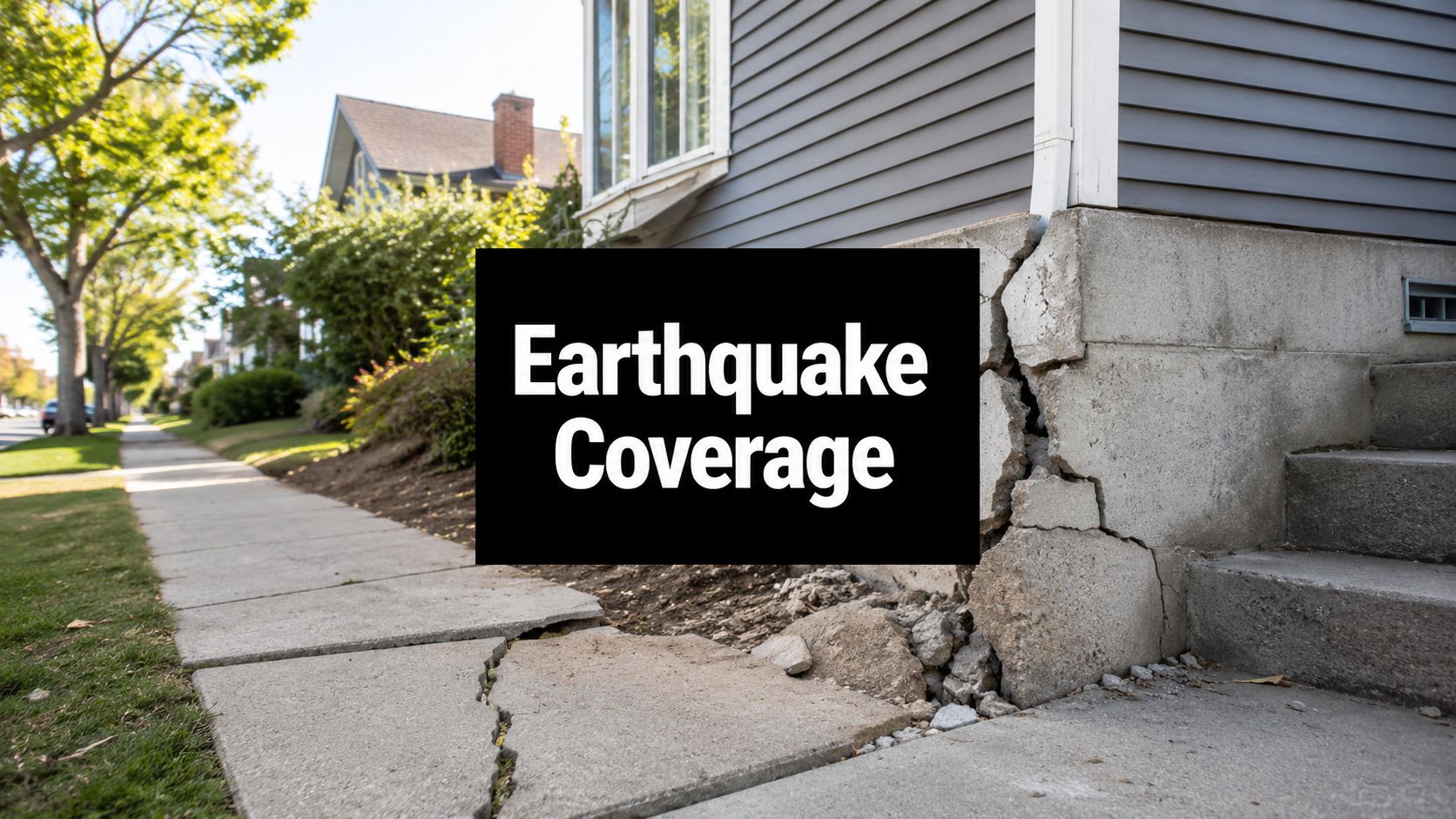
You're staring at a new crack in the garage slab, or maybe a stair-step crack that wasn't there before the last storm, and the insurance adjuster is already calling it “cosmetic damage.” A structural engineer report changes that conversation. In Oregon and Washington, where weather, soil movement, and occasional seismic activity can all complicate a claim, the right report gives you a defensible record of what changed, what it means, and what needs to happen next.
A strong report is more than a summary of visible damage. It is a formal technical document that turns what you can see into evidence an insurer, contractor, or loss consultant can use. The format matters because it creates a record of condition and repair priorities that can support valuation and settlement discussions, especially after storm, fire, or flood losses, where the cause and scope of damage are often disputed as noted in structural engineering report guidance. If you are already in a claim dispute, that record can shift the tone of the conversation fast.
For Oregon and Washington policyholders, the report is also one of the few tools that can separate new damage from pre-existing conditions. It can help you answer the adjuster's first questions with facts instead of guesswork. It also gives you the kind of technical documentation that fits with a forensic investigation when the carrier starts looking for another explanation for the loss.
The Unseen Damage After a Disaster
A homeowner in Portland notices a diagonal crack widening near the basement wall after a heavy rain cycle. A family in Spokane sees doors sticking after a minor tremor, then finds a new gap along the ceiling line. Neither situation calls for panic, but both deserve documentation before the insurer decides the issue is old, minor, or unrelated.
A forensic investigation context matters here because structural damage is often about cause, not just appearance. A cracked wall can point to settlement, movement, impact, water intrusion, or a load issue, and the insurer will usually focus on the explanation that limits payment. A structural engineer report gives you a technical record that keeps the claim grounded in observed conditions instead of a debate over impressions.
Why the report changes the claim dynamic
The report format has become standardized over time, with sections such as observations, conclusions, and recommendations. That structure helps create a defensible record of condition and repair priorities that can support valuation and settlement discussions, especially after storm, fire, or flood damage. For Oregon and Washington policyholders, it also gives you a cleaner way to separate a one-time event from movement that may have been building for some time.
A good report does more than say there is damage. It shows what the engineer observed, what those findings mean, and what should be addressed first so the claim can be argued in a practical order. That order matters when the carrier wants to treat everything as one broad scope and leave you to sort out the rest later.
Practical rule: if the claim turns on whether the damage is new, progressive, or structural, get the engineering record before the insurer narrows the scope.
For Oregon and Washington policyholders, that distinction is direct. Weather and ground conditions can blur the line between a single event and an ongoing structural issue, so the report needs to give you language that holds up through inspections, supplements, and settlement talks. It also helps when the insurer starts looking for another explanation and the claim needs support from a forensic investigation.
What Is Inside a Structural Engineer Report
A structural engineer report should tell you what the engineer found, what those findings mean, and what should happen next. In an insurance claim, that matters because the carrier needs a written record that ties visible damage to a structural conclusion, not just a general impression of “something is wrong.”
The parts that actually matter
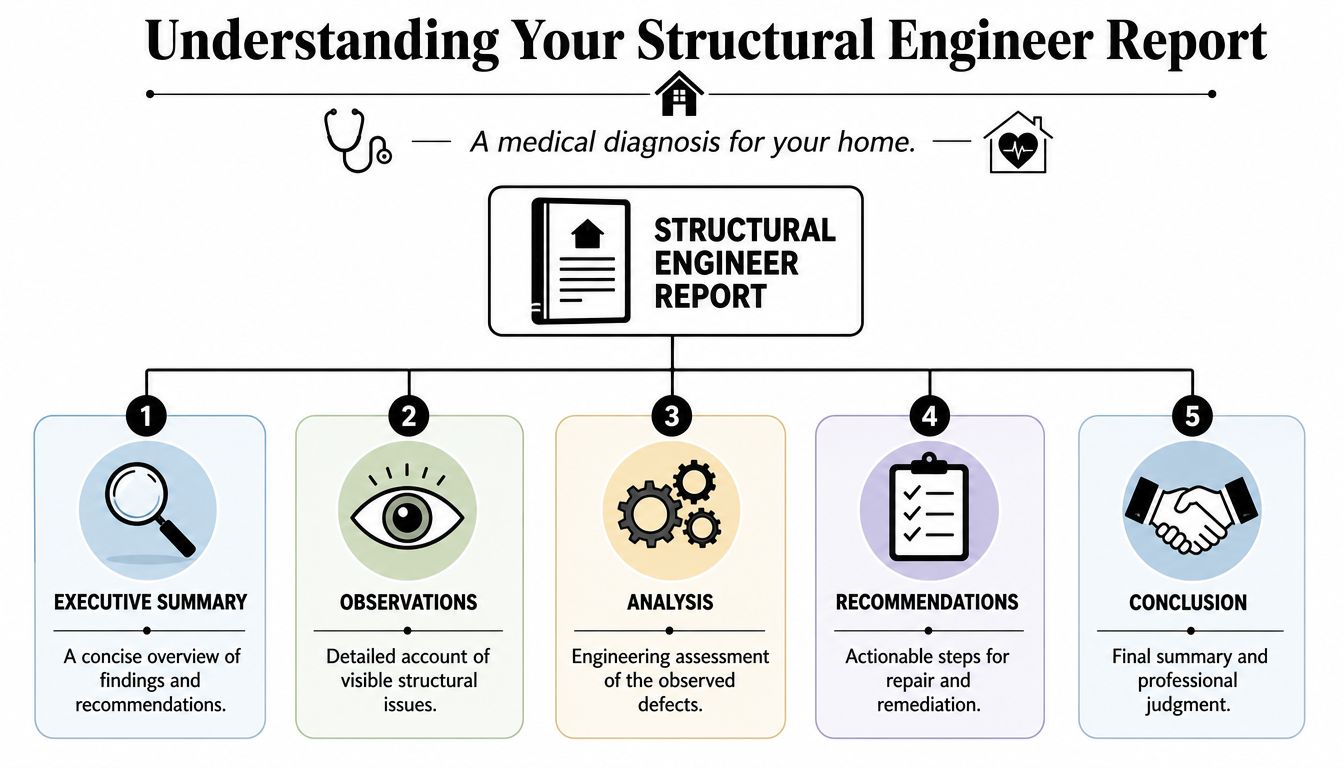
A solid report usually includes an executive summary, the scope of the inspection, documented findings, photographs, and recommendations per this report overview. The summary gives the claim team the big picture. The findings show what the engineer observed in the field, and the photos preserve the condition at the time of inspection. That record becomes valuable if the insurer later argues the damage changed after the visit, or that the issue was never tied to the loss event.
For Oregon and Washington policyholders, the report should also help separate structural movement from surface-level damage. If your claim is already being evaluated through a property damage assessment, the engineering report should fit into that file cleanly, so each observation supports the same story. That makes it easier to challenge an insurer that tries to treat everything as maintenance or as one broad category of loss.
Crack classification can matter too. Some reports compare visible cracking against the CSIRO damage category scale, which gives context to the severity of movement or distress. Recommendations should be organized by urgency and time horizon, because a homeowner needs to know what must be addressed now, what should be monitored, and what can wait until the claim is settled.
A well-structured report often includes:
- Executive summary, a short explanation of overall condition and key concerns.
- Methodology, so you know how the engineer inspected and what was reviewed.
- Documented findings, which should be tied to visible conditions, measurements, or both.
- Photographs of significant defects, useful for claim files and repair planning.
- Recommendations, ideally separated by immediate action, follow-up, and monitoring.
A report also helps clarify roles. If you are still sorting out who should evaluate the damage, understanding architectural and engineering roles can keep you from sending the claim down the wrong path. In practice, that avoids delays when the insurer wants a structural opinion rather than a design opinion, or both.
Pricing varies with scope, and industry guidance shows a typical range of about $500 to $2,500 for this type of report. That spread usually reflects property size, complexity, and how deep the engineering analysis needs to go.
For a homeowner, the question is simple. Does the report clearly explain the condition, the risk, and the next steps so you can use it in the claim discussion?
When You Absolutely Need a Structural Engineer Report
Some damage is easy to spot. Some damage hides behind drywall, under flooring, or in the foundation line. You need a report when the cause matters as much as the damage itself, because that is usually where the insurance dispute starts.
Common triggers in Oregon and Washington
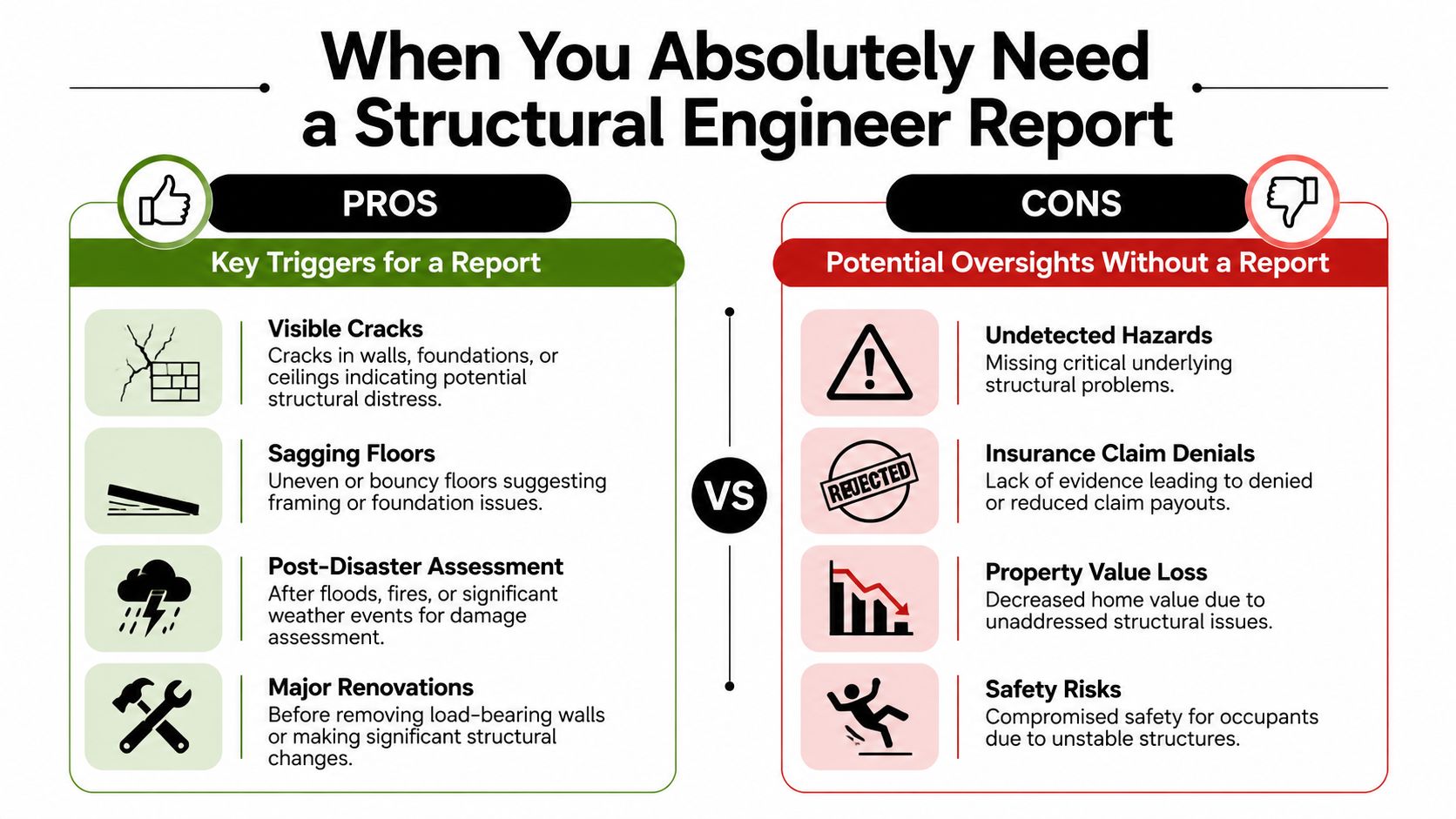
After seismic shaking, new foundation cracks, rotated walls, or door misalignment should be treated as more than cosmetic. The same applies to sagging roof lines after heavy rain or snow, or to homes where a tree strike, fire, or flood may have affected framing, connections, or support members. A report is also smart before major renovations that touch load-bearing parts of the house.
The reason is direct. Modern reports need to explain why distress is happening, not only what can be seen, especially in areas exposed to earthquake, flood, and expansive-soil conditions as described in current guidance. If the report does not address mechanism, the insurer can argue that the damage existed before the loss, came from wear and tear, or does not support the repair scope you are requesting.
When the issue looks structural, a general contractor's opinion alone is usually not enough. Contractors are important, but they usually do not provide the same independent structural analysis. If you are still sorting out who should evaluate the damage, understanding architectural and engineering roles can help you ask the right questions before the claim gets messy.
If the damage could affect load path, foundation performance, or lateral stability, you want engineering input before you accept a narrow repair scope.
That matters even more when the claim involves construction defect questions or disputed causation. In those cases, a report can connect the visible damage to a repair plan that stands up to scrutiny, and the same issue often appears in construction defect claim disputes.
Situations that justify fast action
- New movement after a storm or tremor, because timing can matter in proving causation.
- Repeated cracking in the same area, since recurrence can point to an unresolved structural issue.
- Post-fire or post-impact conditions, where heat, vibration, or force may have changed structural capacity.
- A disputed insurer inspection, when the adjuster's conclusion does not match what you are seeing at home.
If the visible damage is only the starting point, the report is the tool that helps you prove what is underneath it.
How to Obtain and Validate Your Report
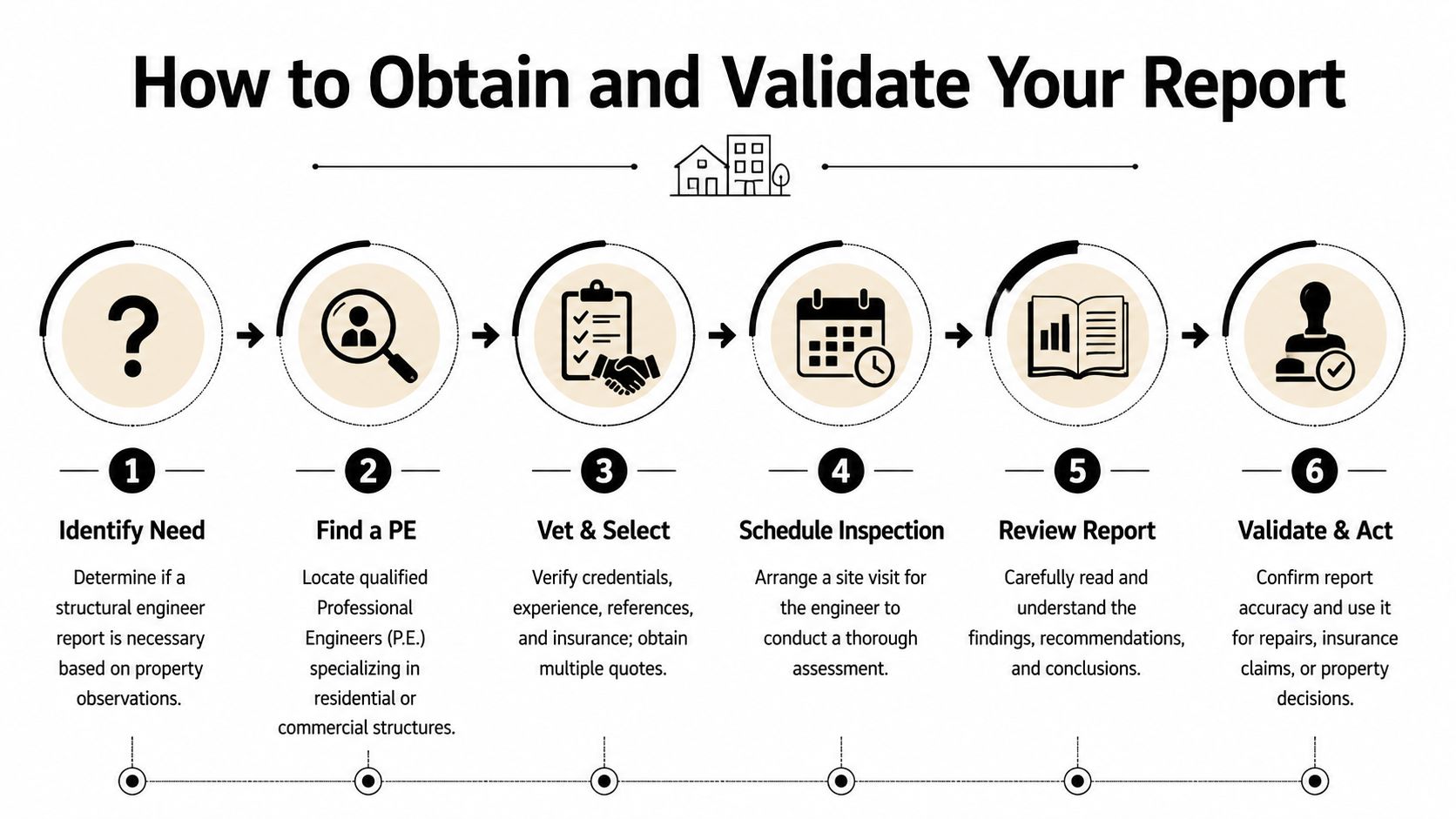
A homeowner usually feels the pressure here first. The insurer wants proof, the contractor wants a direction to build from, and the engineer needs enough access to explain what is happening in the structure. In Oregon and Washington, start by confirming the engineer holds a current P.E. license in the state where the property sits, then ask exactly what they will inspect, what they will not inspect, and what conditions could limit the report.
What to ask before the site visit
Start with the work the engineer does. Ask whether they routinely handle residential foundation movement, storm-related damage, or post-loss inspections, because those assignments require a different level of judgment than a basic visual opinion. Ask whether the report will address likely causes as well as visible symptoms, since a claim file usually needs more than a description of cracks or separation.
You also want to know whether the engineer can document the issue in a way that helps a claim survive scrutiny. A report that names the problem but avoids the cause often leaves the insurer room to narrow the loss. If you are comparing fees and scope, Aureli Construction's engineering cost guide helps set the right expectation, because engineering cost usually follows complexity, access, and the amount of analysis required, not just time on site. The goal is not a quick walkthrough. It is technical judgment that can support your position when the carrier questions the scope.
For claims that may require a deeper causation opinion, homeowners often also need a forensic engineer. If that is the situation, review how to choose a forensic engineer for a damage claim before you hire, because the wrong fit can leave you with a report that is technically sound but weak for insurance purposes.
How to read the final document
A report only carries weight if the scope matches the damage. Guidance on reading engineering reports notes that limitations often appear when the engineer could not access hidden areas or confirm conditions behind finishes as explained here. That matters in a claim because a clean-looking document can still leave open questions about framing, foundations, or soil conditions. Read the limitations section before you rely on the conclusion.
If you want to pressure-test the report, look for these items:
- Scope and limitations, so you know exactly what was and was not inspected.
- Photos tied to findings, not just general site photos.
- Next-step language, such as repair, monitoring, or further investigation.
- Clear cause statements, especially when the damage could be tied to loading, movement, or moisture.
- Specific repair direction, not vague advice to “consult a contractor.”
Practical rule: a good report does not just label damage. It tells you what action is needed and why that action fits the observed condition.
If the report feels thin, incomplete, or vague, address that before it goes into the claim file. A weak report can give the insurer something to minimize, while a solid one gives you a factual base to push for the right scope. If you are still trying to understand what a fair engineering fee looks like before you order the report, use Aureli Construction's engineering cost guide as a reference point for comparing scope and price.
Using the Report to Maximize Your Insurance Claim
A structural engineer report has real value once it is placed inside the claim file in a way the carrier has to address. Submit it with your photos, repair estimates, correspondence, and any prior inspection notes so the engineer's conclusions sit alongside the rest of the evidence, not off to one side.

Where the report helps most in negotiation
A detailed technical report documents the load path and the information needed to check stability, including foundation type, design stresses, and applicable codes as set out in this structural report format. Those details help show whether the damage came from limited capacity, abnormal loading, or a different structural condition, which matters when you are asking the insurer to accept a broader repair scope.
That matters because insurers often begin with the narrowest reading of the loss. If the report shows that stability, load transfer, or support conditions were affected, the claim stops being a general disagreement and becomes a technical issue. Your job is to keep the file organized, direct, and tied to the property conditions the engineer observed.
A public adjuster uses the report to do three things:
- Anchor causation, by tying visible damage to an engineering explanation.
- Support scope, by showing that repairs should address the underlying issue, not only the cosmetic symptom.
- Challenge omissions, when the insurer's estimate misses affected structural elements or temporary stabilization.
If masonry, foundation, or load-bearing repairs are part of the loss, the report can also support line-item supplements and a more complete estimate. For policyholders who need a structured way to build that request, insurance claim supplements are often the next step after the engineering findings are in hand. A useful reference point for that kind of repair documentation is Atlanta home masonry repair, especially when structural distress has moved beyond a simple surface patch.
Practical rule: send the report with a short cover note that states what the engineer found, what repair category it supports, and which claim line items should be revisited.
NW Claims Management uses this kind of documentation process when it collects repair recommendations, estimates, and written support for loss files. The goal is not to overwhelm the insurer, it is to make the file reflect the actual condition of the property.
What not to do
Do not send the report and hope for the best. Do not reduce it to a single-page summary if the supporting photos and limitations matter. And do not accept an adjuster's “we'll revisit it later” if the report already identifies the next steps now.
If the engineer's conclusions and the insurer's estimate do not line up, a supplement package built around the report is usually the cleanest way to keep the conversation moving.
Your Oregon and Washington Report Checklist
Use this as a quick review before the report goes to the carrier.
- State license confirmed, verify the engineer's P.E. license is current in Oregon or Washington.
- Property-specific scope, make sure the report addresses the actual damage, not a generic inspection.
- Regional issues addressed, look for discussion of movement, moisture, seismic concerns, or foundation conditions when relevant.
- Clear cause analysis, the report should explain why the distress is happening, not just list visible defects.
- Photo support included, confirm the findings are backed by images tied to the damage.
- Limitations identified, read the inaccessible-area notes closely.
- Actionable recommendations, the report should separate repair, monitoring, and further investigation.
- Claim-ready language, the document should be usable in insurer correspondence without translation.
If the report misses one of those items, ask for clarification before you submit it. It's much easier to tighten the record now than to reopen it after the carrier has already built its position.
FAQ for Oregon and Washington Policyholders
Should I use the engineer my insurer recommends?
You can, but ask who is retaining them and whether the scope is independent. If the carrier is directing the inspection, you'll want to review the report carefully and compare it against your own evidence before relying on it.
What if the engineer's report contradicts the adjuster?
Treat that as a scope dispute, not a dead end. The report becomes the technical basis for a supplemental demand, especially if the adjuster ignored load path, movement, or hidden damage. Keep the disagreement in writing and ask for a reinspection if the facts support it.
What should I raise with an engineer in Oregon or Washington?
Ask about soil movement, foundation settlement, and weather-related loading, since those issues often sit behind visible cracks or shifts in this region. If the home has older framing or signs of prior repair, ask whether additional investigation is needed in areas that weren't accessible during the first visit.
Can a “clean” report still leave me exposed?
Yes. If the engineer couldn't inspect hidden assemblies, subgrade conditions, or other inaccessible areas, the report may be limited. Read the scope carefully before you treat it as the final word.
If you're dealing with a claim right now, don't wait for the insurer to define the story for you. Get the engineering record, compare it against the estimate, and build the file around facts that can stand up in negotiation. A CTA for NW Claims Management to review your claim documents, organize the engineering report, and help you press for the full repair scope your policy should support.