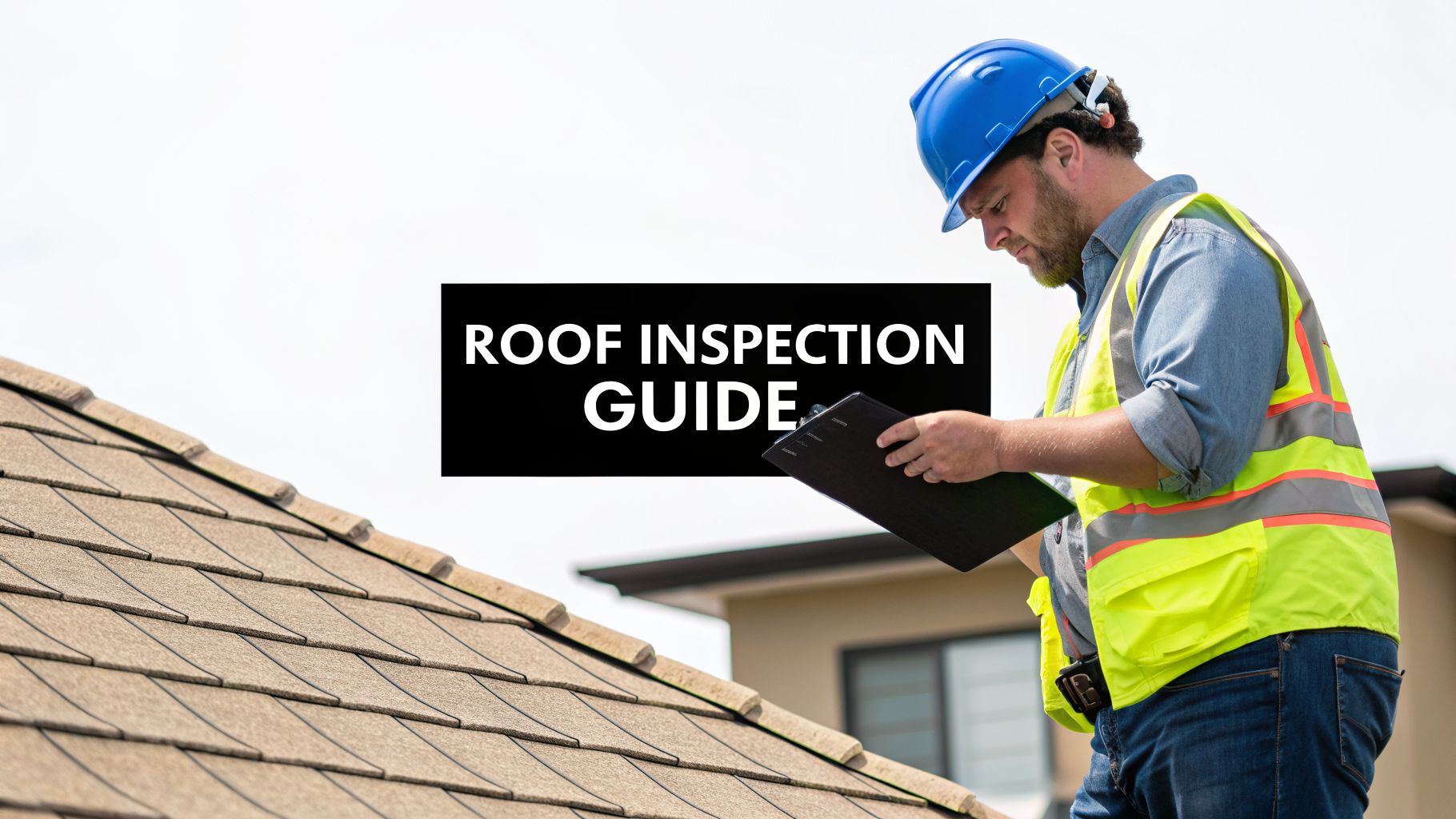
Think of a roof inspection contractor as a detective for your home's first line of defense. These are specialized pros who perform a detailed health check-up on your roof, hunting for clues and spotting hidden issues long before they become expensive disasters.
Their entire purpose is to protect your property by giving you the unvarnished truth about its condition.
What A Roof Inspection Contractor Actually Does
So, what does that look like in practice? A roof inspection contractor provides a thorough, top-to-bottom evaluation of your roof's health, going far beyond what you can see from the yard. Their job is to be an impartial third-party expert, delivering an unbiased report on the integrity of your entire roofing system.
This distinction is crucial. They aren't there to sell you a new roof; they're there to give you the facts.
Think of it as a smart, preventative investment rather than a reactive expense. By catching something as small as a few cracked shingles or worn-out sealant around a vent pipe, they stop water intrusion in its tracks. That's how you prevent widespread rot, dangerous mold, and serious structural damage down the line. It's one of the simplest ways to maintain your property's value and safety.
Why This Kind Of Professional Oversight Matters
The growing demand for this service tells its own story. The global roof inspection market was valued at around USD 5.2 billion back in 2021, a number driven by a wider understanding of preventative maintenance. For homeowners, routine inspections can actually extend a roof's lifespan by as much as 20%, saving thousands in premature replacement costs.
To really see the full picture, it helps to understand the benefits of regular roof inspections. Their detailed reports do more than just point out what needs fixing—they create a crucial paper trail.
An independent inspection report is one of the most powerful tools you can have after a storm or unexpected damage. It provides the unbiased evidence needed to validate your claim and counter an insurer's attempts to downplay the severity of the loss.
This kind of documentation is invaluable, especially when you need a fair and complete property damage assessment for an insurance claim. A detailed report from a trusted inspector ensures your claim is built on a solid foundation of fact, not guesswork.
Clear Signs You Need to Call an Inspector
Trying to figure out when to call a roof inspector can feel like guesswork. But your roof usually gives you signals when it needs help. Ignoring them is a lot like ignoring your car’s check engine light—what starts as a small problem can turn into a massive, expensive failure if you let it go.
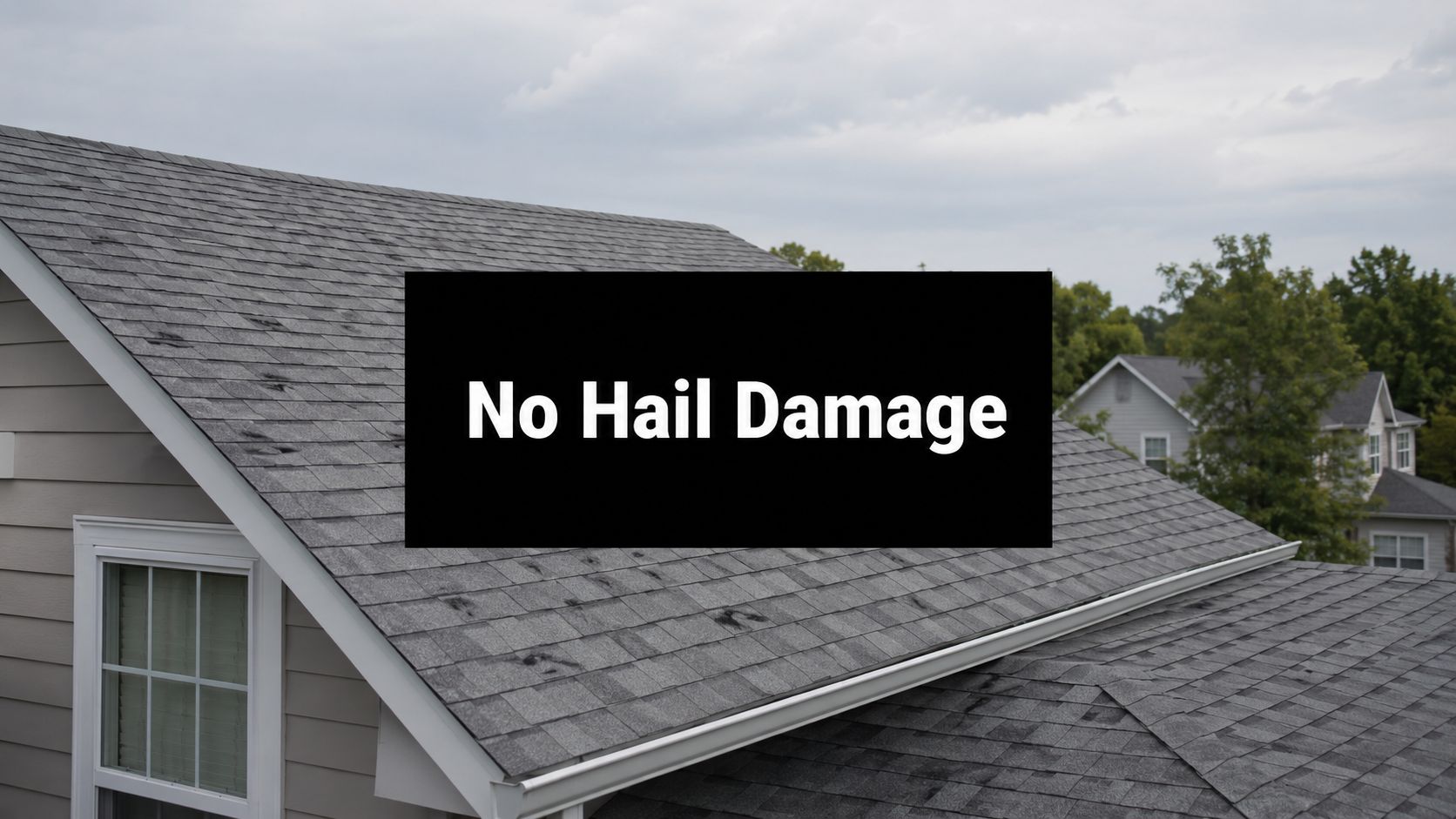
Some reasons to call for an inspection are sudden and obvious. After a big storm rolls through, it's always a good idea. High winds, a serious hailstorm, or a fallen tree branch all warrant a professional assessment right away. You can’t always see the real damage from the ground; it takes a trained eye to notice subtle hail impacts or shingles that have been lifted by the wind, creating hidden paths for water to get in.
Time-Based Maintenance Triggers
Other triggers aren't about a sudden event, but simply the passage of time. Every roof has a finite lifespan, and age is a huge factor. An asphalt shingle roof, for instance, generally lasts between 15 and 30 years. Once your roof hits that 15-year mark, it's smart to start scheduling regular check-ups.
Think of it like an older car that needs more frequent tune-ups. Over the years, roofing materials break down, sealants become brittle, and fasteners work themselves loose. A proactive inspection can catch this normal wear and tear before it evolves into a full-blown leak.
A professional roof inspection is also a must-have when you're buying a home. A roof that looks fine from the curb could be hiding thousands of dollars in repairs. An independent report gives you the leverage you need by showing the roof’s true condition before you close the deal.
Obvious Visual Warning Signs
Finally, there are the red flags you can spot yourself from the ground. These are your roof’s clearest cries for help, telling you a problem is already underway. If you notice any of these, it's time to make a call.
- Curling or Clawing Shingles: When you see shingle edges curling upwards or the middles start to pop up, it’s a sure sign of aging and moisture damage.
- Visible Leaks or Water Stains: This is the most urgent warning sign. Those brownish spots on your ceiling mean water has already penetrated your roof and is likely damaging your attic, insulation, and framing.
- Granules in Your Gutters: Shingles are coated with sand-like granules that protect them from the sun. If you find piles of them in your gutters, it means your shingles are "balding" and losing their defensive layer.
- Missing or Cracked Shingles: Any gap in your roof’s armor is a direct invitation for water to seep in, leading to rot in the underlying structure.
While these signs point to common issues, other disasters can cause devastating roof damage. The intense heat from a house fire, for example, can compromise the entire roof structure, even in areas the flames never touched. Understanding what to do after a house fire always includes a thorough structural assessment, and the roof is one of the top priorities.
The Anatomy of a Professional Roof Inspection
When you call in a top-tier roof inspection contractor, you're getting far more than a quick look from the driveway. A real professional conducts a methodical, top-to-bottom evaluation to understand the complete story of your roof's health. It’s less like a casual glance and more like a full physical for your home, where every vital system is checked to head off future problems.
From the moment they arrive, a skilled inspector is already taking notes. They’re looking at the big picture—things like drainage around your foundation, overhanging trees, and other environmental factors that could be putting your roof at risk.
Stage 1: The Structural Assessment
The first hands-on part of the inspection focuses on the skeleton of your roof. The inspector will get up close to check for any signs of sagging between the rafters or uneven roof planes, which could point to serious structural issues. They'll also carefully examine the fascia and soffits—the boards along your roofline—for any rot or deterioration.
This stage always includes a thorough look at your gutters and downspouts. Are they securely attached? Are they clear of leaves and debris? A clogged gutter is one of the quickest ways to force water back up under your shingles, creating the perfect conditions for rot and leaks.
Stage 2: The Material Inspection
Next, it’s time to zoom in on the roofing materials themselves. This is a meticulous, up-close examination of the shingles, tiles, or metal panels that serve as your roof’s primary shield.
The inspector is looking for very specific clues of damage or aging, including:
- Cracked, curled, or completely missing shingles.
- "Bald" spots on asphalt shingles where the protective granules have worn off.
- Small, dark bruises on shingles that often indicate hail impacts.
- Any rust or corrosion developing on metal roofing and its components.
They’ll pay extra attention to the most vulnerable spots on any roof: the valleys, ridges, and every penetration point. This includes chimneys, vents, and skylights. The flashing and seals around these areas are common failure points, and even a tiny gap can let in a surprising amount of water.
This detailed material check often confirms one of the common triggers for an inspection in the first place.
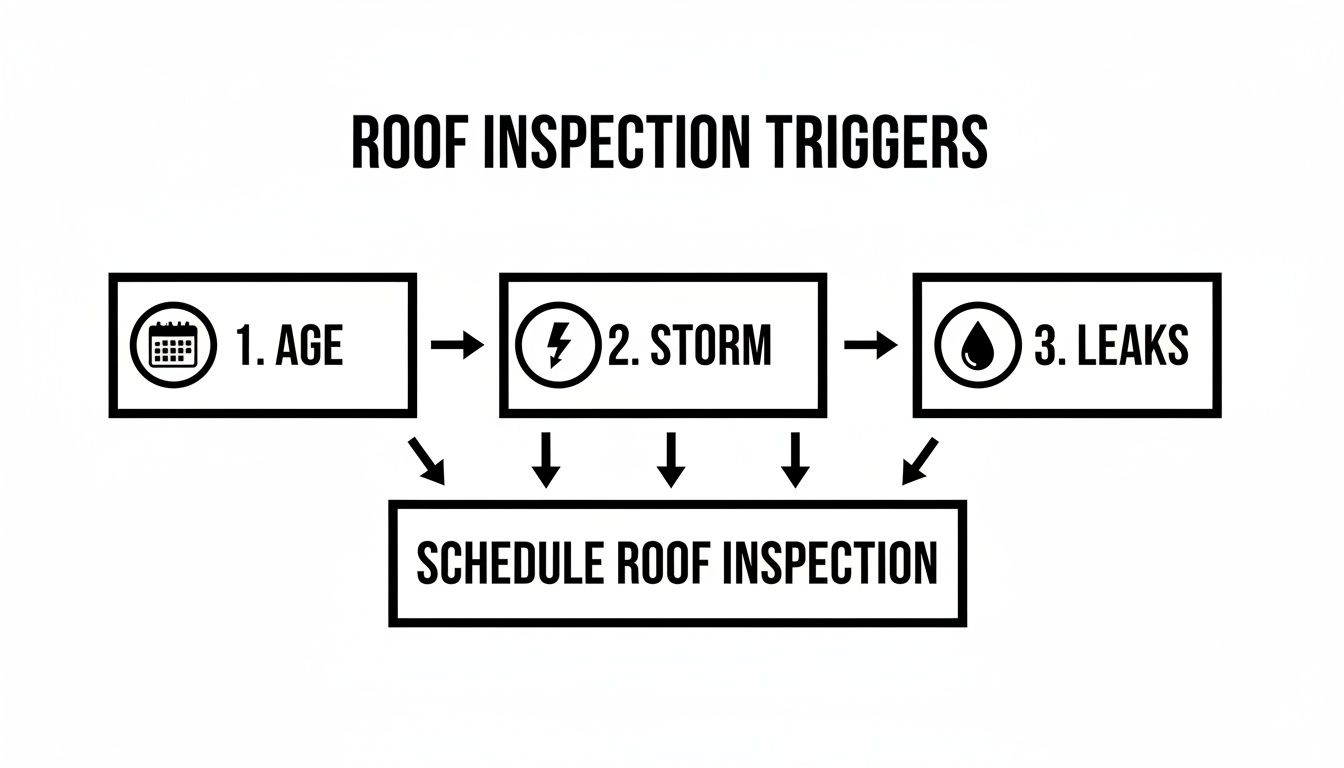
As you can see, the need for an inspection is usually driven by a mix of age, a recent storm, or the unmistakable signs of an active leak.
Stage 3: The Interior and Attic Check
A truly comprehensive inspection never stops at the surface. Your inspector will need to get into the attic to see the underside of the roof deck. This interior view is absolutely critical, as it often reveals hidden problems that are completely invisible from the outside.
What’s happening inside your attic can tell you more about your roof’s health than the shingles themselves. Poor ventilation traps heat and moisture, which can literally cook your shingles from below and lead to premature failure and rot.
Inside, the inspector is searching for dark water stains on the wood, signs of mold or mildew growth, and any damp or compressed insulation. They’ll also check that your attic has proper ventilation. Without good airflow, trapped heat and moisture can drastically shorten the lifespan of your entire roofing system.
To give you a clearer idea of what a professional is looking for, here's a quick summary of the key checkpoints in a thorough inspection.
A Professional Roof Inspection Checklist
| Inspection Area | What They Are Looking For | Why It Is Important |
|---|---|---|
| Structure | Sagging, uneven planes, rotted fascia/soffits | Indicates potential foundational issues with the roof's framework. |
| Materials | Cracked, curled, missing shingles; granule loss; hail bruises | These are direct signs of wear and tear or storm damage. |
| Penetrations | Damaged flashing, failed seals around vents, chimneys, skylights | These are the most common points for water to enter the home. |
| Interior/Attic | Water stains, mold, poor ventilation, damp insulation | Reveals hidden leaks and moisture issues that degrade the roof from within. |
| Workmanship | Improperly nailed shingles, misaligned rows, poor flashing install | A roof can fail due to poor installation, even with good materials. |
This checklist covers the core components, but a seasoned inspector is always looking for the subtle details that connect these different areas.
Stage 4: Assessing Workmanship and Modern Tools
Finally, a good inspector evaluates the quality of the original installation. Was the roof installed correctly in the first place? They’ll check for things like proper shingle alignment, correct fastener placement, and professionally installed flashing. Sometimes, a roof fails not because of the materials, but simply due to shoddy workmanship.
For roofs that are especially large, complex, or steep, many roof inspection contractors now use drones. This technology provides a safe way to capture high-resolution photos and videos of every nook and cranny, ensuring no potential issue is overlooked.
This complete, documented picture is an essential part of the larger property damage claim process, as it provides the undeniable proof you need to support your case.
How to Decode Your Inspection Report
After the inspector has packed up their ladder, the most valuable part of their service arrives: the inspection report. This isn't just a piece of paper; it’s the complete health record for your roof. A good report translates what the expert saw into a clear, actionable roadmap that helps you protect your property and your budget.
Frankly, an inspection is only as good as the report it generates. If you get a vague, one-page summary, that’s a major red flag. A professional, detailed document is packed with proof, making the condition of your roof impossible to ignore.
Core Components of a Useful Report
A truly useful report doesn't just dump a bunch of technical jargon on you; it guides you. It should start with a high-level overview, then dive into the specific problems found, and finish with a clear set of recommendations. The absolute best reports are built on a foundation of solid visual evidence.
Here’s what you should demand in any report you receive:
- High-Resolution Photos: And lots of them. Every single issue, from a tiny hail bruise to a cracked sealant, needs its own clear, close-up photograph. The best inspectors will also include annotated photos, using arrows or circles to pinpoint exactly what you’re looking at.
- A Clear Summary of Findings: This is your "at-a-glance" section. It should plainly state your roof's age, the materials used, and its overall condition in simple, straightforward language.
- Categorization of Issues: Problems should be sorted by how urgent they are. This is critical for helping you decide what needs to be fixed now versus what can simply be watched over time.
A great report will categorize findings into tiers like "Urgent Repair," "Recommended Fix," and "Monitor." This prioritization is crucial for budgeting and preventing a small leak from turning into a catastrophic failure.
Turning Your Report Into Insurance Claim Evidence
This is where the report really proves its worth, especially when you need to file an insurance claim. The document transforms from a simple maintenance guide into a powerful piece of evidence. With impartial, third-party documentation from a qualified inspector, you can substantiate your claim and make it much harder for an insurance company to downplay or deny the damage.
For a deeper dive into the data, you can even use modern tools like an AI Agent for Real Estate Inspection Report Analysis to quickly extract key findings and measurements.
The detailed photos and expert descriptions create a factual baseline that holds up under scrutiny. Instead of it being just your word against the insurance adjuster’s opinion, you now have a professional report that proves the extent of the damage. Understanding how to get more from an insurance claim often begins with having this kind of undeniable, expert-backed documentation from day one.
Using Your Report to Strengthen an Insurance Claim
Once your inspection is complete, you’ll have the single most important document for your insurance claim: the report. Think of this as more than just a summary of your roof's condition. It's the factual evidence you need to secure a fair settlement from your insurance company.
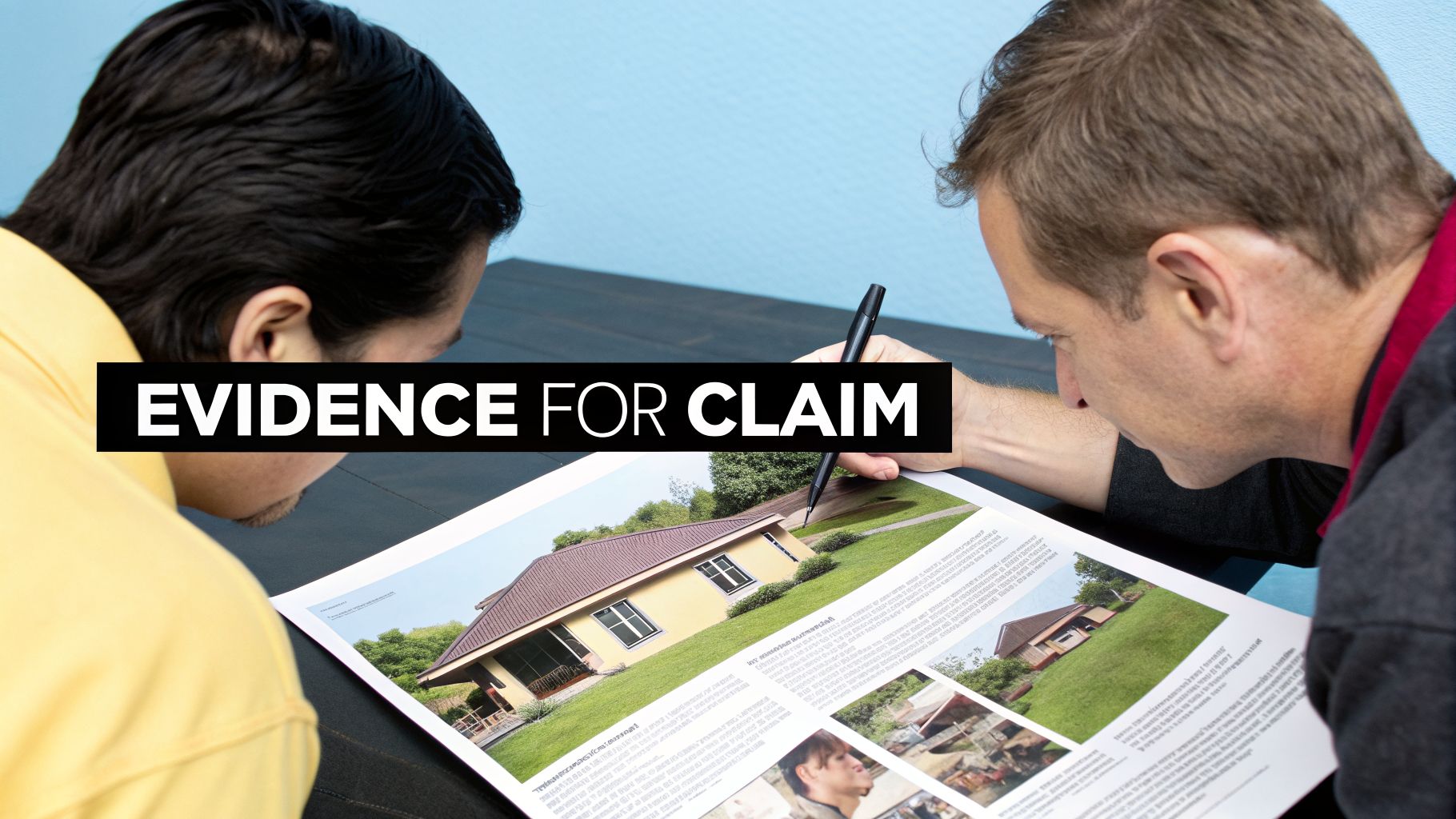
It’s easy to forget, but the adjuster your insurance company sends out is on their payroll, not yours. Their primary job is often to protect the company's bottom line. An independent report from professional roof inspection contractors levels the playing field, making sure your claim is based on unbiased facts.
The Report as Undeniable Evidence
A thorough inspection report, packed with high-resolution images and an expert’s analysis, forms the backbone of your claim. It makes it incredibly difficult for an insurer to dismiss or minimize the true extent of the damage. This is especially vital for problems that aren't immediately obvious to an untrained eye.
For instance, a company adjuster might do a quick walkthrough and say your roof just has "minimal wear and tear." But your report will have professionally annotated photos showing the exact location of hail impacts, wind-lifted shingles with broken seals, and measured granule loss—all documented by a neutral expert. This kind of evidence proves the damage is real, significant, and a direct result of a covered event like a storm.
When you back your claim with a comprehensive, third-party inspection report, you change the entire conversation. You're no longer just asking for a repair; you're presenting a documented case for why those repairs are absolutely necessary under your policy.
Having this solid proof is your best defense against the common tactics some adjusters use to reduce a payout. If you’re worried about navigating that process, it helps to understand some of the typical insurance adjuster tricks so you can protect your interests.
When to Bring in a Public Adjuster
While an inspection report delivers the evidence, a public adjuster brings the expertise to use that evidence for maximum effect. If you’re dealing with a large or complicated claim, or if you feel the insurance company is already giving you the runaround, it’s the perfect time to call one. A public adjuster works only for you, the policyholder.
They take your inspector’s detailed findings and combine them with an insider’s knowledge of insurance policies, state regulations, and negotiation tactics. Their role is to manage the entire claims process for you, fighting to get you the full settlement you're entitled to.
This kind of expert advocacy is more important than ever. North America, led by the U.S., dominates the roof inspection industry due to its massive housing market and the increasing frequency of severe weather. From 2019 to 2024 alone, extreme weather events caused billions in roof damage. In storm-prone states like Oregon and Washington, public adjusters are essential partners, using inspection reports to fight insurer lowball offers that can impact up to 70% of claims, according to some market research. You can read more about the roof inspection services market to understand the trend.
Bringing in a public adjuster ensures your claim doesn't just get filed—it gets fought for, using the rock-solid proof your roof inspector provided. This one-two punch of an expert report and professional representation is your best strategy for a fair and complete financial recovery.
Common Questions About Roof Inspections
When you’re thinking about your roof, a lot of questions pop up. It’s a huge, expensive part of your property, and hiring the right person to look at it can feel like a high-stakes decision. Let's walk through some of the most common questions we hear from property owners.
How Much Does a Real Roof Inspection Cost?
Let's start with the big one: money. A legitimate, detailed roof inspection isn't free, and there’s a good reason for that. You can expect to pay anywhere from $250 to over $600, depending on how large and complex your roof is.
You might see roofing companies advertising "free inspections," but it's important to understand what you're actually getting. Those are almost always sales calls disguised as inspections. Their goal is to find a reason to sell you a new roof.
A paid inspection ensures you get an unbiased, comprehensive report from a professional whose only job is to document the facts—not to close a sale. That impartiality is precisely what makes the report so powerful.
Think of it this way: a free estimate is a sales pitch. A paid inspection is a diagnostic tool that you own. You get a detailed, factual report you can use to make your own decisions, whether it’s for an insurance claim, a home sale, or just peace of mind.
How Often Should I Get My Roof Inspected?
So, how often do you need to shell out for one of these? For general maintenance on a healthy roof, getting a professional inspection once every two years is a great rule of thumb.
However, if your roof is getting up there in age—say, 15 years or more—it’s smart to switch to annual inspections. This helps you get ahead of the common, age-related problems before they turn into major leaks.
You should also get an inspection immediately after any major weather event, no matter how new your roof is. This is non-negotiable. Key triggers include:
- Significant Hailstorms: Even small, pea-sized hail can leave "bruises" on shingles that you can't see from the ground, cracking the matting and inviting leaks down the road.
- High-Wind Events: Fierce winds can easily lift the edges of shingles and break their watertight seals, creating a perfect entry point for rain.
- Heavy Snowfall or Ice Dams: The sheer weight of snow and ice can put a massive strain on your roof's structure, especially around flashing and vents.
Will My Insurance Pay for the Inspection?
This is a critical question, and the answer isn't a simple yes or no. Your insurance policy typically won't cover the cost of a routine, preventative maintenance inspection. That's considered part of regular homeowner upkeep.
However, the story changes when you're filing a claim for storm damage. In that case, the cost of an independent inspection report can often be included as part of your overall claim. It becomes a necessary expense to accurately document the full extent of your loss.
An independent report from a qualified inspector gives your claim immediate credibility. It’s the third-party proof you need to validate the damage and counter any lowball offers from the insurance company’s adjuster. It’s a small investment that can be crucial for securing a fair and complete settlement.
When your property is damaged, getting the full settlement you're owed is a fight you shouldn't have to wage alone. NW Claims Management are experts in managing property insurance claims for owners across Oregon and Washington. We use detailed expert reports to build undeniable claims and negotiate the maximum possible settlement. Get a free claim evaluation and let our licensed public adjusters take on the insurance company for you.