After a loss, most owners in Oregon and Washington face the same problem. The damage is obvious, but the path to a full insurance recovery is not. A windstorm tears off shingles in Vancouver, a kitchen fire spreads smoke through a Portland nonprofit office, or a frozen pipe soaks drywall in Spokane. Within hours, cleanup crews, contractors, insurers, and tenants may all be asking questions at once.
That's where a real property inspection checklist earns its keep. The modern checklist isn't just a form. It's a structured record built around repeatable documentation, room-by-room and system-by-system, with notes, photos, testing, and evidence that can support maintenance decisions, deposit disputes, and insurance claims, as outlined in property management inspection guidance. For owners dealing with a loss, that same structure becomes a claim preparation tool.
This version is built for residential, commercial, and nonprofit properties in Oregon and Washington. It also reflects a practical reality in the Pacific Northwest. Water intrusion, smoke spread, roof failures, and hidden moisture often matter more than the first visible damage. If you're also dealing with a purchase decision rather than a loss, separate pre-purchase inspection guidance can help with that process.
1. Roof and Attic Inspection
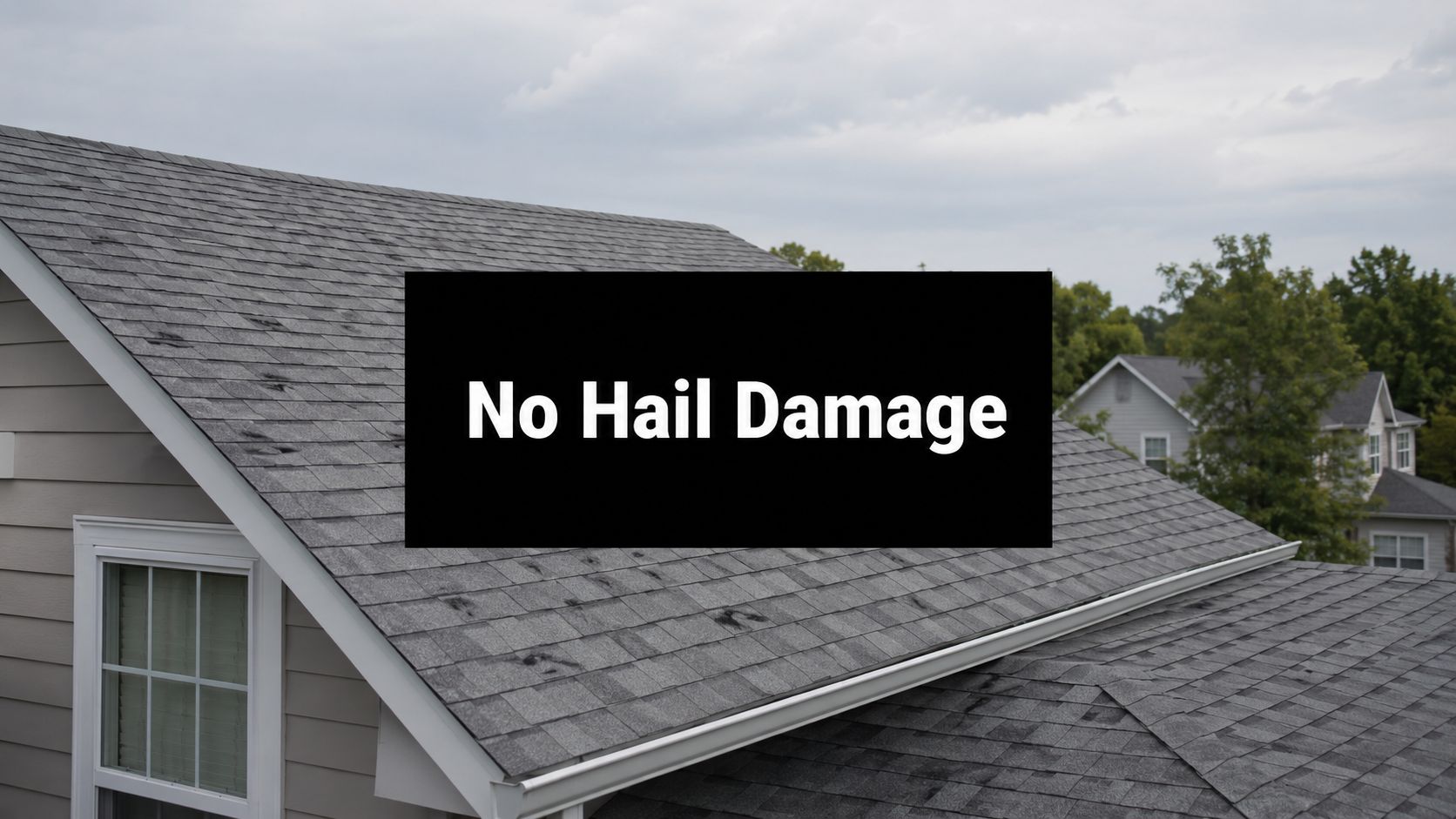
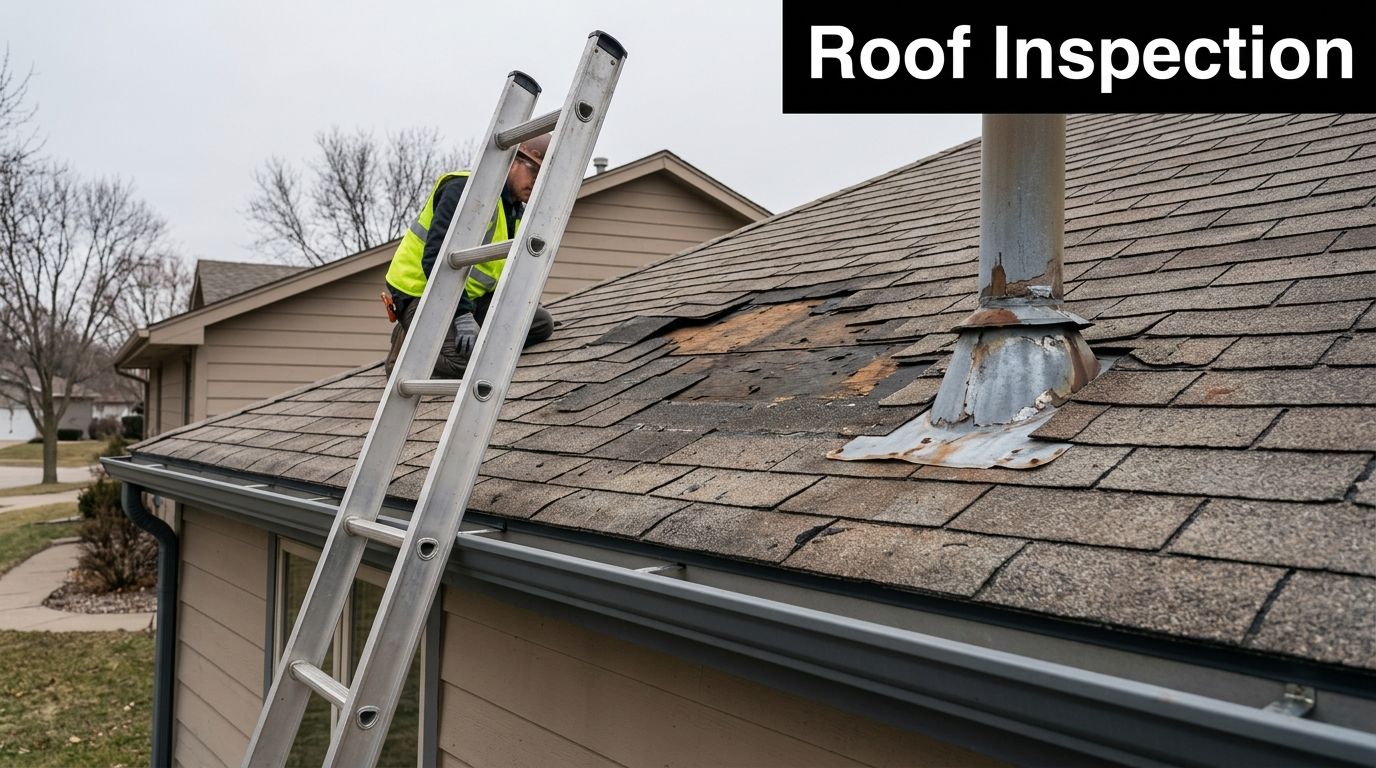
The roof usually tells the first part of the story. In Oregon and Washington, wind, branch impact, hail, smoke exposure, and prolonged rain can all turn a manageable repair into a larger claim if the inspection stops at ground level. Owners often photograph a missing shingle or two, then miss lifted flashing, damaged gutters, wet insulation, or staining in the attic that shows water traveled farther than expected.
Start outside, but don't stop there. Check ridges, valleys, penetrations, skylights, chimney flashing, gutters, downspouts, soffits, and the attic side of the roof deck. If water entered through the roof, your claim may involve insulation, framing, ceilings, contents, and even electrical components below.
What to document on the roof claim side
Use wide shots first, then close-ups. Insurers need context and detail. A photo of one torn shingle helps less than a sequence showing the roof plane, the damaged area, nearby vents, gutter impact, and matching interior stains below.
- Capture multiple angles: Photograph each slope, all elevations, and every transition point where water can enter.
- Use safe aerial documentation: If a drone operator is available, aerial images often show pattern damage more clearly than ladder photos.
- Compare before and after: Listing photos, prior inspection images, and satellite views can help establish pre-loss condition.
- Record roof specifics: Note approximate age, material type, manufacturer markings if visible, and any prior repairs.
A practical move after a storm is to line up a roofing specialist early. General adjusters sometimes note “repairable damage” before anyone checks for brittle shingles, widespread impact marks, or underlayment failure. If you need contractors who understand damage documentation, review roof inspection contractor guidance.
Practical rule: If attic staining, damp insulation, or daylight through the roof deck appears, treat the roof claim as a building-envelope claim, not just a shingle claim.
Seattle-area owners should also keep up with routine prevention. This kind of maintenance record can help show that the loss was sudden rather than neglected. Helpful seasonal context appears in these roof maintenance tips for Seattle homeowners.
2. Foundation and Structural Integrity
Structural damage is where many claims become technical fast. A foundation crack after flooding, fire suppression, or ground movement isn't just a cosmetic issue. It raises questions about causation, stability, water migration, and whether related framing or slab movement occurred elsewhere.
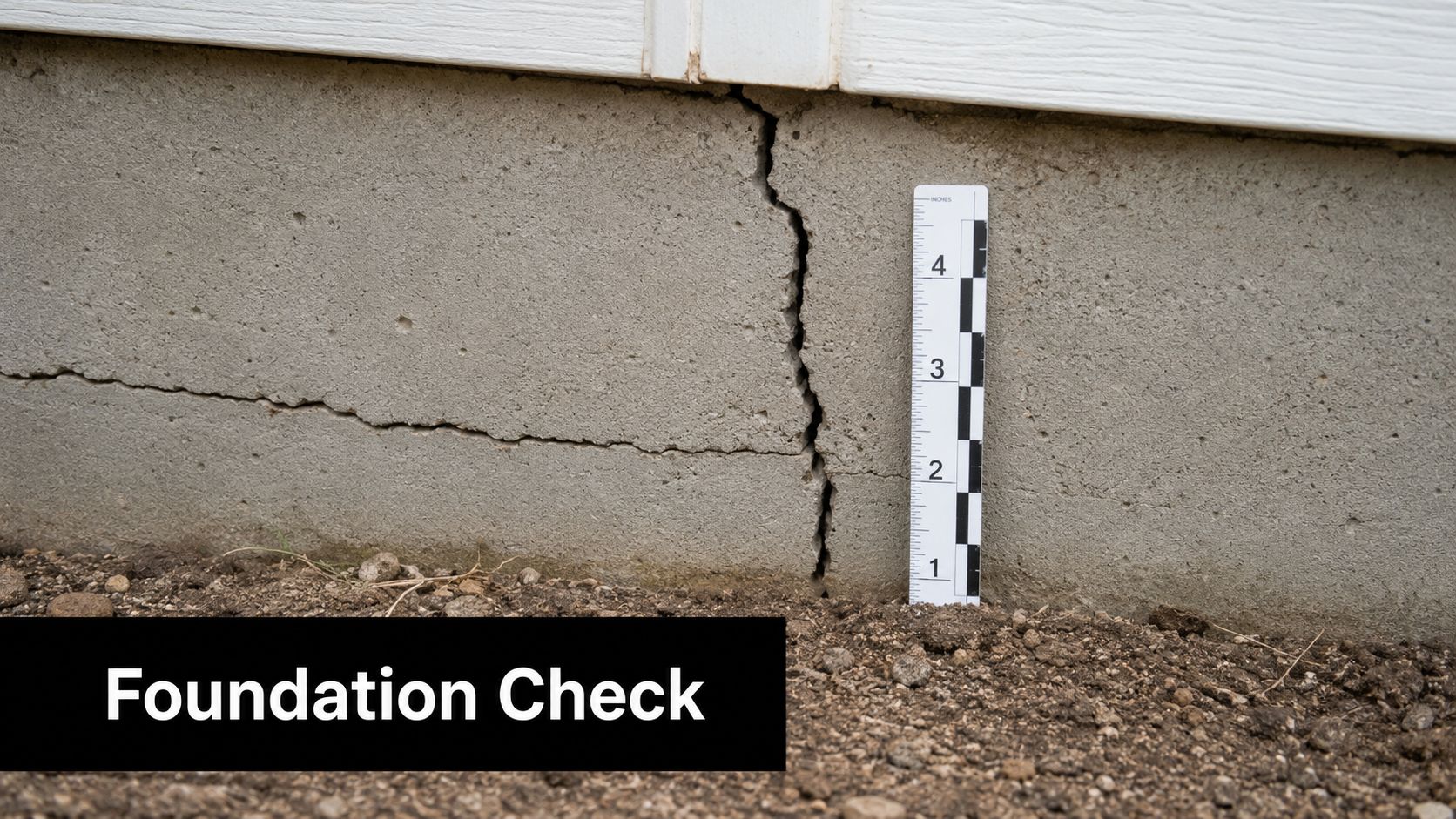
Walk the entire perimeter and every accessible basement, crawlspace, and slab area. Look for new cracking, widening gaps, displaced trim, sticking doors, sloped floors, separated masonry, and fresh water entry lines. In older Oregon and Washington buildings, the challenge is separating long-term settlement from a loss-related change. That's why comparative evidence matters.
Make the crack evidence usable
Photograph each crack with a ruler or scale in frame. Then step back and photograph the same area from farther away so the location is obvious. If a nonprofit facility or commercial property had prior capital planning records, preserve those too. They can show whether the movement predates the loss.
A system-by-system reporting structure is now standard practice in inspection reporting, grouping findings into components like foundation, exterior, plumbing, electrical, HVAC, and interior, rather than burying everything in one narrative, as described in home inspection report guidance. That's useful in structural claims because it keeps the foundation issue tied to related symptoms elsewhere in the building.
- Bring in an engineer early: Structural movement arguments are hard to win with casual photos alone.
- Preserve prior records: Old inspection reports, sale photos, and maintenance logs can help establish pre-loss condition.
- Map related symptoms: Include wall cracks, floor movement, and door misalignment in the same evidence set.
- Get specialized measurements: If movement is serious, survey data can strengthen the causation argument.
When structural movement may affect claim value, survey support can become part of the proof package. In such situations, surveyors in insurance claims can matter.
For owners dealing with accessory structures, sheds, or detached buildings, some practical maintenance context appears in this guide to preventing shed foundation problems.
3. Water Damage and Moisture Intrusion
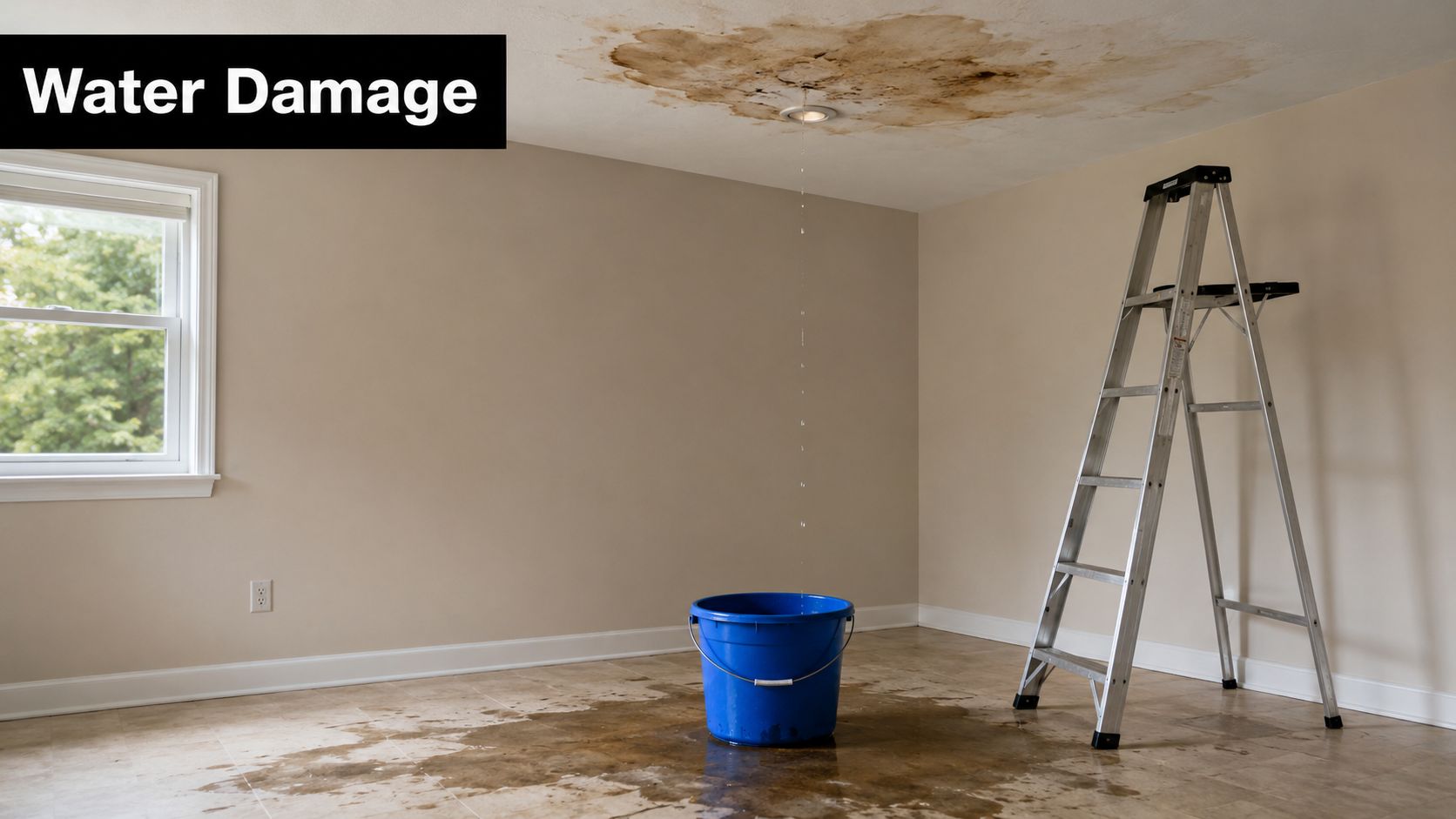
In the Pacific Northwest, water rarely stays where it starts. A roof leak can appear in a ceiling corner but travel through insulation and framing first. A burst pipe in a nonprofit office can wet carpet, drywall, cabinets, and electrical runs before anyone shuts off the supply. A good property inspection checklist has to track the path of water, not just the stain it leaves behind.
This is also where routine inspection habits and claim documentation diverge. Widely available checklists often cover roofs, plumbing, HVAC, and safety devices, but they usually stop short of the insurance-specific evidence insurers and adjusters look for, such as moisture migration paths, hidden damage indicators, room-by-room loss mapping, time-stamped media, and records of temporary repairs, as noted in this property inspection checklist use case discussion.
Follow the water, then preserve the proof
Start with the source if it's identifiable. Then inspect outward and downward. Ceiling stains, baseboard swelling, damp insulation, buckled flooring, cabinet toe-kicks, crawlspace moisture, and warped doors often belong to the same event.
Water claims get weaker when owners dry first and document later. Stop further damage, but preserve the original condition with photos and notes before materials disappear into a dumpster.
Use moisture meters or thermal imaging when available, but even without them, detailed room-by-room notes help. Record where water entered, what got wet, what was removed, and what temporary mitigation was performed. If contents were moved to dry areas, note that too.
If the loss is substantial or hidden moisture may affect walls and subfloors, it helps to coordinate with a restoration team that understands both drying and documentation. For that, see water damage restoration support in Bellingham.
4. Electrical System Damage
Electrical damage is easy to underestimate because much of it isn't dramatic. A charred outlet is obvious. A wet panel, compromised breaker, smoke-exposed wiring run, or damaged low-voltage control board often isn't. Yet these issues can affect safety, code compliance, and whether a building can be occupied or reopened.
Inspect the main panel, subpanels, breakers, outlets, switches, fixtures, hardwired alarms, visible wiring, and connected equipment. If the loss involved water, don't assume the system is fine because power came back on. If the loss involved smoke or fire, don't assume replacement is limited to visibly burned parts.
What insurers often miss first
Many initial inspections focus on “functional now” rather than “safely restorable.” That's a mistake. A commercial panel exposed to water or fire suppression may still energize circuits while remaining unsuitable for continued use. In older homes, even localized repairs can trigger code-related work once a licensed electrician opens the system.
At the inspection-practice level, strong checklists are expected to document what was inspected, what was not inspected and why, photo evidence for material issues, and severity categories so clients can separate immediate safety risks from deferred maintenance, as summarized in inspection industry practice guidance.
For owners, that means your electrical inspection notes should do more than say “outlet damaged.” They should answer four questions:
- Where is it located: Room, wall, panel, or equipment tag.
- What happened to it: Burned, wet, corroded, nonfunctional, or smoke-contaminated.
- Why does it matter: Safety hazard, occupancy issue, equipment outage, or code concern.
- What supports the claim: Photos, electrician findings, and replacement recommendations.
Call a public adjuster early when the electrical damage affects multiple circuits, a panel, life-safety devices, or business operations. Those claims tend to expand once qualified trades inspect them.
5. HVAC and Mechanical Systems
HVAC claims often get shortchanged because the equipment sits in basements, closets, rooftops, or mechanical rooms that nobody photographs first. But smoke, soot, moisture, and power events can damage furnaces, air handlers, heat pumps, mini-splits, controls, duct liners, and ventilation components long after surface cleanup looks complete.
In Oregon and Washington, that matters for habitability. If the building can't heat, ventilate, or manage indoor air quality properly, the loss affects more than comfort. It affects whether the property can safely function.
Don't settle for a wipe-down opinion
After a fire, some carriers lean toward cleaning visible surfaces and moving on. That can be appropriate in limited cases, but not when smoke or suppression water entered air pathways, insulation, or electronic controls. In a commercial property, a single damaged rooftop unit or failed control board can affect multiple suites or mission-critical operations.
Get a licensed HVAC contractor to inspect the entire system, not just the main cabinet. Ask for findings on burners, blower compartments, evaporator coils, duct interiors, thermostats, and control wiring. If the system is older, include model and serial information and note whether equivalent replacement parts are available.
A useful claim file includes repair-versus-replacement reasoning. If restoration is proposed, ask how the contractor will address contamination in ductwork, inaccessible insulation, or moisture exposure in controls. If replacement is recommended, ask for a full scope that includes startup, balancing, disposal, and connected components.
This is one of the clearest points to involve a public adjuster when the insurer treats HVAC as incidental damage even though the contractor considers it a core system loss.
6. Interior Finishes and Flooring
Interior finishes are where claim totals tend to accumulate. Drywall, insulation, paint, trim, doors, baseboards, flooring transitions, cabinet fillers, and texture matching rarely look expensive one item at a time. Taken room by room, they can represent a major portion of the loss.
The biggest mistake here is treating finishes as cosmetic only. Water, smoke, and fire don't damage rooms neatly. If one wall section is removed, adjacent texture, paint continuity, flooring tie-ins, and trim replacement usually become part of a practical repair scope.
Room-by-room beats broad descriptions
Don't write “smoke damage in hallway” and leave it there. Write what material was affected and how. Ceiling paint discolored, wall texture sealed with odor, engineered wood flooring cupped, baseboard swollen, closet doors smoke-stained, and so on. That level of detail makes estimates easier to compare later.
Industry practice has also moved toward standardized digital workflows. The property inspection software segment is projected to grow from about USD 1.78 billion in 2025 to USD 4.50 billion by 2035, implying a 9.7% CAGR, according to home inspection software market projections. For owners, the practical takeaway is simple. Good checklist documentation now depends less on a generic paper form and more on consistent issue capture, photo evidence, and structured report output.
Field note: When a contractor estimate lists only “paint and patch,” ask how they're handling texture match, floor transitions, trim removal, and finish continuity in adjoining areas.
Use full-room photos first, then wall-by-wall and floor-level details. In nonprofits and commercial spaces, include signage, specialty finishes, and functional built-ins that affect reopening.
7. Windows, Doors, and Exterior Openings
A damaged window or door is rarely just a glass claim. In a storm or fire loss, exterior openings become pathways for water, smoke, security issues, and additional interior damage. In the Pacific Northwest, failed seals and flashing details also matter because prolonged moisture can turn a simple opening repair into wall damage.
Inspect each opening from both sides. Open and close operable windows and doors if it's safe. Note cracked panes, warped frames, damaged hardware, smoke residue, failed seals, and water staining below sills. On commercial buildings, don't forget storefront systems, loading doors, and panic hardware.
Focus on envelope performance
If rain entered after a storm because a door frame shifted or flashing failed around a window, document the secondary damage in the same sequence. Exterior photo, close-up of frame or seal, interior photo of staining, then any wet flooring or wall finish below. That sequence tells a cleaner claim story than isolated photos.
Climate-driven losses also change the inspection priority. Public checklists often mention seasonal tasks like checking roofs, insulating pipes, or testing sump pumps, but they often fail to prioritize the hidden areas most likely to drive larger losses after severe weather. Guidance on landlord inspections highlights moisture, drainage, ventilation, attics, crawlspaces, flashing, sealants, and concealed moisture as high-value inspection points after extreme conditions, as discussed in this landlord property inspection checklist article.
For claims, that means a broken window isn't just broken glass. It may be the entry point that explains wet insulation, damaged trim, and mold risk in the wall cavity.
8. Cabinets, Countertops, and Built-In Fixtures
Kitchens, bathrooms, break rooms, classrooms, and office workspaces hold a lot of claim value in fixed components. Cabinets absorb water from the bottom up. Countertops can delaminate, crack from heat, or require disconnect and reset work. Built-in fixtures often look salvageable until installers price labor, finish matching, and plumbing reconnection.
Partial scopes can lead to owners getting trapped. An adjuster may allow one vanity cabinet door, while the contractor explains that the finish is discontinued and the box itself is swollen. Both statements can sound plausible until someone documents the assembly carefully.
Separate appearance from function
Open every cabinet and drawer. Check toe-kicks, end panels, interior boxes, shelves, hinges, pulls, and sink bases. In fire losses, inspect for heat distortion and soot inside enclosed spaces, not just outside faces. In water losses, check underside swelling, edge banding failure, and fastener corrosion.
A useful evidence package includes:
- Material identification: Thermofoil, laminate, painted wood, veneer, stone, solid surface, or composite.
- Damage location: Face, edge, underside, interior box, or anchoring point.
- Related trade impacts: Plumbing disconnect, countertop removal, backsplash work, flooring tie-in, and finish carpentry.
- Replacement matching issues: Discontinued lines, color mismatch, and inconsistent wear if only part is replaced.
In schools, churches, and nonprofit facilities, built-ins often include storage systems and specialty counters that don't fit a standard residential price list. That's another moment to bring in a public adjuster if the carrier uses oversimplified line items.
9. Contents and Personal Property Inventory
A structure claim can be documented by contractors. A contents claim usually depends on the owner. That's why personal property losses are so often underpaid. People remember the sofa and television, then forget linens, office supplies, seasonal décor, tools, children's items, archived records, kitchenware, accessibility equipment, and everything tucked into closets and storage rooms.
Use a room-by-room inventory. Start with the most damaged areas, then move to adjacent spaces where smoke, soot, water, or contamination spread. Photograph before disposal whenever possible. If items must be removed quickly for safety or mitigation, create a holding-area inventory and keep disposal records.
Build an inventory insurers can actually evaluate
The most useful list includes item description, brand if known, model if known, quantity, approximate age, condition before loss, and current replacement equivalent. For business and nonprofit claims, inventory should also identify whether the item is mission-critical, revenue-related, donor-funded, or part of a program function.
Some contents deserve separate treatment because policy language can be different. Jewelry, art, collectibles, musical instruments, specialty equipment, and certain electronics often require closer review. If you're unsure how those categories fit into coverage, this overview of scheduled personal property coverage is a good starting point.
“If you threw it away before listing it, you made the claim harder. If you photographed it, described it, and tied it to a room, you gave yourself leverage.”
For smoke and water losses, include soft goods, paper records, and items that appear intact but may not be economically restorable. In a nonprofit setting, damaged supplies can interrupt programs even when the building shell survives.
10. Commercial Property Systems and Equipment
Commercial and institutional losses don't stop at walls and finishes. They hit operations. A church may lose audio systems, kitchen equipment, and classrooms at once. A retailer may have point-of-sale hardware, surveillance, and display lighting down in multiple zones. A manufacturer or service business may face equipment downtime that matters as much as physical repair.
Document every system that keeps the property functioning. Fire alarm panels, access control, camera systems, elevators, commercial kitchen equipment, rooftop units, refrigeration, IT racks, server rooms, specialty lighting, donor or client databases, and production equipment all belong in the inspection process if they were exposed to fire, water, smoke, or power events.
Tie physical damage to operational impact
For commercial claims, photos alone aren't enough. Pair them with service records, serial numbers, manufacturer specs, maintenance contracts, and statements from vendors about repairability and lead times. If a damaged panel or system affects occupancy, code compliance, food safety, or data access, make that explicit in your notes.
A routine residential-style checklist won't capture this level of complexity. Commercial due diligence commonly goes further by incorporating capital expenditure projections and remaining useful life estimates for major systems, which is why more technical property condition assessments differ from a basic home checklist, as explained in the earlier cited inspection-practice guidance. That same mindset helps when a commercial insurance claim turns on whether equipment should be repaired, replaced, or upgraded to restore operations.
If the loss affects reopening, tenant continuity, or mission delivery, bring in claim support early. Commercial owners can review commercial property restoration resources when planning next steps.
This is also the clearest point to involve a public adjuster like NW Claims Management. Once a claim includes equipment, business interruption, multiple trades, or occupancy issues, the dispute usually isn't about whether damage exists. It's about scope, valuation, and time.
10-Point Property Inspection Comparison
| Component | 🔄 Implementation complexity | ⚡ Resource requirements | ⭐ Expected outcomes | 📊 Ideal use cases | 💡 Key advantages / Tips |
|---|---|---|---|---|---|
| Roof and Attic Inspection | 🔄🔄🔄🔄 (High: access, elevation) | ⚡ Ladder/PPE, drone, high-res camera, roofer | ⭐⭐⭐⭐ (High value evidence) | 📊 Post-storm, hail, fire assessments | 💡 Use drone + multi-angle photos; document shingles, flashing, attic stains |
| Foundation and Structural Integrity | 🔄🔄🔄🔄🔄 (Very high: technical) | ⚡ Structural engineer, survey/elevation data, instruments | ⭐⭐⭐⭐⭐ (Critical for large claims) | 📊 Flooding, seismic events, major settlement | 💡 Engage engineers early; photograph cracks with scales and obtain multiple estimates |
| Water Damage and Moisture Intrusion | 🔄🔄🔄🔄 (High: hidden issues) | ⚡ Moisture meters, thermal camera, restoration contractor | ⭐⭐⭐⭐ (Extensive restoration potential) | 📊 Burst pipes, flooding, roof leaks | 💡 Extract and document immediately; use thermal imaging and preserve samples |
| Electrical System Damage | 🔄🔄🔄🔄🔄 (Very high: safety/testing) | ⚡ Licensed electrician, testing gear, panel inspection tools | ⭐⭐⭐⭐ (Safety-critical; may uncover hidden loss) | 📊 Fire, water intrusion, lightning strikes | 💡 Obtain electrician reports and itemized estimates; include code upgrade needs |
| HVAC and Mechanical Systems | 🔄🔄🔄🔄 (High: specialized) | ⚡ HVAC technician, refrigerant handling tools, diagnostic tests | ⭐⭐⭐⭐ (Significant equipment & installation costs) | 📊 Smoke/fire damage, mechanical-room water intrusion | 💡 Get licensed tech estimates; include efficiency and code upgrade options |
| Interior Finishes and Flooring | 🔄🔄🔄 (Moderate) | ⚡ Contractors, material samples, room-by-room estimates | ⭐⭐⭐ (Material and labor significant) | 📊 Water or smoke damage to finishes and floors | 💡 Produce room-by-room estimates; separate demo from replacement costs |
| Windows, Doors, and Exterior Openings | 🔄🔄🔄 (Moderate) | ⚡ Window/door contractors, replacement quotes, hardware lists | ⭐⭐⭐ (Standardized replacement costs) | 📊 Storm breakage, fire-damaged openings, water intrusion | 💡 Obtain replacement quotes (not just repairs); document interior/exterior views |
| Cabinets, Countertops & Built-Ins | 🔄🔄🔄🔄 (Moderate–High: custom work) | ⚡ Cabinetmakers, countertop suppliers, multiple contractor bids | ⭐⭐⭐⭐ (Material choices affect claim value) | 📊 Kitchen/bath water or fire damage | 💡 Separate cabinetry, countertops, and installation costs; document original specs |
| Contents & Personal Property Inventory | 🔄🔄🔄🔄 (High: time-consuming) | ⚡ Inventory specialists, photos, receipts, spreadsheets | ⭐⭐⭐⭐ (Can substantially increase recovery) | 📊 Fire, flood, total-loss scenarios with extensive contents loss | 💡 Start room-by-room immediately; use high-res photos and maintain receipts/spreadsheets |
| Commercial Property Systems & Equipment | 🔄🔄🔄🔄🔄 (Very high: specialized & financial) | ⚡ Equipment specialists, manufacturer specs, financial records for BI | ⭐⭐⭐⭐⭐ (High replacement + business interruption) | 📊 Commercial fires, server/technology failure, kitchen/equipment loss | 💡 Engage specialists early; document business interruption with detailed financials |
Take Control of Your Claim When to Call an Expert
A strong property inspection checklist gives you something most policyholders don't have in the first days after a loss. It gives you structure. Instead of reacting to chaos, you start building an evidence file. You identify what was damaged, where the damage spread, what needs immediate mitigation, and what the insurer still hasn't seen.
That matters because the checklist itself is part of a larger shift in inspection practice. Modern inspections are no longer casual walkthroughs. They are structured, repeatable documentation processes built around major systems, severity, photo evidence, and actionable records that can support maintenance, disputes, and claims. For property owners in Oregon and Washington, that's especially important after storms, water losses, fire events, vandalism, and smoke contamination, where hidden damage often matters as much as visible damage.
Still, documentation alone doesn't settle a complicated claim. At some point, the issue becomes interpretation. Does the insurer recognize full roof scope or only spot repair. Does moisture behind walls get included or left out. Are HVAC systems treated as cleanable when the contractor says they are not. Is structural movement tied to the covered event or dismissed as pre-existing. Are contents valued realistically or reduced to the lowest possible line-item view.
That's where many owners lose ground. They're busy securing the property, relocating occupants, answering contractor questions, and trying to keep daily life or operations going. The insurer, by contrast, handles claims every day. Their representatives know how to narrow scope, challenge causation, and delay commitments while more evidence disappears with cleanup.
Call a public adjuster early when any of these conditions exist:
- The damage affects multiple systems: Roof, interior, electrical, HVAC, and contents all at once.
- The loss includes hidden damage risks: Moisture in cavities, smoke in ductwork, or structural movement.
- The property is commercial or nonprofit: Operational losses, specialty equipment, and reopening deadlines raise the stakes.
- The insurer seems to be minimizing scope: Partial estimates, repeated inspections, or vague reservations are warning signs.
- You don't have time to manage the claim properly: Most owners don't, especially during recovery.
NW Claims Management represents policyholders, not insurers. That distinction matters. A public adjuster works to document the full loss, interpret policy language, coordinate evidence, and push for a settlement that reflects what it takes to repair, replace, and recover. In Oregon and Washington, where losses often involve water intrusion, storm damage, smoke spread, and layered repair scopes, that advocacy can change the outcome of the claim.
Use this checklist immediately after a loss. Photograph first. Stabilize second. Save damaged materials when practical. Keep every invoice, mitigation note, and contractor opinion. If the claim is significant, disputed, delayed, or bigger than you can manage alone, bring in expert help before the record is set by someone else.
If your home, business, school, church, or nonprofit property in Oregon or Washington has suffered fire, water, storm, vandalism, or smoke damage, NW Claims Management can help you document the loss, interpret your policy, and pursue a fuller settlement. The firm works exclusively for policyholders, offers free claim evaluations, and supports residential, commercial, and nonprofit owners who need experienced advocacy from the first inspection through final negotiation.