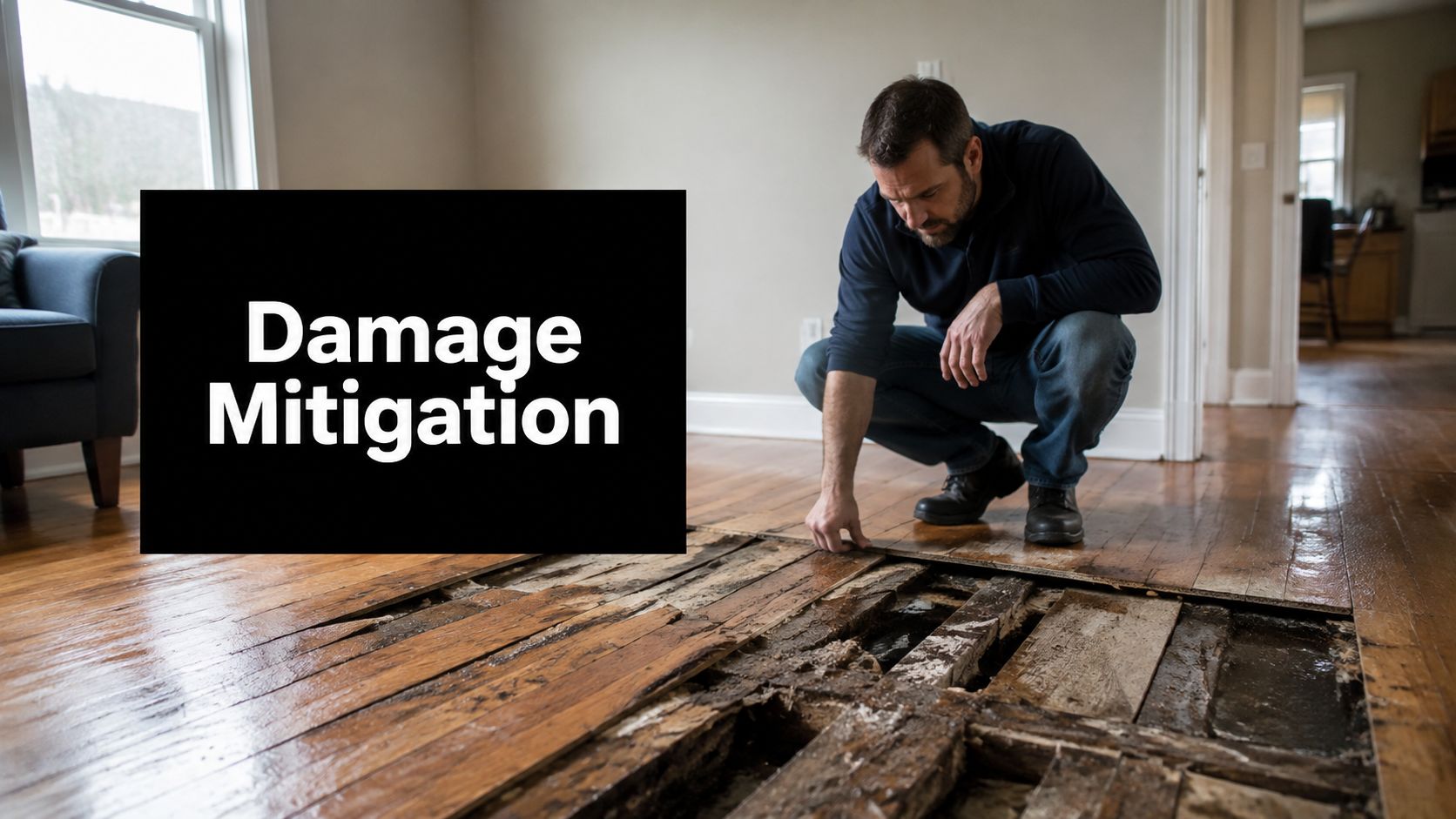
You just found water creeping under the baseboard, or you came home to a roof leak after a windstorm, and now the clock is already running. In that moment, your insurer is going to care less about the shock you're in and more about what you did next. Mitigation of damages is where good claims are won or lost, because post-loss decisions shape whether the carrier pays for the full scope of damage or starts arguing that some of it was avoidable.
The hard truth is that insurers love to use vague “duty to mitigate” language as a weapon. The legal rule is narrower and more practical than they make it sound, and the burden is not on you to prove perfection. It's on the other side to prove a failure to act reasonably and the amount of harm that failure supposedly caused, which is why documentation and timing matter so much from day one. For a broader preservation checklist, keep evidence preservation guidance close while you work through the first response.
The Critical First 72 Hours After Property Damage
The first three days after a loss are not about being heroic. They're about stopping preventable damage, keeping receipts, and avoiding the kind of mistakes insurers later call “failure to mitigate.” If you wait around for permission while water keeps spreading or a broken opening stays exposed, the carrier may try to shift the blame for the extra damage onto you.
A homeowner I'd take seriously is the one who finds a burst pipe on a Sunday night, shuts off the water, photographs the room, calls for extraction, and keeps the invoice. That person is protecting the claim. The one who waits until Wednesday because they're still trying to decide whether the insurer will cover the work gives the carrier room to argue that the secondary damage didn't have to happen.
What to do first
Start with safety, then containment, then evidence. If the structure is unsafe, stay out. If it's safe to enter, stop active damage, protect what's salvageable, and document everything before anything gets moved.
Practical rule: Do the minimum necessary to prevent more loss, then write down exactly what you did and why.
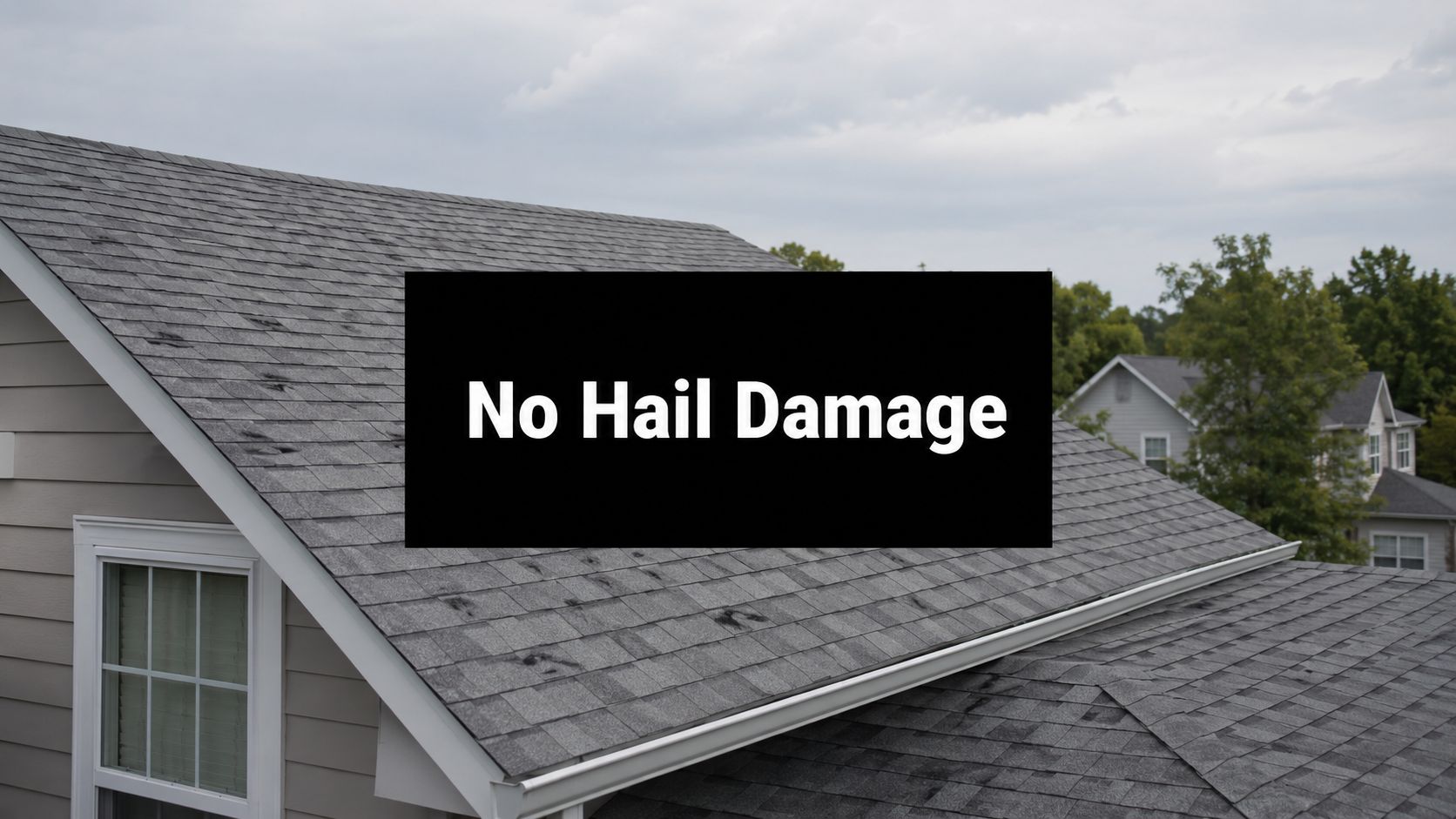
For storm or roof damage, temporary measures matter. A homeowner asking will insurance pay for a new roof still needs to understand that the insurer will look at what was done right after the loss, not just the final repair request. If openings were left exposed, the carrier may argue that later interior damage was avoidable.
Keep the record while the facts are fresh
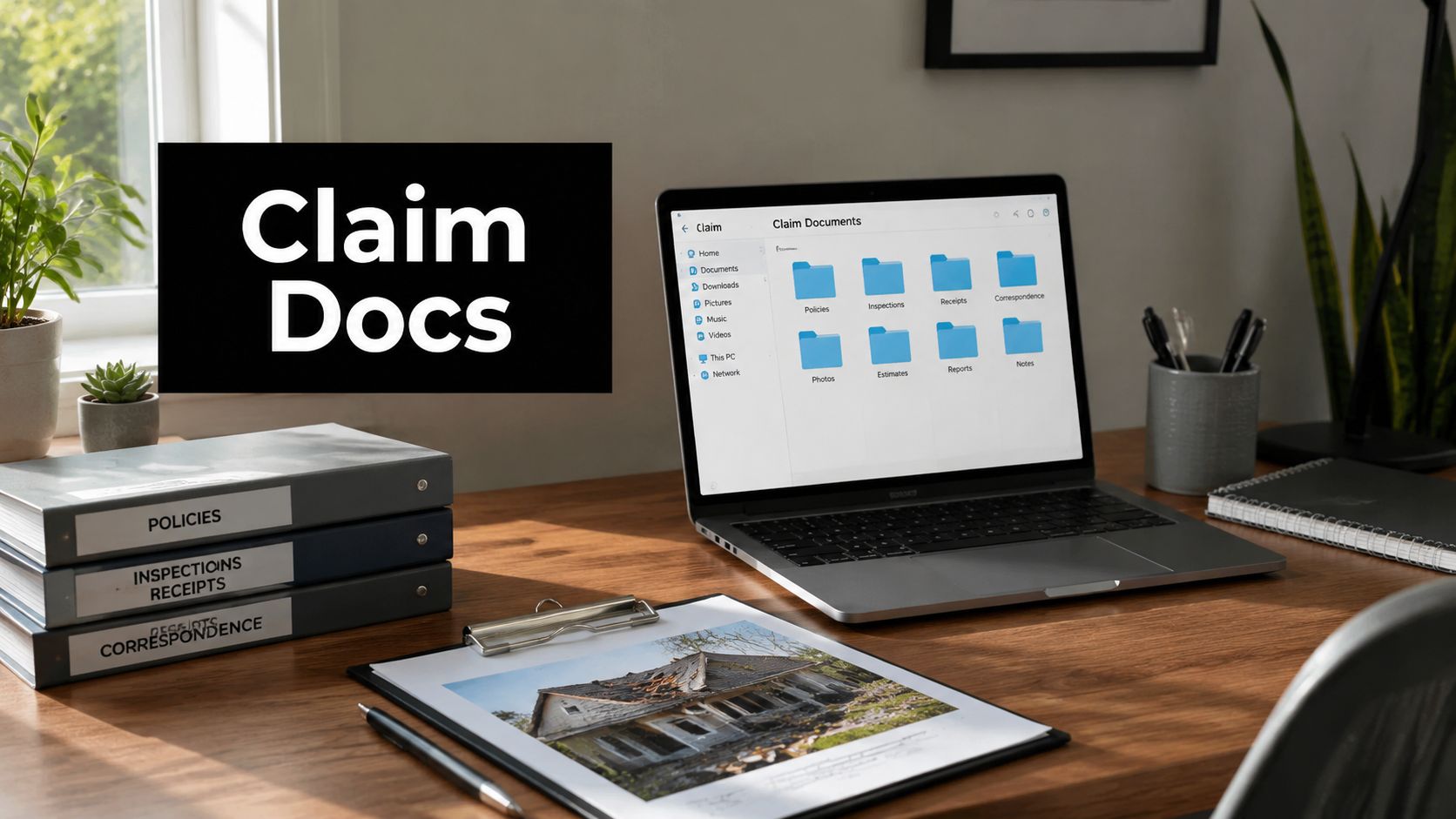
Write down the time you discovered the loss, who you called, what they said, and what emergency work started. Save every receipt, even for tarps, dry-out work, boarding, and temporary protection. When you later move into the claim process, those early notes become the story the insurer has to contend with, not the other way around.
If the damage involves fire, smoke, or water intrusion, don't clean away proof before you've documented the scene and understood what's needed for the claim. Emergency action and evidence preservation go together. One protects the building, the other protects the value of the claim.
What Mitigation of Damages Actually Means for Your Claim
Mitigation of damages does not mean you erase the loss or choose the cheapest path. It means you take reasonable steps to prevent avoidable extra damage. That distinction matters because the law treats mitigation as a limit on recovery, not as a demand that you become your own restoration contractor.
The legal framework is simple once you strip away the jargon. You can't recover for damage you could have avoided with reasonable effort. You can recover reasonable costs spent trying to stop further loss. And you can't recover losses that were avoided by those efforts. The point is fairness, not punishment.
Reasonable doesn't mean cheap
A broken window after a storm should be boarded, not left open because the least expensive route is to “wait and see.” A leak should be extracted and dried, not ignored because a contractor quote hasn't come back yet. Those are ordinary, reasonable steps to prevent more damage, and the costs of taking them are part of the loss picture when they're justified.
The law also recognizes that mitigation can require spending money up front. That's the part many owners miss. If the emergency work is reasonable, the expense itself can be recoverable, which is exactly why a carrier shouldn't be allowed to shame a policyholder for paying to stop the damage from getting worse.
The line insurers try to blur
Insurers often speak as if mitigation means you had to do everything immediately, perfectly, and cheaply. That's not the rule. The actual standard is reasonableness, which leaves room for safety, access problems, contractor availability, and the fact that people aren't operating at full speed while dealing with a loss.
For claim handling, that distinction is critical. A temporary repair, emergency dry-out, or boarding measure can be the right choice even if it isn't the final fix. If the carrier wants to argue otherwise, it has to show why your response was unreasonable and how that allegedly increased the loss. The claims process doesn't reward carriers for vague criticism, and claim processing steps should never be treated like a substitute for real loss control.
Who Bears the Burden of Proof in Mitigation Disputes
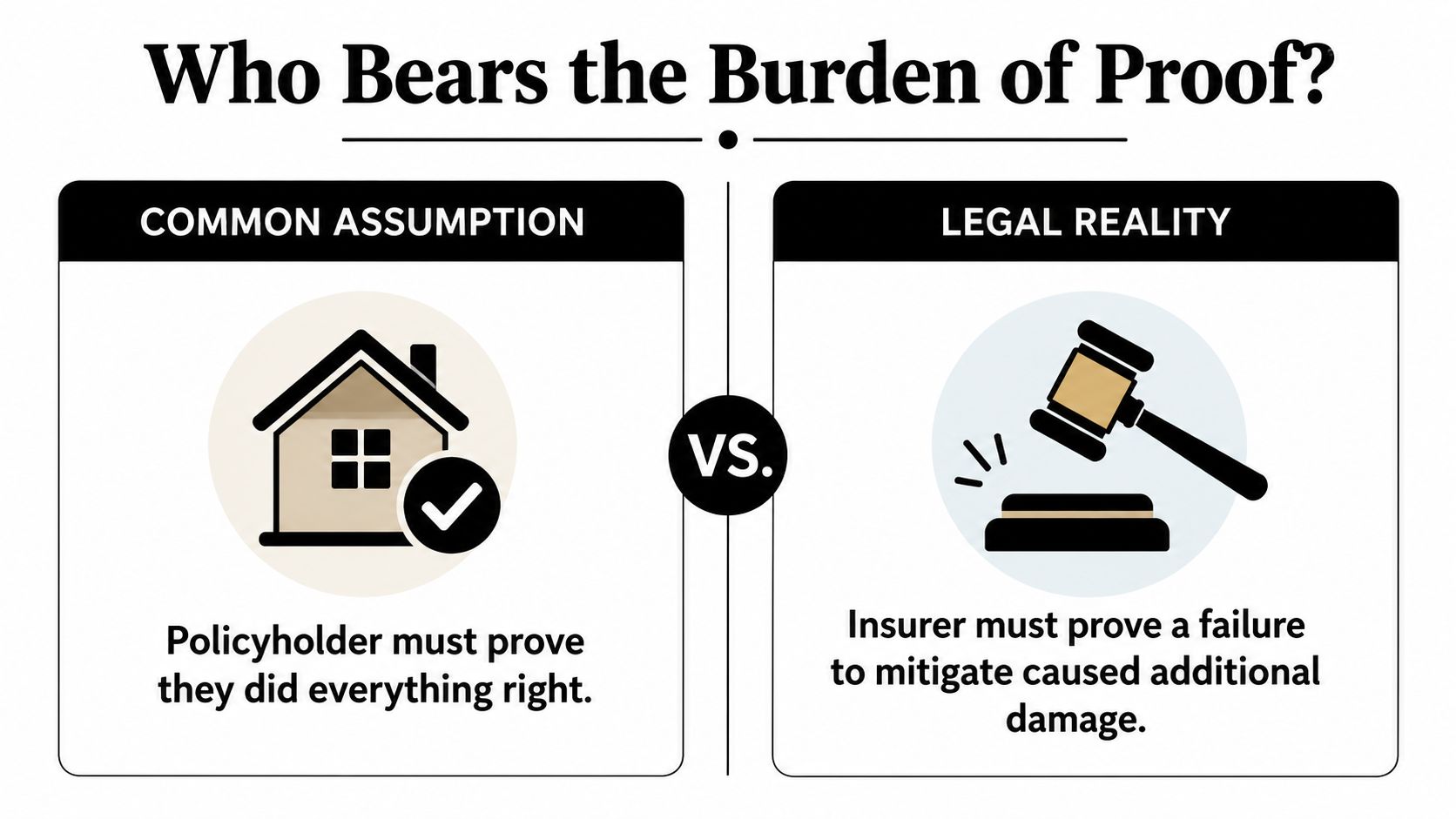
A carrier says you should have stopped the damage earlier. That accusation does not end the analysis. In mitigation disputes, the insurer or defendant generally has to prove both the failure to mitigate and the amount of extra damage it claims resulted from that failure. The Ninth Circuit civil instructions and California jury guidance both reflect that burden, and that shift matters because it changes how you build the claim from the start.
The practical effect is straightforward. If a carrier argues that you let the loss spread, it has to identify the reasonable action you supposedly skipped and tie that choice to specific additional damage. That is a harder task than repeating that the property owner “should have done more.” It forces the insurer to prove causation, not just criticize the response.
What preponderance of the evidence means in plain English
Preponderance of the evidence means the insurer has to make its version more convincing than yours. Not perfect, not certain, just more likely than not. In a mitigation dispute, that usually means the carrier needs records, timelines, photos, inspection notes, and a credible way to connect the alleged delay to actual added damage.
That is why the file you build on day one matters more than a polished explanation later. If you called for service, took emergency steps, and documented the loss as it developed, the insurer has a much harder time claiming you sat on your hands. If all you have is a rough memory and a few texts, the carrier gets more room to shape the story.
How carriers try to build the argument
They usually reach for three points. First, they claim the response was too slow. Second, they say a different contractor would have been cheaper or better. Third, they argue that some part of the damage should have been prevented.
The answer is not a speech. It is dates, photos, invoices, and written instructions.
That is also why a proof of loss package should never be built from memory alone. If you have contemporaneous notes, emergency invoices, and a clean timeline, you are in a much stronger position than the owner who tries to reconstruct everything weeks later after the insurer has already written its version of events. A well-prepared proof of loss form helps anchor that record and makes it harder for the carrier to rewrite the facts.
Practical Mitigation Actions by Disaster Type
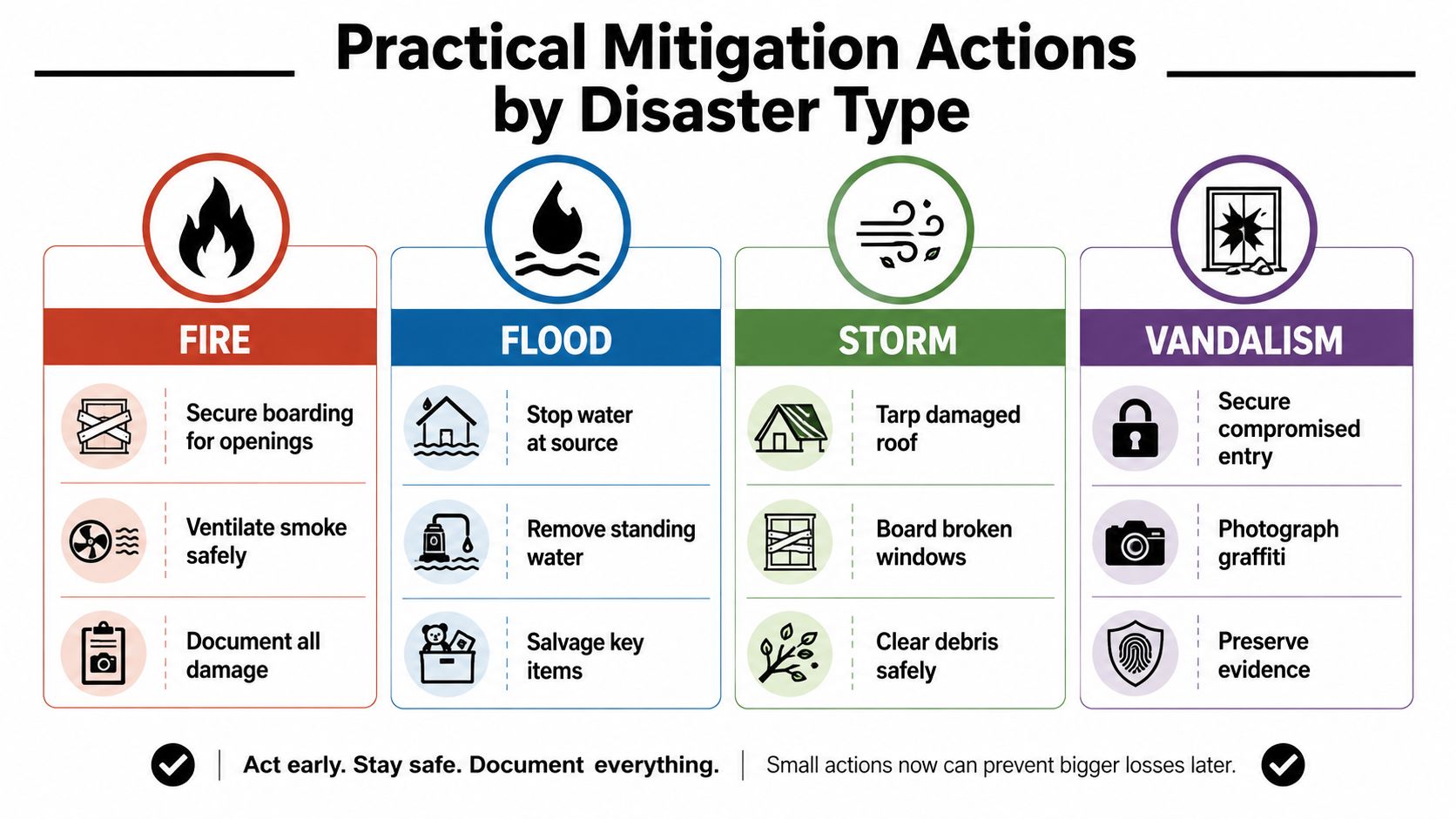
Different losses call for different responses, but the logic stays the same. Stop further damage, protect salvageable property, and document what happened while it's still visible. Fire, flood, storm, and vandalism each create their own risk of secondary loss, and each one gives insurers a different angle if you leave the scene vulnerable.
Fire damage
After a fire, the structure may be exposed to weather, smoke residue, and water from firefighting. Secure openings, protect undamaged contents, and document soot, charring, and moisture before anything gets cleaned. If the damage spreads because the building is left open, the carrier may try to separate what came from the fire from what came later.
Flood and water damage
Water damage moves fast. Extract standing water, dry the structure, and prevent mold conditions as quickly as you reasonably can. If the source is still active, stop it first. If you need help, emergency water extraction services are often the right answer when the loss has already passed the point where a homeowner can control it alone.
Storm damage
For storm losses, the immediate job is to stop new water intrusion. Tarp damaged roofing, board broken windows, and clear debris that's creating a hazard or blocking access. Keep the receipts for temporary work, because those costs are often part of the mitigation story if they were reasonable and necessary.
Vandalism
With vandalism, the building needs to be secured fast. Photograph graffiti, broken entry points, and damaged contents before cleanup starts. Preserve evidence of forced entry or trespass, because once it's gone, the claim gets harder to prove.
The common thread is boring but powerful. Reasonable mitigation is not about doing everything. It's about doing the right things fast enough to prevent a second loss from swallowing the first one. For a broader set of restoration considerations, property restoration tips can help you think through cleanup without losing sight of claim documentation.
Common Pitfalls That Undermine Legitimate Claims
The biggest mistake I see is waiting for insurer approval before taking emergency action. That delay hands the carrier an easy argument that the extra damage could have been avoided. You do not need to stand in a flooded room waiting for someone in an office to approve basic protection.
The next mistake is chasing the lowest bid as if price alone proves reasonableness. It does not. A cheap contractor who skips dry-out steps, leaves the structure exposed, or ignores code and safety issues can create a bigger claim dispute later. The carrier cares whether the work was reasonable and necessary, not whether it was the cheapest option on paper.
Documentation beats verbal explanations
A phone call helps. A follow-up email helps more. Photos, invoices, moisture logs, and dated messages are what protect you when the adjuster starts asking why something was not done sooner. If you had a legitimate reason for the delay or the repair choice, put it in writing right away while the timeline is still fresh.
Do not rely on memory after the fact. The claim file will outlast your recollection.
The next trap is telling yourself, “I was going to fix it myself.” That is not mitigation if the delay lets the damage spread. It also gives the insurer more room to argue that you failed to protect the property. Reasonable mitigation does not require you to do unsafe or specialized work personally.
Internal rules and local building requirements can also be used against owners when they are ignored, especially on mold and water claims. The carrier may try to turn vague duty to mitigate language into a denial tool, and insurance adjuster tricks often start with that kind of excuse. The burden shifts fast if your file is thin. Silence, missing photos, and sloppy records give the insurer exactly what it wants, a reason to reduce or deny payment. For a broader set of cleanup considerations, Purified Air Duct Cleaning restoration tips can help you think through restoration without losing sight of claim documentation.
How NW Claims Management Protects Your Mitigation Compliance
A good public adjuster turns mitigation from guesswork into a managed process. NW Claims Management works as a claim advocate for property owners, so the immediate response, the paper trail, and the repair scope all line up with what the carrier will later scrutinize. That matters because the wrong emergency decision can become an argument for a reduced settlement.
The practical value is in contemporaneous documentation. When emergency work starts, the file should already be organized with photos, invoices, contractor notes, and a record of why each step was taken. That kind of record is harder for an insurer to dismiss because it shows reasonableness at the moment the loss was unfolding, not months later in an argument over money.
Why this changes the claim dynamic
Public adjusters also help owners avoid being pushed into unfair choices. If an insurer demands a vendor or rejects a reasonable emergency step, the response should be based on the loss facts and the policy language, not intimidation. A firm that handles mitigation-related disputes can separate legitimate emergency work from carrier tactics that are designed to narrow the payout.
That's where NW Claims Management fits naturally into the process. The firm's role is to interpret the loss, document it, and negotiate it from the policyholder's side, while keeping the claim aligned with what was reasonable on the ground. For owners in Oregon and Washington, that also means local code and weather realities are part of the conversation, not an afterthought.
What policyholders should expect
You should expect straight answers, written support, and a claim file that can survive scrutiny. You should not expect to be blamed for acting quickly to stop damage. The carrier can question a loss, but it shouldn't be allowed to punish a policyholder for making sensible emergency decisions.
Your Mitigation Action Plan and Next Steps
The safest move after property damage is straightforward. Stop active loss, document the scene, keep every receipt, and avoid any delay that lets the damage spread. If the claim is already getting complicated, or if the insurer is hinting that you “should have done more,” get help before you hand them an opening.
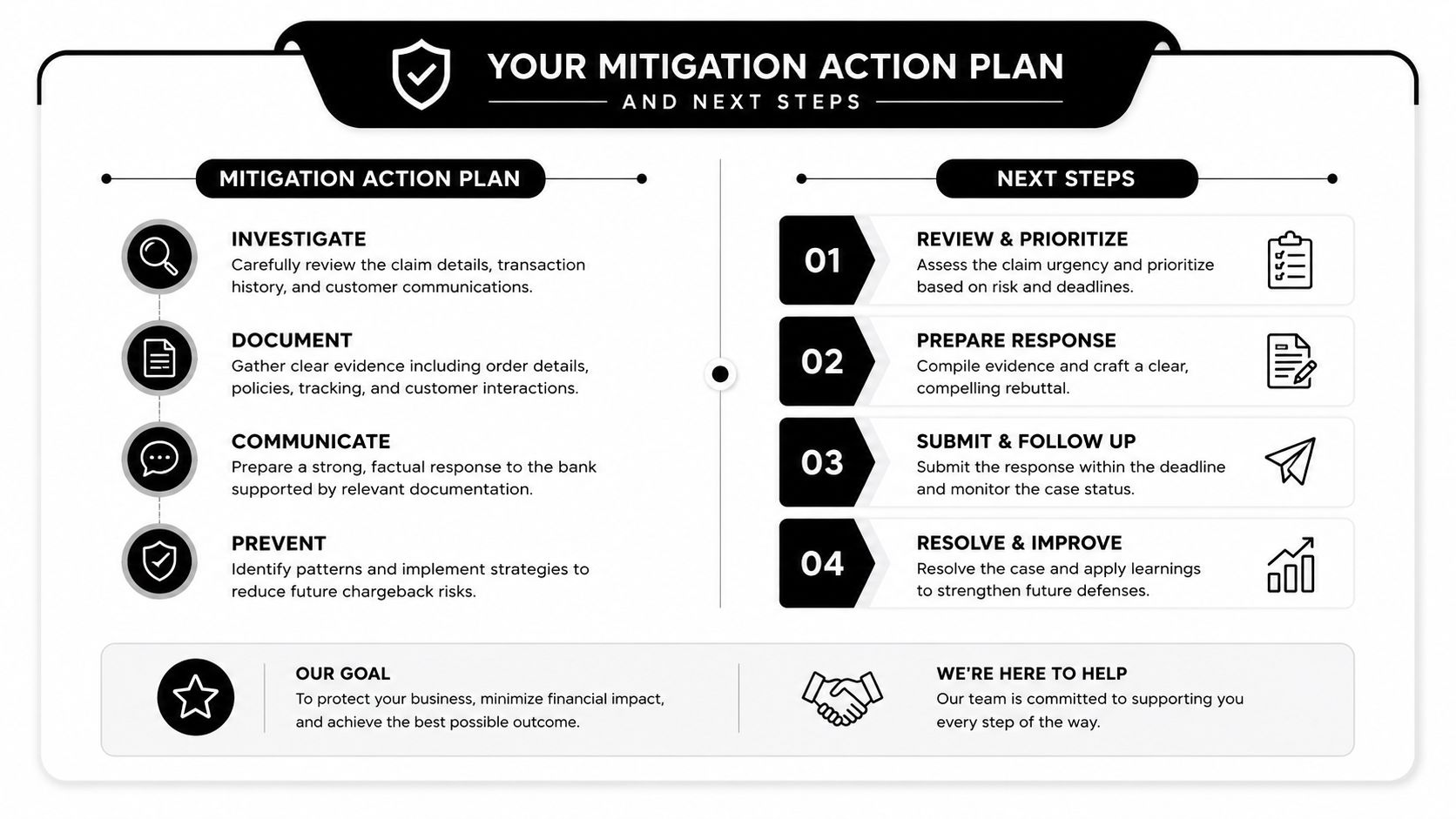
Use this simple rule set. First, protect people and property. Second, preserve evidence and keep a written timeline. Third, document every mitigation expense so it can be tied back to the loss. If the carrier starts turning “duty to mitigate” into a denial strategy, that's the moment to bring in a licensed public adjuster who can push back with facts, not guesses.
NW Claims Management handles property claims from emergency response through settlement, including documentation, scope review, and negotiation on the policyholder's side. If you're dealing with fire, flood, storm, or vandalism damage and you want someone to pressure-test the insurer's mitigation arguments, visit NW Claims Management and request a free claim evaluation.