A contractor finishes work at a commercial property in Oregon. Months later, a water loss damages several tenant spaces, and the owner expects the contractor's liability policy to respond because the owner was listed as an additional insured. The certificate appears to confirm it. Then the carrier asks for the endorsement itself, separates the loss into ongoing and completed operations, and questions whether the damage was caused by the contractor's work at all.
That is where an additional insured endorsement stops being a contract-management formality and becomes a claim issue. The endorsement can provide valuable access to another party's liability coverage, but the protection is limited by the exact form, edition, schedule, policy terms, and applicable law. A certificate or contract clause may support the claim, but it usually cannot replace the policy language that grants coverage.
When Additional Insured Status Becomes a Claim Problem
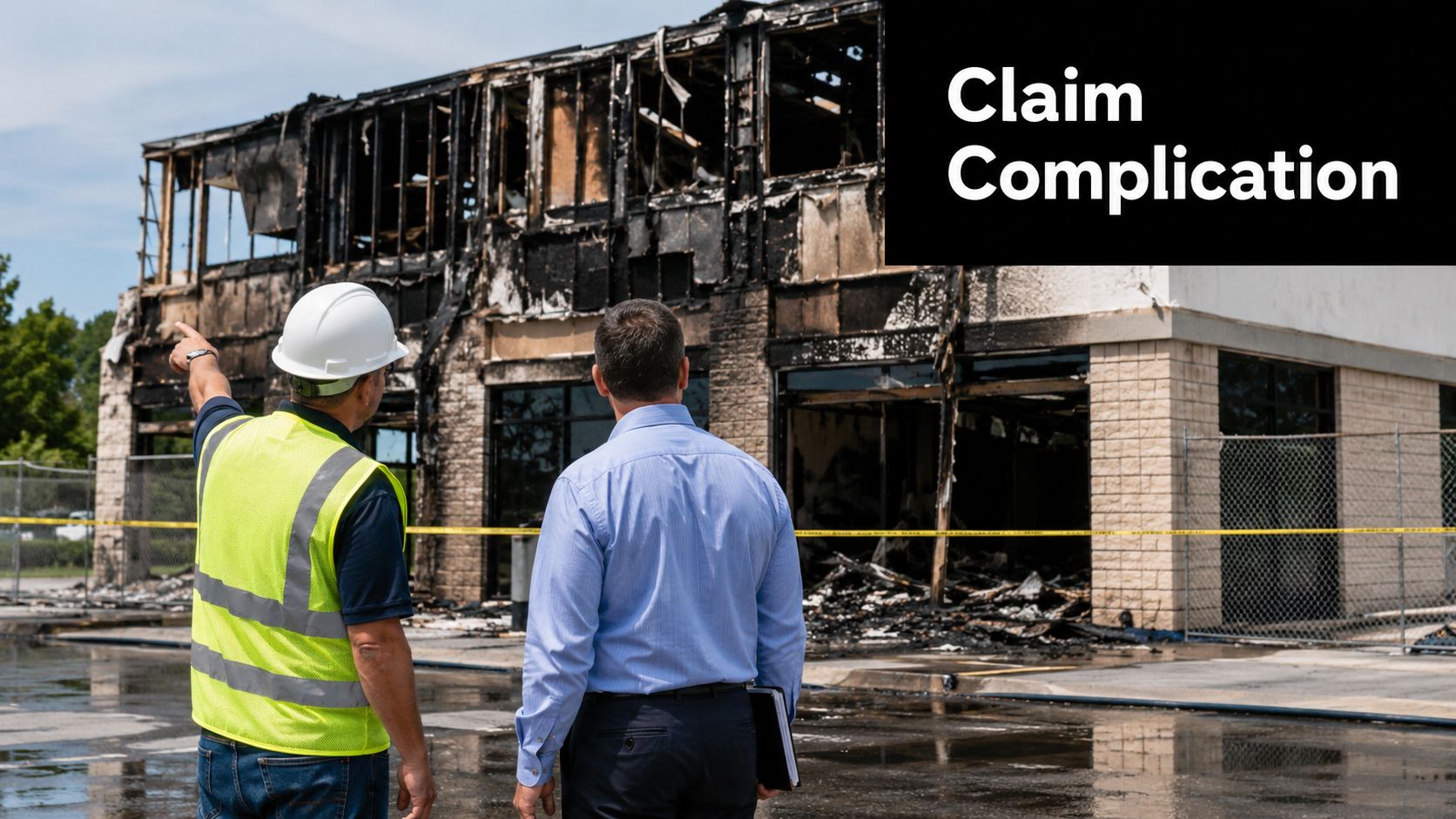
A commercial building fire often produces several overlapping theories of responsibility. The electrical contractor may be accused of defective work. The property manager may be blamed for maintenance decisions. The building owner may face claims from tenants, while a municipality or public entity may be involved because it owns the premises or issued permits.
Suppose the contractor added the owner as an additional insured under its Commercial General Liability policy. After the fire, the owner tenders the claim to the contractor's carrier. The insurer doesn't ask whether the owner's name appears on a certificate. It examines whether the endorsement covers the specific liability, whether the contractor's operations caused or contributed to the damage, and whether the work was still ongoing when the loss occurred.
Practical rule: Treat additional insured status as a coverage question, not as proof that another insurer will automatically pay the property claim.
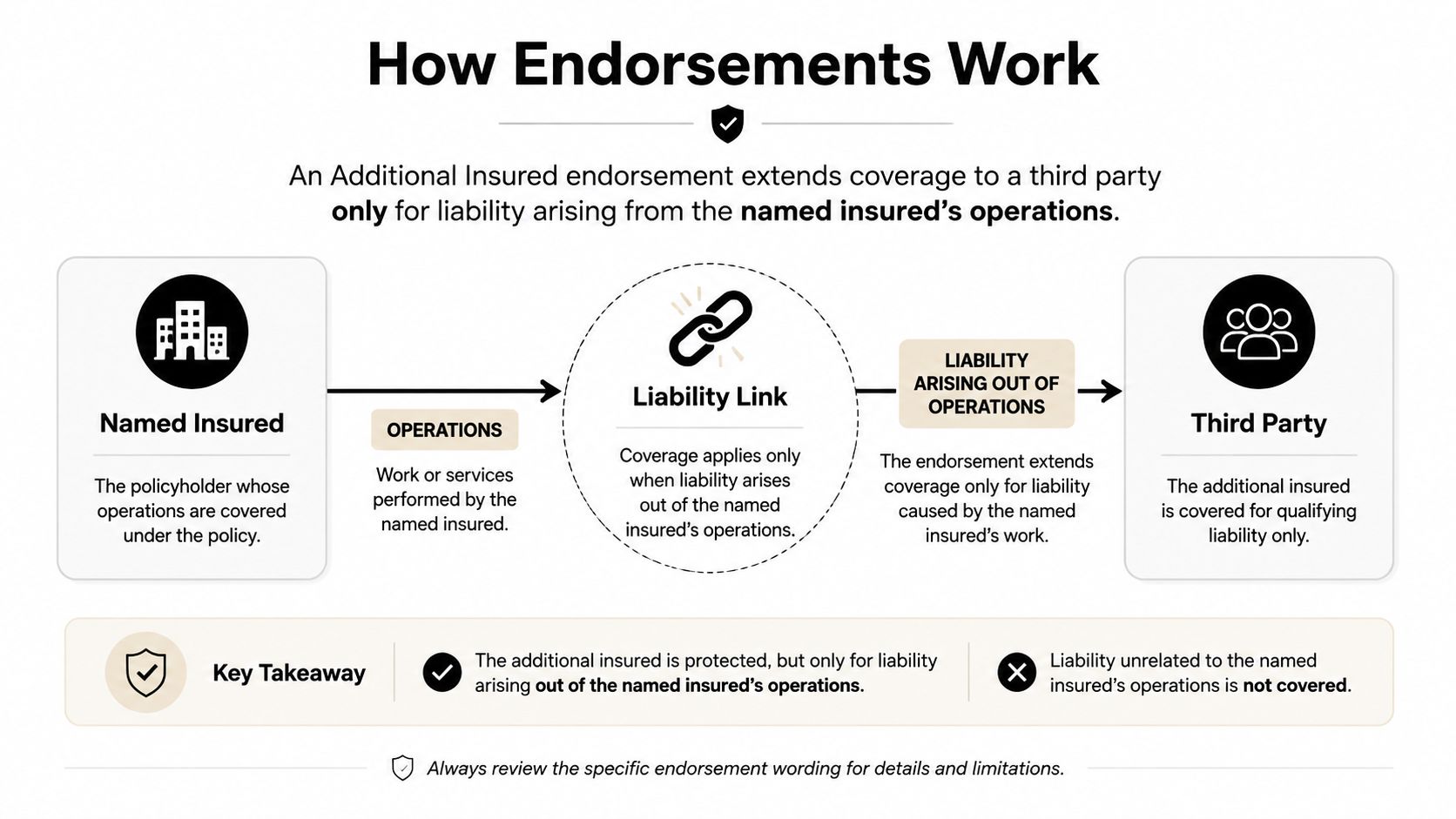
An additional insured endorsement extends insured status to a third party for liability connected to the named insured's operations, premises, or completed work. It doesn't turn the third party into a full named insured, and it generally doesn't insure the additional insured for liability caused solely by that party's own conduct. The result is a narrower form of protection that depends on wording and scheduling, as explained in this overview of additional insured coverage.
Why the dispute starts after the loss
The underlying contract may require the contractor to defend, indemnify, and insure the owner. But the insurer looks first to the endorsement attached to the policy. If that endorsement applies only to ongoing operations, a defect discovered after completion may fall outside its grant. If the wording requires a causal connection to the contractor's acts or omissions, the owner may need evidence tying the fire or water damage to that work.
A certificate can make the file look complete while leaving the most important document missing. Before assuming the carrier must defend or indemnify an additional insured, review the policy and consider the broader implications of a coverage dispute.
How Additional Insured Endorsements Actually Work
The simplest way to understand an additional insured endorsement is to treat it as a limited invitation onto another party's liability policy. The named insured owns the policy and remains the central insured. The additional insured receives protection only within the boundaries created by the endorsement.
That boundary usually follows a liability link to the named insured's operations, premises, or completed work. If a contractor's work allegedly causes property damage at an owner's building, the owner may have a basis to seek defense or indemnity under the contractor's policy. If the owner's independent management decision causes the loss, the endorsement generally won't function as a substitute for the owner's own liability coverage.
The distinction matters during property claims because the endorsement doesn't insure every interest the additional insured has in the building. It addresses specified liability exposure connected to another party. It also doesn't eliminate the need for the owner, manager, municipality, or contractor to maintain its own insurance.
The documents that control
Three documents frequently appear together, but they don't carry equal weight:
- The contract: It establishes the parties' risk-transfer agreement and may require specific forms, limits, or terms.
- The certificate of insurance: It provides evidence of insurance information, but it doesn't amend the policy or create coverage rights by itself.
- The endorsement: It changes the policy and supplies the operative additional insured language.
The endorsement may be scheduled by name, location, project, or relationship. Some forms use blanket language tied to a written contract. Either way, the words matter. A party listed in a contract may still face resistance if the policy endorsement wasn't issued, doesn't identify the right relationship, or applies only to a different operation.
The difference between general liability protection and the narrower additional insured grant is important when reviewing a general liability insurance policy. The policyholder should identify the actual endorsement, its effective period, its schedule, and the liability connection it requires.
What the status can and can't do
Additional insured status may provide a direct route to the named insured's carrier for a covered liability claim. It may also support defense obligations when the additional insured is sued because of the named insured's work. But it doesn't guarantee payment for first-party building damage, replace contractual indemnity, or override exclusions and limits in the policy.
A claim submission should therefore separate the issues. Identify the alleged liability, identify the contractor's work, explain the connection between that work and the damage, and provide the endorsement with the contract. Conflating property coverage, liability coverage, and indemnity makes it easier for an insurer to characterize the tender as outside the grant.
Comparing Common Endorsement Forms and Wording
The form number is often the fastest way to identify the intended phase of coverage. Under ISO's standard structure, CG 20 10 addresses ongoing operations, while CG 20 37 addresses completed operations. That distinction is central in construction and property claims because a loss may surface after work ends even though the alleged problem began during the project.
The historical change in wording is equally important. ISO's first standard CGL additional insured form, CG 20 10 11/85, was released in November 1985 and used broad “liability arising out of your work” language. Industry summaries describe that form as covering ongoing and completed operations in one endorsement at the time. ISO later revised the language in 1993/1997, 2001, and 2004, and the 2013 edition added restrictions including “to the extent permitted by law” and a limitation to coverage required by contract. The timeline is documented in this history of additional insured endorsements.
The 2004 and 2013 revisions also replaced the older “arising out of” trigger with “caused, in whole or in part, by” language. That wording demands a causal relationship to the named insured's acts or omissions. It's a meaningful difference from the broader 1985 language, which many courts treated as not requiring fault by the additional insured.
| Form | Operations Phase | Coverage Trigger | Key Limitation |
|---|---|---|---|
| CG 20 10 | Ongoing operations | Liability connected to the named insured's ongoing work | May not address claims arising after completion |
| CG 20 37 | Completed operations | Liability connected to the named insured's completed work | Must be issued and maintained when post-completion protection is required |
| CG 20 10 and CG 20 37 together | Ongoing and completed operations | Separate grants for active work and completed work | The contract and policy must align across both phases |
Why one form may not be enough
The separation between ongoing and completed operations creates a practical gap. A contractor may be actively working when a pipe is installed incorrectly, but the resulting water damage may not appear until after the project is finished. If the owner has only the ongoing operations form, the insurer may argue that the claim falls outside the endorsement.
The companion completed operations form, CG 20 37 04/13, reflects the market's movement toward segmented risk allocation. The technical discussion of this evolution explains how modern forms distinguish active work from completed operations rather than relying on one broad grant.
Secondary terms need their own review
Primary and noncontributory wording addresses how the additional insured's coverage interacts with its own insurance. Without that treatment, the additional insured may face an argument that its policy should share the defense or loss. The exact effect depends on the policy and jurisdiction, so the phrase should be written into the contract and confirmed in the policy materials rather than assumed from the words “additional insured.”
Broad-form and blanket endorsements also require inspection. A blanket grant may be convenient for contractors with many projects, but the wording may limit the parties, locations, operations, or contractual circumstances that activate coverage. A form that appears broad by title can still be narrow in operation.
How to Verify and Obtain the Right Endorsement
Verification should happen before a project starts, not after smoke, water, or structural damage has already complicated the file. The contract should identify the required insurance protection, and the insurance documents should prove that the carrier issued it.
Start with the contract
Read the insurance section alongside the scope of work. Identify:
- The required parties: Confirm the exact legal names of the owner, contractor, manager, municipality, or other intended additional insureds.
- The covered relationship: Check whether the obligation applies to a lease, construction agreement, service contract, permit, or other written arrangement.
- The operations: Describe the work and locations precisely enough to compare them with the endorsement.
- The timing: Determine whether protection is needed during active work, after completion, or both.
- The secondary terms: Look for primary and noncontributory requirements, completed operations, waiver provisions, and any required limits.
If the contract names specific ISO forms, don't accept a substitute without comparing the actual language. If it says only “additional insured,” the carrier or broker may provide a more restrictive endorsement than the parties expected.
Request the policy documents
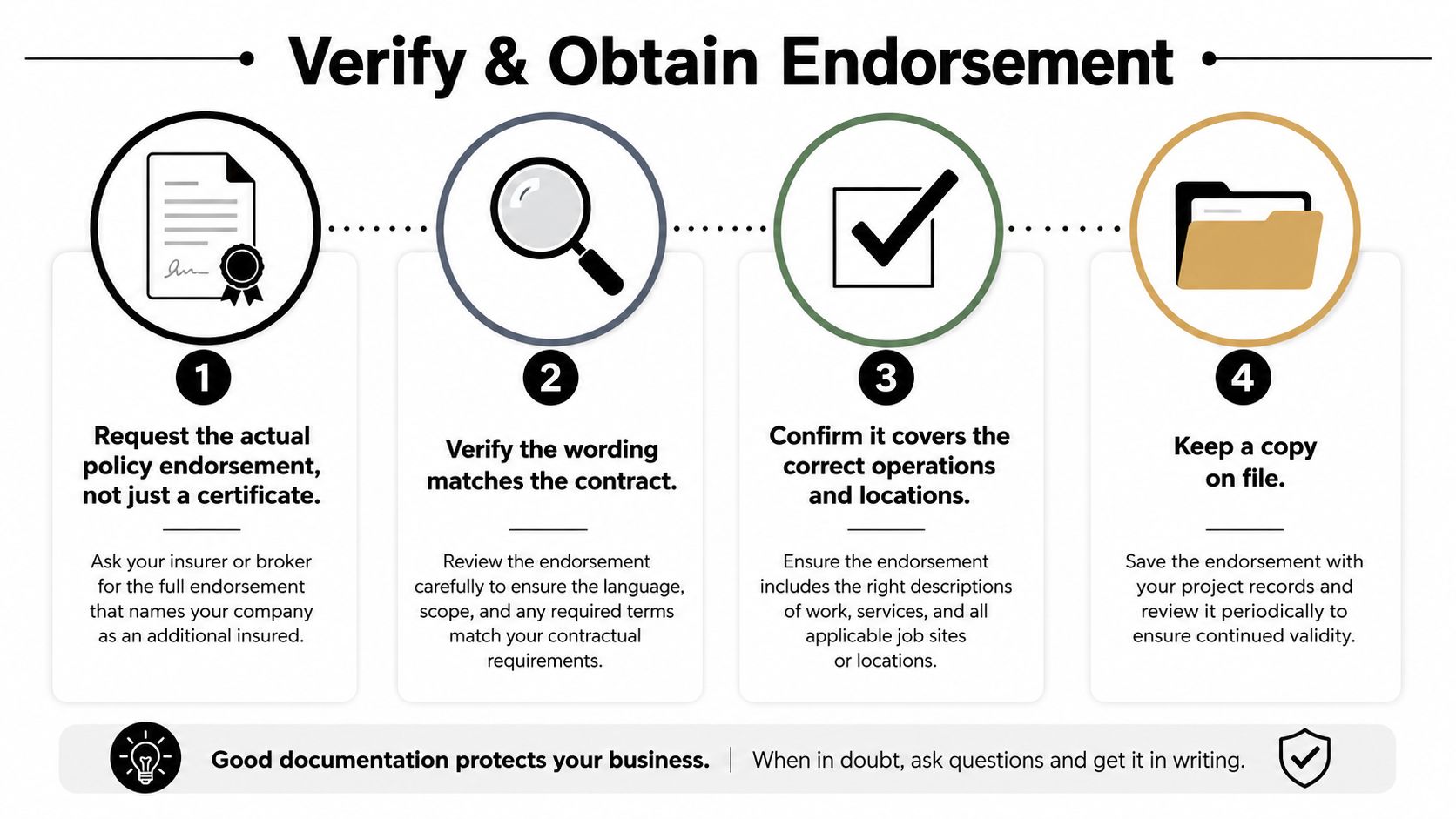
Ask the named insured, broker, or carrier for the actual endorsement, not just an ACORD certificate. Confirm the form number and edition, schedule, effective dates, project description, location, and operations. Check whether the endorsement is individual or blanket, and read any conditions that tie coverage to a written contract.
A certificate can support the record, but the endorsement is the document that changes the policy. Keep both documents with the underlying contract, certificates, renewal records, and correspondence. Businesses using centralized administration may also benefit from reviewing guidance on claims integration in policy systems, particularly when endorsement records must remain connected to project files.
If the loss has already happened
Preserve the original contract, certificate, endorsement, policy, and every request for additional insured status. Ask the insurer to identify the specific provision supporting any denial or reservation of rights. Then compare that position with the alleged cause, date of damage, project status, and location.
For roof-related losses, the work records matter as much as the endorsement. Collect contracts, invoices, photographs, inspection notes, maintenance logs, change orders, and communications with the contractor. A roof inspection contractor resource can help clarify whether the alleged damage relates to ongoing work, completed work, maintenance, or an unrelated event.
Common Pitfalls That Undermine Coverage
The most common error is treating a certificate as if it were the coverage grant. A certificate may state that additional insured status exists, but it doesn't amend the policy. The carrier can still examine the endorsement and argue that the form doesn't cover the claim, the named party, the location, or the relevant operations.
A second mistake is assuming that additional insured status equals named insured status. It doesn't. The additional insured usually receives limited protection for liability connected to the named insured's operations, not broad protection for every claim involving the property or business.
The wording traps that deserve attention
“Arising out of” and “caused, in whole or in part, by” aren't interchangeable. The older wording was broader. The later wording focuses on causation and the named insured's acts or omissions. A tender should address that connection with evidence, not merely repeat the contract's insurance requirement.
Ongoing operations and completed operations aren't interchangeable. A water intrusion claim discovered after a contractor leaves the site may involve completed work even if the installation occurred during active operations. If the policy carries only the ongoing form, the timing issue can become decisive.
Primary and noncontributory status isn't automatic. Additional insured status alone doesn't necessarily prevent the carrier from seeking contribution from the additional insured's own insurer. If the contract requires primary and noncontributory treatment, request and verify the separate policy language.
The additional insured's own negligence remains a pressure point. The endorsement generally isn't designed to insure liability caused solely by the additional insured. Whether coverage exists when both parties contributed depends on the wording, facts, and governing law. The answer can't be determined from the certificate checkbox.
Coverage follows the endorsement language, not the assumption created by the contract.
Jurisdiction and relationship structure matter
Courts and practitioners increasingly scrutinize privity, causation, and policy wording. A 2024 New York appellate decision imposed a privity-of-contract requirement in one construction context, illustrating how a party's expected AI status can fail when the endorsement doesn't match the relationship structure. The decision and its implications are discussed in this analysis of additional insured limitations.
That doesn't mean every jurisdiction reaches the same result. Some courts allow coverage beyond pure vicarious liability when the named insured was at least partly causative, while the form and forum can narrow the result in another dispute. Review the endorsement, contract, pleadings, and governing law together. A broader coverage gap review can expose missing forms before the next claim makes the problem urgent.
State Considerations for Oregon and Washington Claims
Oregon and Washington claims often involve layered relationships among property owners, general contractors, subcontractors, property managers, public entities, and nonprofit organizations. The contract may allocate responsibility one way, while the endorsement and state law impose a different boundary. That mismatch deserves attention before anyone assumes the contractor's policy will fund defense or property-related liability.
Anti-indemnity rules can affect contractual risk transfer, and courts may examine whether an agreement attempts to shift responsibility for a party's own negligence. The endorsement must still be analyzed independently. A contract requirement may help establish the intended arrangement, but it doesn't expand policy language that the carrier never issued.
What regional claim review should establish
A careful Oregon or Washington file should answer several practical questions:
- Who was insured: Identify the legal entity, not just a trade name or property brand.
- What relationship existed: Confirm the contract between the named insured and the party seeking coverage.
- What work was involved: Tie the claimed damage to a defined operation, location, or completed project.
- When the damage occurred: Separate active work from post-completion conditions.
- What law governs: Review venue, contract provisions, and the applicable state rules before making a definitive coverage argument.
Public adjusters also distinguish first-party property damage from third-party liability exposure. An additional insured endorsement may help with liability claims connected to a contractor's work, but it doesn't automatically replace the owner's property policy or business income coverage. The claim strategy should pursue every applicable policy while keeping each coverage theory clear.
Documentation is especially important where multiple carriers and parties communicate separately. Preserve notices, denial letters, reservation-of-rights correspondence, contracts, expert reports, photographs, and repair records. Prompt attention to time and payment of claims provisions can also help policyholders track insurer obligations and avoid unnecessary delay.
Practical Steps When a Claim Involves Additional Insured Status
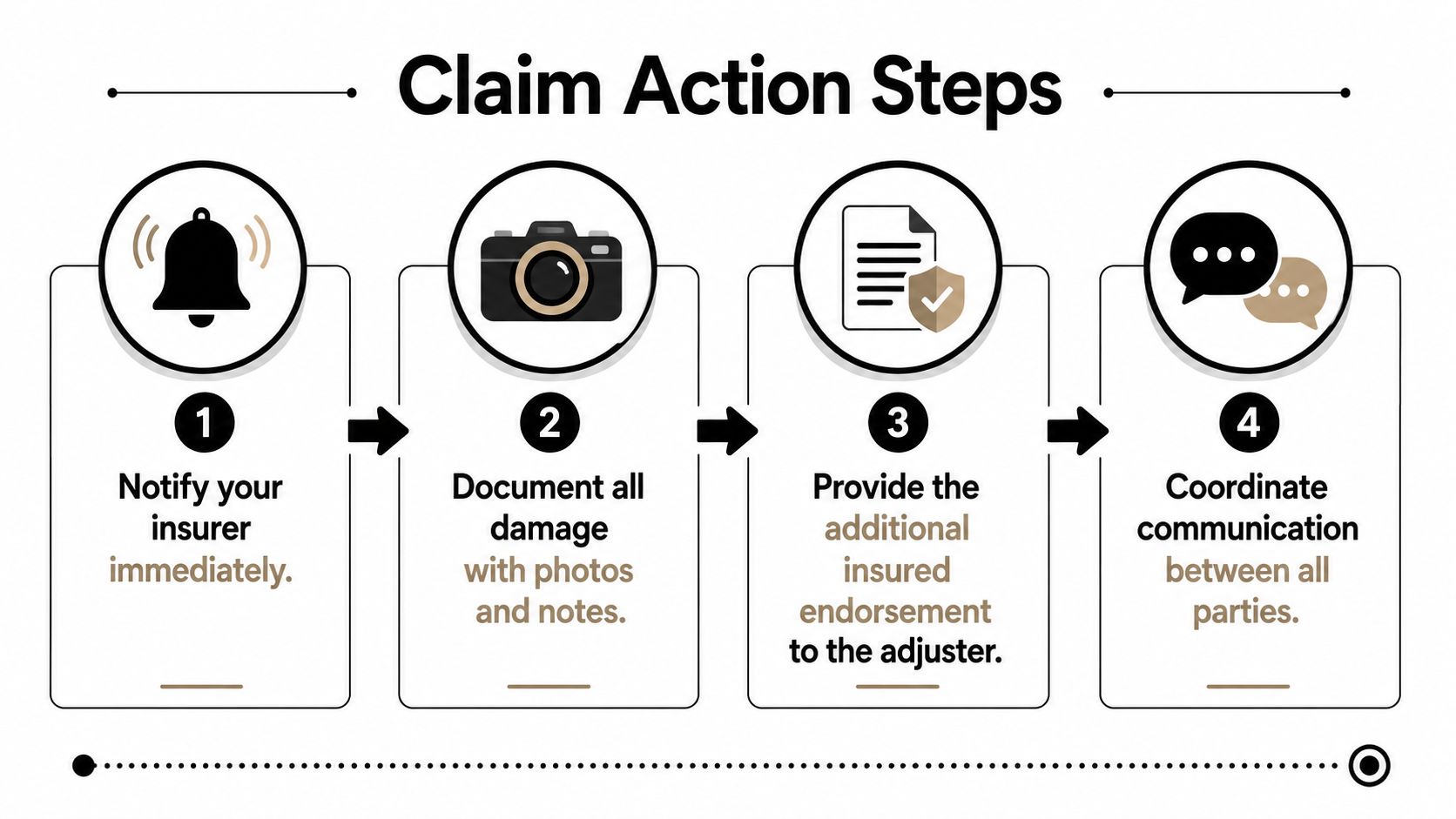
When a loss occurs, move quickly but keep the file organized. The first notice should identify the loss, the property, the named insured, the additional insured, the contractor's role, and the policy or endorsement believed to apply. Don't wait for the parties to agree on fault before giving notice.
A disciplined claim response
Notify every potentially relevant carrier. Give notice under the property policy and the contractor's liability policy where the facts support it. Include the contract and endorsement, but don't characterize disputed facts more narrowly than the evidence allows.
Document the physical loss. Photograph and video the damage before demolition when safe. Preserve damaged components where feasible, record emergency work, and maintain invoices, payroll records, tenant communications, and repair estimates.
Tender the liability claim clearly. Explain the alleged connection to the named insured's work, identify the operations phase, and request a written coverage position. If the carrier denies or reserves rights, ask it to cite the precise endorsement language.
Coordinate the parties. The named insured and additional insured should share contracts, notices, witness information, expert findings, and repair records. Separate confidential legal advice when counsel becomes involved, and avoid inconsistent statements about causation or responsibility.
A public adjuster can help organize the property damage presentation, identify overlapping coverage, test the insurer's interpretation against the policy, and keep the claim moving. Coverage counsel may be appropriate when the dispute involves tender, indemnity, privity, causation, reservation of rights, or a significant conflict between the parties.
The strongest claim file connects four things: the endorsement, the contract, the damaged property, and the evidence of causation.
If the endorsement is missing, request it from the named insured's broker and carrier in writing. If the claim has already been denied, preserve the denial and policy documents before responding. The objective isn't to rely on a label such as “additional insured.” It's to show why the specific policy language applies to the specific loss.
NW Claims Management helps Oregon and Washington property owners, businesses, municipalities, and nonprofits document complex losses and pursue every available coverage path, including disputes involving additional insured endorsements. Visit NW Claims Management for a free claim evaluation and practical support from licensed public adjusters.