Your property is damaged. The contractor says one thing, the insurance estimate says another, and the person on the phone from the carrier keeps talking about depreciation, actual cash value, and what they believe is “reasonable.” Most owners hit this point fast. They aren't just dealing with damage. They're dealing with a valuation fight.
That fight usually starts before you realize it has started. The insurer gives you a number. You assume that number reflects what it will take to repair the loss. Sometimes it does. Often, it reflects the valuation method the carrier chose, the pricing system they relied on, and the assumptions built into their estimate. If you don't know which method is in play, you can't tell whether the offer is fair.
For Oregon and Washington property owners, that matters even more after fire, water, storm, and large regional events. Local code requirements, contractor availability, and reconstruction pricing can turn a “good enough” estimate into a serious shortfall. The good news is that loss valuation methods aren't mystery math. They're rules, formulas, and negotiation positions. Once you understand them, you can push back intelligently.
The Phone Call Every Property Owner Dreads
The call usually comes when you're already exhausted. You've spent the morning moving wet furniture, calling a mitigation company, or trying to figure out whether the smoke smell will ever come out of the walls. Then the adjuster calls and says they've “run the numbers.”
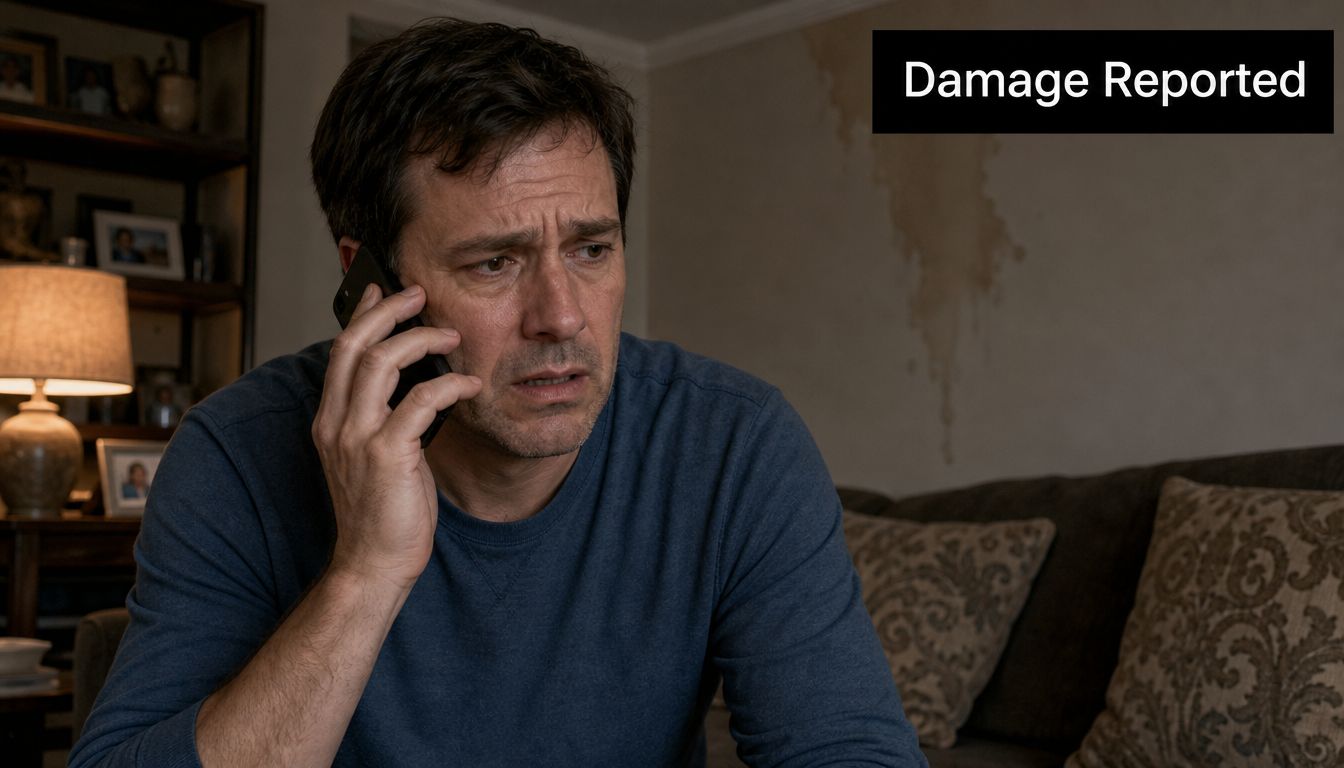
If you've never had a serious property claim before, that first conversation can feel disorienting. The adjuster sounds calm. The process sounds routine. But the number they mention may have very little to do with what your contractor says it will take to make the property whole again. That gap is where many claims go sideways.
In practice, the insurer's first number is usually built on a specific valuation framework. It isn't random. It also isn't automatically the right number for your situation. A roof can be valued one way. Interior finishes another. Personal property another still. If communication starts feeling fragmented, even support services like telephonic case management can help organize the moving parts around treatment, housing, documentation, and claim follow-up.
Why the first number feels final when it isn't
Many owners hear an estimate and assume they're looking at a fixed outcome. They're not. They're looking at the insurer's current position based on its scope, pricing, and valuation method.
That distinction matters because two people can inspect the same damage and reach very different conclusions about value. One estimate may leave out code-related work. Another may apply aggressive depreciation. Another may price labor with assumptions that don't hold in your county.
The insurer's estimate is part of the claim process. It is not the final word on what your loss is worth.
What you need to know right now
If you're early in the claim, focus on three things first:
- Identify the valuation method: Ask whether the carrier is paying Actual Cash Value, Replacement Cost, or another method.
- Request the full estimate: Don't settle for a summary. Get the line-item scope, not just the bottom-line number.
- Compare value to reality: Put the insurer's estimate next to a local contractor's repair plan and look for omissions, pricing gaps, and depreciation.
That's the start of taking control.
Actual Cash Value vs Replacement Cost
This is the dispute that affects more claims than anything else. Actual Cash Value, usually called ACV, and Replacement Cost Value, usually called RCV, can produce very different outcomes even when the damage is identical.
The basic formula
ACV is the cost to replace something, minus depreciation for age, wear, and obsolescence. RCV is the cost to replace it with new materials of like kind and quality, subject to the policy terms.
Formula: Actual Cash Value = Replacement Cost minus Depreciation
A simple way to think about it is a car. ACV is closer to what your used car is worth today. RCV is closer to what it costs to go buy the current equivalent. Those are not the same number, and in a property claim that difference can be painful.
Under residential property insurance, ACV is calculated as replacement cost minus depreciation. A 15-year-old roofing system with a 30-year lifespan typically incurs a 50% depreciation deduction, reducing a $20,000 replacement cost claim to a $10,000 ACV payout, whereas Replacement Cost Value coverage pays the full $20,000 if the policyholder completes repairs within the required timeframe, often 180–365 days according to this loss valuation methods guide.
What the insurer is doing behind the scenes
Carriers often present ACV as if it's just common sense. The problem isn't that depreciation exists. The problem is how it gets applied.
A claims handler may use broad age-based assumptions that don't reflect real condition. A roof that was maintained well can get depreciated like one that was near failure. Interior finishes may get grouped in ways that drive value down. On an RCV policy, carriers may pay ACV first and hold back the recoverable depreciation until repairs are completed, which creates a cash-flow problem for owners who need funds to start the work.
If your policy includes replacement cost, don't assume the insurer will volunteer every step required to recover the full amount. Read the payment conditions carefully. Many owners lose part of their claim because they miss the repair and documentation requirements.
Loss valuation methods at a glance
| Method | Calculation | Best For |
|---|---|---|
| Replacement Cost | Cost to repair or replace with new materials, subject to policy terms | Owners who need funds to restore the property to pre-loss condition |
| Actual Cash Value | Replacement cost minus depreciation | Older property components where the policy limits payment to present value |
| Market Value | What a willing buyer would pay for the property in the current market | Situations where real estate value is relevant, but not always ideal for rebuilding after a loss |
If you're comparing policy language before renewal, this breakdown of agreed value vs replacement cost helps clarify where these methods diverge.
What works and what doesn't
What works is asking for the exact depreciation applied to each major component. What doesn't work is arguing in general terms that the offer “feels low.”
Use specifics:
- Ask for line-item depreciation: You want the age, expected life, and depreciation amount for major components.
- Match policy language to payment method: Don't let an ACV payment slide by if the policy supports replacement cost recovery.
- Track deadlines for recoverable depreciation: If repairs must be completed within a set timeframe, calendar that immediately.
When owners understand the difference between ACV and RCV, they stop debating feelings and start disputing math.
Exploring Other Key Valuation Methods
Not every claim turns on ACV versus replacement cost. Other valuation methods show up more often than owners expect, especially with older properties, unique buildings, and partial losses where the insurer wants flexibility.
Market value and why it can miss the point
Market Value asks what a willing buyer would pay a willing seller for the property in its current market. That sounds reasonable until you remember that real estate value and reconstruction cost aren't the same thing.
The three foundational loss valuation methods in property insurance are Replacement Cost, ACV, and Market Value, and they can produce materially different settlements. Replacement Cost typically yields payouts 20% to 40% higher than ACV for residential structures because it excludes depreciation while ACV deducts age and wear. In one example, a 20-year-old home with $300,000 in structural damage would receive $300,000 under Replacement Cost, while an ACV calculation with 40% depreciation ($120,000) would reduce the settlement to $180,000. During the 2020 Pacific Northwest wildfires, over 1,200 homes were destroyed, and policyholders with ACV coverage received an average of $95,000 less per claim than those with Replacement Cost coverage according to this technical breakdown of residential loss valuation methods.
For owners in Oregon and Washington, market value can be especially misleading after a major event. A lot value, school district, or neighborhood demand may drive home price. None of that tells you what it costs to rebuild after smoke, fire, wind, or water damage.
A related concept shows up outside property claims too. If you want a simple analogy for why value changes after damage, Bell Law has a useful explanation of your car's diminished value after an accident. The principle is similar. Damage changes what something is worth, but the right valuation question depends on the claim context.
Functional replacement cost and agreed value
Functional Replacement Cost usually comes up with older properties that contain materials or construction methods that are outdated, obsolete, or prohibitively expensive to match exactly. Instead of paying for exact like-kind replacement, the policy may allow payment for a modern functional equivalent.
That can be appropriate in some settings. It can also become a cost-cutting tool if the insurer uses it to justify lower-grade materials than the policy allows. If your home has custom millwork, plaster, old-growth framing, or specialty finishes, don't assume “functional” equals fair.
Agreed Value is different. The insurer and policyholder set the value in advance, usually when the policy is written. This method often appears with historic homes, artwork, specialty structures, or property where standard valuation methods don't fit well.
When these methods deserve scrutiny
Ask harder questions when any of these situations apply:
- Older or historic property: The carrier may push functional replacement when true restoration is the actual issue.
- Unique assets: Agreed value only helps if the scheduled amount still reflects the actual exposure.
- Mixed valuation language: Some policies apply different methods to the building, contents, and specialty items.
If value is disputed and the policy allows it, formal valuation disputes may move into appraisal. In those cases, insurance appraisal services can become part of the strategy, especially when the main fight is over amount of loss rather than whether coverage exists.
Valuations for Business and Complex Losses
Commercial claims get complicated fast because the building is only one part of the loss. A business may also have damaged equipment, interrupted operations, extra expenses, tenant obligations, and deadlines that affect revenue long after the physical repairs begin.
The building estimate is only the first layer
For a commercial structure, the benchmark valuation standard matters. Under International Valuation Standards 105 and U.S. ASC 820, the cost approach, specifically the replacement cost new method, is the mandated benchmark for valuing damaged or destroyed property in insurance loss scenarios. The same standard notes that appraisers must estimate the current cost of constructing an equivalent asset minus physical deterioration, functional obsolescence, and economic obsolescence. In public adjusting practice, using the cost approach with localized contractor estimates rather than insurer-provided software like Xactimate can increase settlement valuations by 15% to 25% for commercial properties due to more accurate inclusion of code upgrade requirements and soft costs, as discussed in IVS 105 valuation guidance.
That's a real-world issue in Oregon and Washington. A software estimate may be neat, fast, and incomplete. It may not fully capture local code upgrades, permit burdens, access issues, or specialty trades needed for a school, nonprofit facility, apartment building, or mixed-use property.
For owners trying to understand broader valuation concepts before the claim turns adversarial, PropLab's property valuation guide is a useful outside reference on how property value gets analyzed from different angles.
Business interruption is its own valuation fight
A business interruption claim is not a rough guess at “lost income.” It depends on records. The insurer will want profit and loss statements, tax returns, payroll data, sales history, contracts, and proof of continuing expenses.
What owners often miss is that the carrier may accept the building damage and still undervalue the income loss by narrowing the period of restoration, rejecting parts of extra expense, or taking an overly conservative view of what the business would have earned. Restaurants, contractors, manufacturers, schools, and nonprofits each need a different proof package.
For business claims, weak financial documentation creates the same problem that weak photo documentation creates in a building claim. It leaves the carrier room to define the loss for you.
If operations have been interrupted, this overview of a business interruption claim helps frame the documentation issues owners need to tackle early.
What helps on complex losses
- Separate building, contents, and income issues: Don't let them get blended into one vague claim narrative.
- Use local contractor input: National estimating logic often misses local realities.
- Document soft costs and code impacts: Design fees, permit requirements, and mandated upgrades can be major recovery items.
- Build the financial story early: Waiting to organize records usually weakens the income-loss position.
Large losses are won on detail, not broad arguments.
Common Insurer Tactics and Valuation Pitfalls
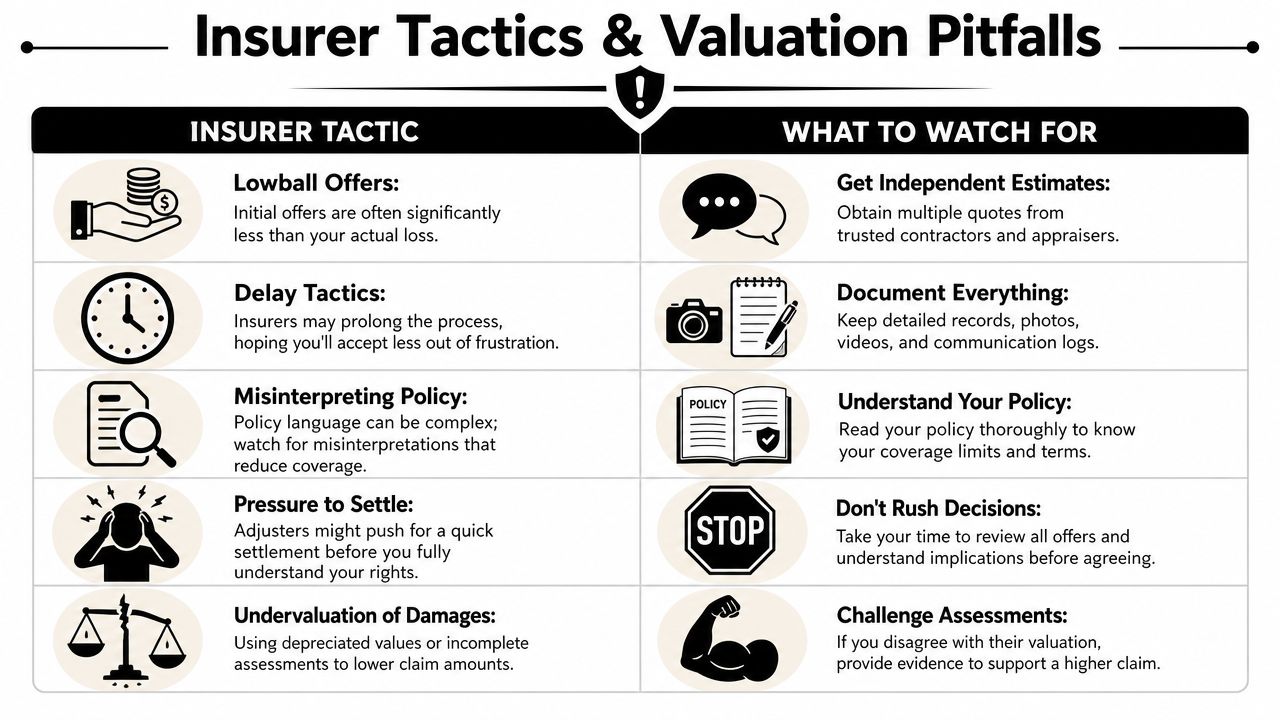
Insurers don't have to deny a claim outright to underpay it. Most underpayment happens through scope, pricing, and valuation choices that look technical enough to avoid immediate pushback.
Standardized depreciation used as a shortcut
One of the most common tactics is using a flat or standardized depreciation approach for property items that don't fit a simple straight-line life expectancy. Mid-life components are where this gets messy. Roofing, flooring, cabinets, and HVAC equipment may still have substantial useful life, but the estimate treats them as though age alone tells the whole story.
That matters because the impact of depreciation on ACV settlements is often dynamic rather than static. According to this guide on challenging excessive depreciation, policyholders who actively challenge excessive depreciation calculations see their claim settlements increase by an average of 15%. The same source notes that many beginner guides don't explain how to request written depreciation breakdowns or use market comparables to rebut the insurer's logic.
Common patterns that should put you on alert
Look closely when you see any of these:
- Bundled line items: The estimate groups multiple repair steps into one allowance, making omissions harder to spot.
- Old pricing logic: Labor and materials are priced below what local contractors are charging.
- Code upgrades ignored: Required changes for electrical, energy, accessibility, or seismic-related work don't appear in the scope.
- Partial repair assumptions: The carrier assumes spot repairs are enough when uniformity, matching, or damage spread says otherwise.
- Pressure to close quickly: The adjuster frames the current number as the practical resolution before the full scope is documented.
How to challenge the valuation effectively
Don't answer a technical estimate with a general complaint. Answer it with documents.
Practical rule: If the insurer depreciates a major item, ask for the age used, the expected lifespan used, the condition assumptions used, and the written depreciation worksheet.
Then compare that against your evidence:
- Photographs showing condition before the loss
- Maintenance records or invoices
- Local contractor opinions on repair versus replacement
- Current bids that reflect your county's actual pricing
- A written request for any omitted code-related items
In Oregon and Washington, code issues deserve special attention. If the estimate ignores local ordinance-driven upgrades, the carrier may be valuing the property as if it can be rebuilt under old standards. That's not how reconstruction works on the ground.
How to Maximize Your Recovery in Oregon and Washington
A fair claim doesn't happen because you were polite, patient, or obviously suffered a real loss. It happens because you build a file the insurer can't easily discount. That takes method, not hope.
The moves that give owners leverage
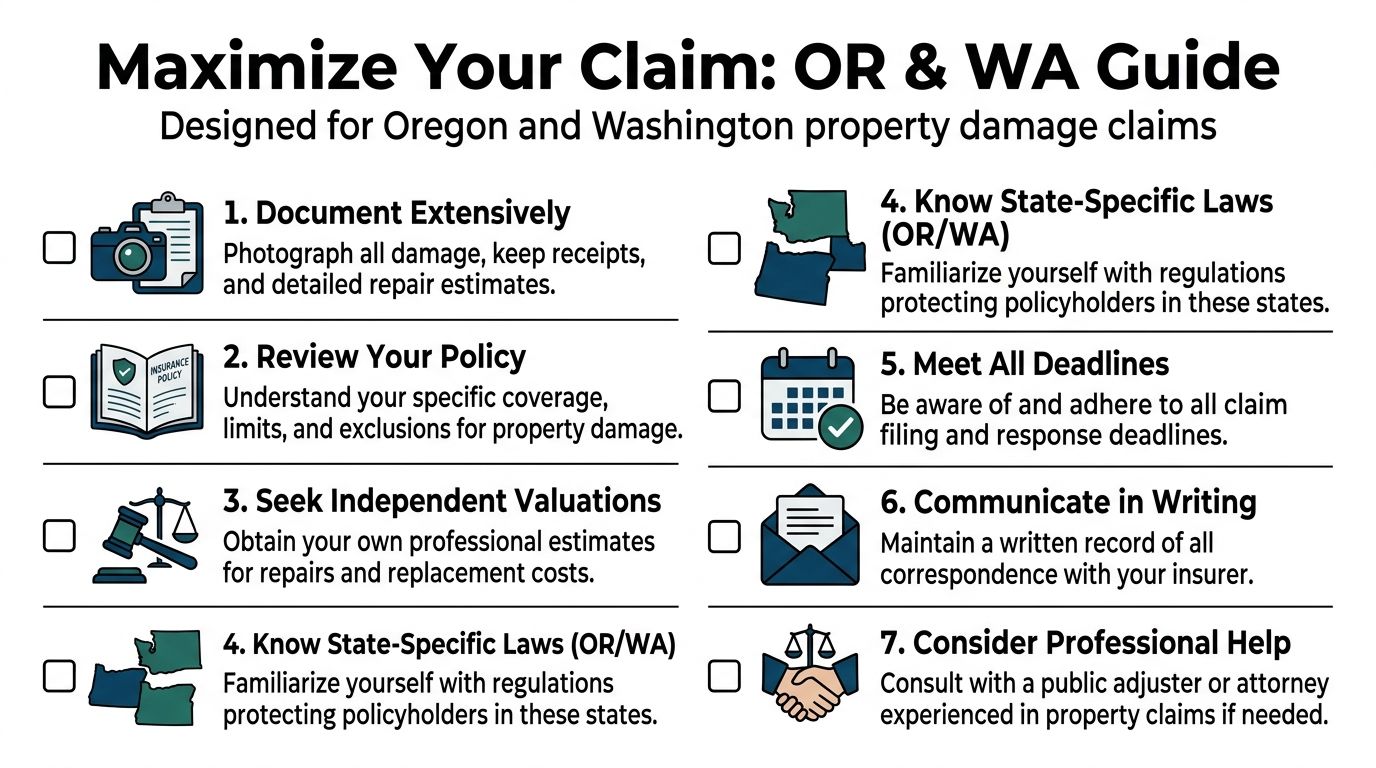
Start with documentation that ties damage to cost. Photograph every room, every elevation, every affected component, and every damaged personal property category. Then build an inventory that's detailed enough to show what was there, what condition it was in, and what it costs to replace or repair locally.
Keep your communication in writing whenever possible. If an adjuster makes a verbal statement about coverage, depreciation, or what will be included later, send a follow-up email that confirms what you understood. That creates a record and forces clarity.
If you need a structured starting point, a formal claim of damages helps organize the scope, support, and demand in a way carriers have to engage with seriously.
Oregon and Washington issues owners shouldn't overlook
Owners in these states need to think beyond the visible damage.
- Check ordinance or law coverage: Code upgrades can drive major costs on older homes and commercial buildings.
- Use local contractors: A bid from someone who builds in your area carries more weight than a generic pricing printout.
- Request depreciation support in writing: Don't accept a single lump-sum deduction with no explanation.
- Track repair deadlines carefully: If recoverable depreciation depends on completed repairs, missed timing can cost real money.
- Watch for regional reconstruction conditions: After widespread events, material and labor pressures can widen the gap between software estimates and real bids.
When a public adjuster makes sense
Not every claim needs outside representation. Some do.
Bring in a licensed public adjuster when the loss is large, the insurer's scope is incomplete, depreciation looks aggressive, code issues are being minimized, or you don't have the time to manage the documentation and negotiation yourself. That's especially true for wildfire losses, multi-room water losses, commercial claims, nonprofit facilities, and any claim where business interruption is in play.
If the carrier's estimate and your contractor's estimate live in different worlds, you're already in a valuation dispute whether anyone has said those words out loud or not.
A good public adjuster levels the field by reading the policy, building the scope, documenting the loss, and negotiating from evidence instead of frustration.
Your Path to a Fair and Complete Settlement
Loss valuation methods shape the entire outcome of a property claim. ACV changes what gets deducted. Replacement cost changes what can be recovered. Market value, agreed value, and functional replacement can each help or hurt depending on how the policy is written and how the insurer applies them.
The important point is this. Valuation is not a gift from the carrier. It's a contractual determination that often requires scrutiny, documentation, and negotiation. Owners who understand the method being used are in a much stronger position to challenge missing line items, inflated depreciation, weak pricing, and overlooked code costs.
If you're in Oregon or Washington and the insurer's numbers don't line up with what it will take to repair, rebuild, or recover operations, don't assume you have to accept the gap. Ask for the support behind the valuation. Get independent estimates. Put everything in writing. Escalate when the math doesn't hold.
If your property claim feels overwhelming or undervalued, NW Claims Management can review the loss, explain the valuation method being used, and help you pursue a fair, complete settlement through a free, no-obligation claim evaluation.