At 2 a.m., a burst pipe can turn a quiet Portland home into a claim file before the homeowner has found a mop. Water stains spread across the ceiling, hardwood begins to cup, and the smell of saturation settles into furniture and drywall. The first priorities are obvious, shut off the supply, move valuables, remove standing water, and keep people away from unsafe areas. The compliance priorities are less visible, but they start at the same time.
A policyholder's first call, first photograph, first mitigation invoice, and first written notice can later determine whether the insurer sees a well-supported loss or a file full of gaps. Regulatory compliance requirements are practical claim-handling obligations, not paperwork reserved for lawyers. They govern when notice is given, how damage is preserved, what an adjuster can negotiate, and whether the carrier can verify the amount of loss.
The First 72 Hours After Property Damage
The homeowner wraps towels around the base of the couch and carries a floor lamp upstairs. A family member searches for the main shutoff while another records water running across the kitchen floor. Nobody is thinking about proof of loss yet. They're trying to keep the ceiling from collapsing and prevent more property from being ruined.
From a public adjuster's perspective, the claim clock has already started. The policy may require prompt notice, and Oregon insurance rules affect how the carrier must acknowledge and handle the loss. If the water came from an outside flood rather than a broken interior pipe, the National Flood Insurance Program introduces its own reporting and documentation rules. Contaminated water may also affect the type of cleanup required, particularly if sewage or other hazardous material is involved.
Field rule: Stop the source, protect people, preserve evidence, and create a written record before the scene changes.
The first photographs should show the room as found, including water lines, damaged surfaces, displaced contents, and the source if it's safe to document. Don't throw away soaked materials merely because they look unsalvageable. If disposal is necessary for health or safety, photograph the item thoroughly, record what it was, and retain samples or invoices when practical.
What to record before the first call
- Time and discovery: Write down when the damage was discovered, when the suspected event occurred, and who was present.
- Immediate actions: Note shutoff steps, emergency repairs, drying equipment, plumber visits, and conversations with the insurer.
- Visible damage: Photograph ceilings, walls, flooring, cabinets, contents, exterior openings, and any pre-existing condition that could become disputed.
- Expenses: Keep receipts for emergency labor, materials, temporary lodging, storage, and equipment.
- Safety concerns: Restrict access to unstable areas and ask contractors how they'll address electrical, structural, mold, or contaminated-water hazards.
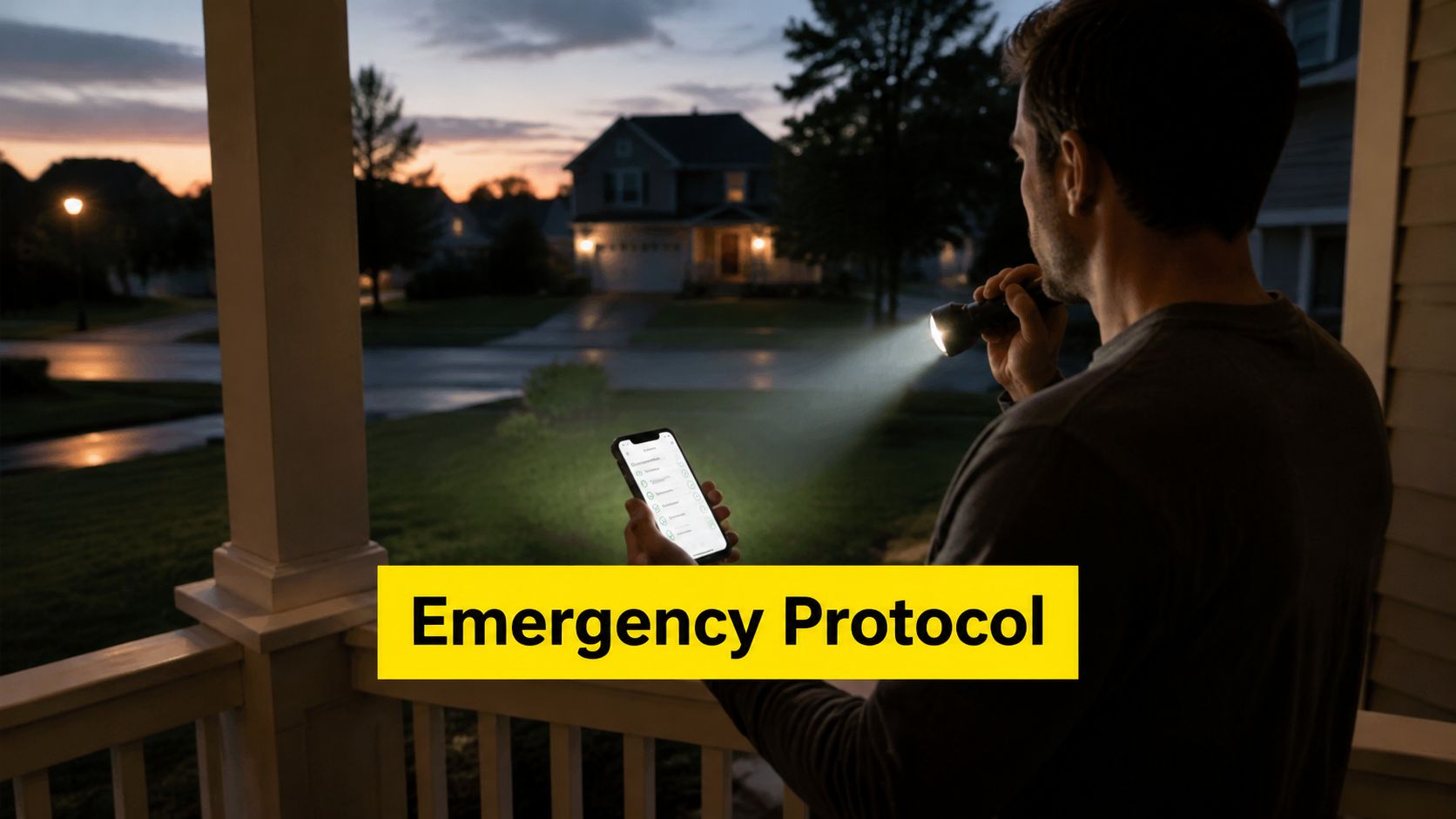
A concise emergency response protocol for property claims can help organize those first actions without turning mitigation into unauthorized repairs. The objective isn't to make the property look perfect before inspection. It's to prevent additional damage while leaving the original condition understandable to the carrier, contractor, and eventual reviewer.
The first phone call should be made with dates, photographs, and a short description ready. Ask for a claim number, the assigned adjuster's contact information, instructions for mitigation, and the required method for submitting documents. Then send a written confirmation. That simple record often becomes the starting point for every deadline that follows.
What Regulatory Compliance Requirements Mean
Compliance is a set of connected duties applied to the claim file at different points. A single property loss may involve federal program rules, Oregon or Washington insurance requirements, local permitting, environmental safeguards, and licensing obligations. The practical question is always, which rule applies at this moment in the file?
For example, a water-loss file may begin with an acknowledgment letter and an inspection request. If the cause later points to flooding, federal program procedures may control the proof-of-loss package. If covered reconstruction requires permitted electrical or structural work, local code requirements affect the repair scope. If damaged materials contain asbestos or lead-based coatings, the contractor's work plan and disposal records must reflect those hazards.
- A federal flood program may control the claim when the loss falls within NFIP coverage.
- Oregon or Washington insurance law may govern the carrier's notice, investigation, payment, and communication duties.
- A city or county building department may control permits and code requirements for rebuilding.
- Environmental rules may apply when mold, asbestos, lead-based coatings, or contaminated water are disturbed.
- Licensing law applies when an adjuster or representative interprets coverage, prepares a claim, or negotiates for the policyholder.
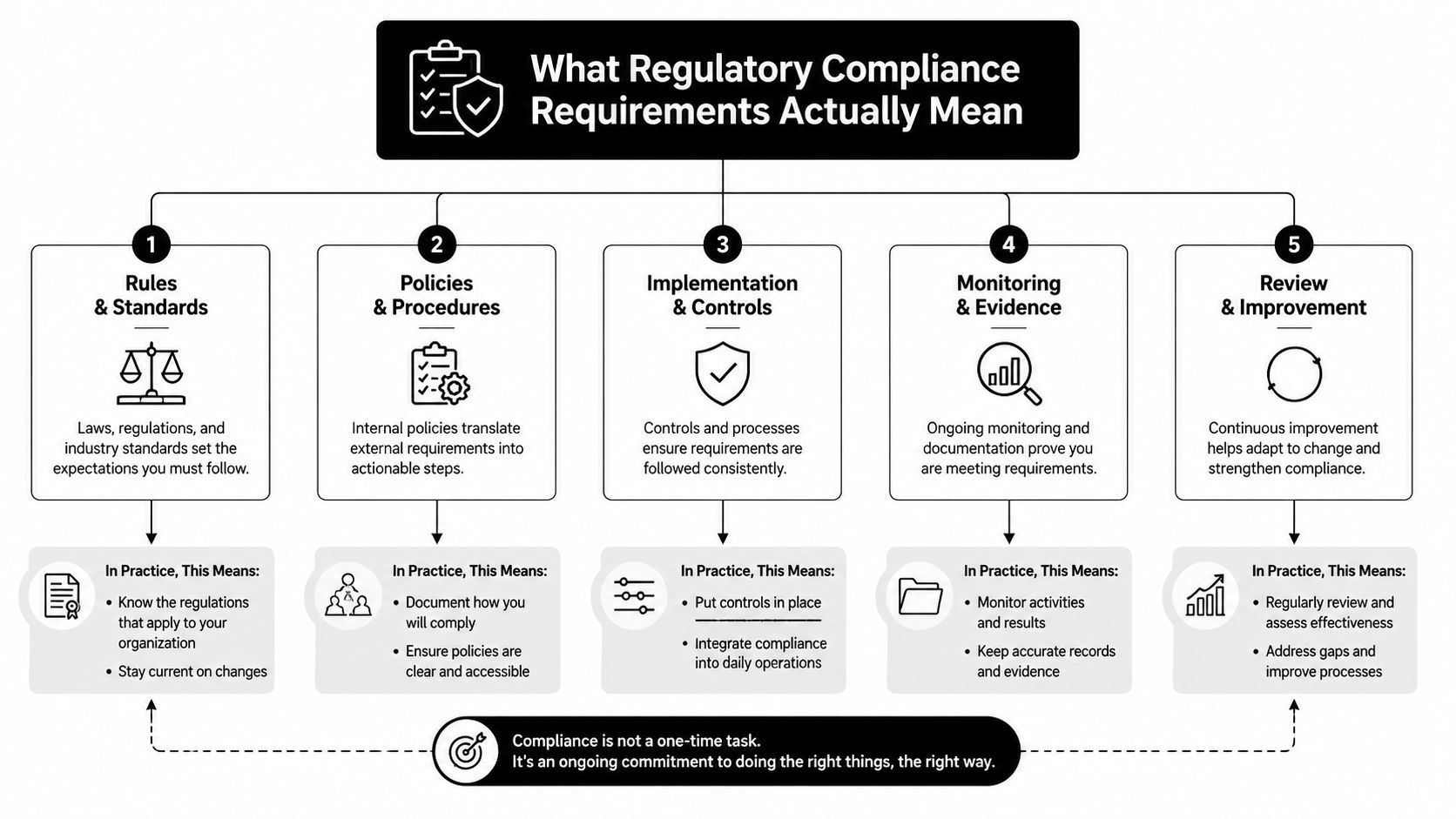
How the layers appear in a claim file
The federal layer may appear in a signed proof of loss and its delivery record. The state layer may appear in the carrier's acknowledgment, investigation correspondence, or settlement timing. The local layer appears in the estimate when a permit requires upgrades that were not visible during the initial inspection. Environmental and safety requirements appear in work plans, contractor invoices, disposal records, and photographs.
A covered cause of loss can still produce a stalled claim if the file does not connect cause, damage, documentation, and required action. The policyholder may establish what happened without documenting the full extent. The carrier may inspect but lack a signed form needed for payment review. A contractor may price replacement work without accounting for code requirements governing lawful reconstruction.
SendItFax compliance hub provides broader guidance on document control, tracking, and audit-ready communication. Those practices fit a property claim when the file contains estimates, photographs, acknowledgment letters, proof-of-loss forms, and deadline-sensitive notices from several participants.
A claim file should show who acted, what was submitted, when it was submitted, and what response followed. Clear documentation organization for an insurance claim helps prevent a missing attachment or unclear delivery record from delaying an otherwise supportable request.
Federal Compliance Layers That Touch Every Property Claim
Federal requirements don't apply identically to every loss. A wind claim, a kitchen fire, an interior pipe break, and a flood claim activate different federal concerns. The adjuster's job is to identify the trigger early, then preserve evidence that proves the required steps were taken.
Flood claims and federal program rules
NFIP claims require close attention to federal policy language and proof-of-loss procedures under 44 CFR Part 61. The commonly cited proof-of-loss deadline is 60 days, and flood adjusters working within the program must meet FEMA licensing requirements. A policyholder who misses the federal filing requirement can put an otherwise serious loss at risk, so the signed form, supporting estimates, photographs, and delivery confirmation should be treated as one package.
Flood also changes the physical investigation. Water lines, soil deposits, damaged foundations, and moisture migration can help distinguish flood damage from a covered plumbing event. The file needs more than a room-by-room estimate. It needs a defensible explanation of the water source and resulting damage.
Environmental and worker-safety triggers
The EPA's Renovation, Repair and Painting Rule matters for covered renovation work in pre-1978 properties when lead-based paint may be disturbed. Asbestos NESHAP requirements can become relevant when demolition or renovation involves regulated asbestos-containing materials. OSHA duties arise when workers, owners, or contractors enter a compromised structure, particularly where electrical, fall, collapse, respiratory, or exposure hazards exist.
These rules don't decide coverage by themselves. They affect how mitigation and reconstruction can lawfully occur, how contractors price the work, and what documentation belongs in the claim file.
A cheaper estimate that ignores lawful demolition, containment, or disposal isn't a complete estimate. It's a future dispute.
NIST-aligned documentation is also useful when structural conditions, disaster failure, cybersecurity, or evidence integrity become part of the file. In federal contracting, agencies must implement security programs under FISMA using NIST SP 800-53, while contractors handling Controlled Unclassified Information face contractual requirements tied to NIST SP 800-171 through DFARS clauses, with obligations flowing down to subcontractors. That cascading model reinforces a broader file-management principle: evidence, control records, and incident procedures must survive handoffs.
A structured insurance claim management system can keep photographs, scopes, correspondence, and submissions connected to the event that triggered them.
Federal compliance triggers by damage type
| Damage Scenario | Federal Rule | Trigger Condition | Compliance Obligation |
|---|---|---|---|
| Flood | NFIP rules under 44 CFR Part 61 | Flood policy and eligible flood loss | Prepare and submit the required proof of loss, with supporting evidence and delivery records |
| Fire or renovation | EPA RRP Rule | Renovation work in a pre-1978 property where lead-based coatings may be disturbed | Use appropriate certified renovation practices and preserve contractor documentation |
| Demolition | Asbestos NESHAP | Demolition or renovation involving regulated asbestos materials | Survey, handle, contain, and dispose of materials according to applicable requirements |
| Unsafe structure | OSHA requirements | Workers enter a structure with recognized hazards | Use appropriate safety controls, training, protective equipment, and hazard documentation |
| Federal contract property | NIST-aligned contractual controls | CUI or federal security obligations apply | Maintain control evidence, documentation, and incident-handling procedures |
Oregon and Washington State Rules You Cannot Skip
State rules determine much of what a policyholder experiences after the first notice. Oregon and Washington both regulate claims handling, but the exact statutory reference, complaint process, building-code administration, and public-adjuster requirements differ. A claim handled across the Columbia River shouldn't be managed with a copy-and-paste assumption that the states operate the same way.
Oregon's prompt-pay framework is especially important at the proof-of-loss stage. The plan for this article identifies a 30-day period for accepting or denying a claim after receipt of proof of loss, followed by payment of accepted amounts within 30 days of settlement. The file should show when the proof of loss was delivered, what documents accompanied it, and whether the carrier requested additional information.
Washington timing obligations arise under references including RCW 48.18.080 and WAC 284-30, alongside broader standards governing fair claims handling. The policyholder should preserve every acknowledgment, inspection notice, estimate request, reservation of rights, and payment explanation.
Agencies and construction rules
An Oregon policyholder can use the Division of Financial Regulation complaint pathway when carrier conduct remains unresolved. In Washington, the Office of the Insurance Commissioner provides the first-party complaint route. A regulator complaint won't replace the policy's proof requirements, but it creates a formal record of the concern and the carrier's response.
Repair scope also depends on the applicable building authority. Oregon's Building Codes Division administers the state code framework, while Washington's statewide code and amendment process can affect how repair work is permitted and priced. Code-required work isn't automatically covered because a building official requires it. The estimate must separate direct damage, code upgrades, ordinance-or-law coverage, and unrelated improvements.
Safety planning belongs in this stage too. Guidance on who is responsible for providing PPE can help owners and contractors discuss responsibilities before work begins, rather than after an injury or jobsite dispute.
Public adjuster licensing is another state-specific layer. Oregon requirements include ORS 744.600, while Washington requirements include RCW 48.17.510. Fee caps, written agreements, and disclosure forms must be checked against the state where the claim is handled. A policyholder should verify the license and keep the signed contract with the claim records. More detail on the time and payment of claims provision helps frame why delivery dates and payment records matter.
| Compliance Area | Oregon Reference | Washington Reference |
|---|---|---|
| Claims handling | Oregon insurance statutes and Division of Financial Regulation oversight | RCW 48.18.080 and WAC 284-30 |
| Consumer complaint | Oregon Division of Financial Regulation | Washington Office of the Insurance Commissioner |
| Building requirements | Oregon Building Codes Division | Washington statewide building-code and amendment process |
| Public adjuster licensing | ORS 744.600 | RCW 48.17.510 |
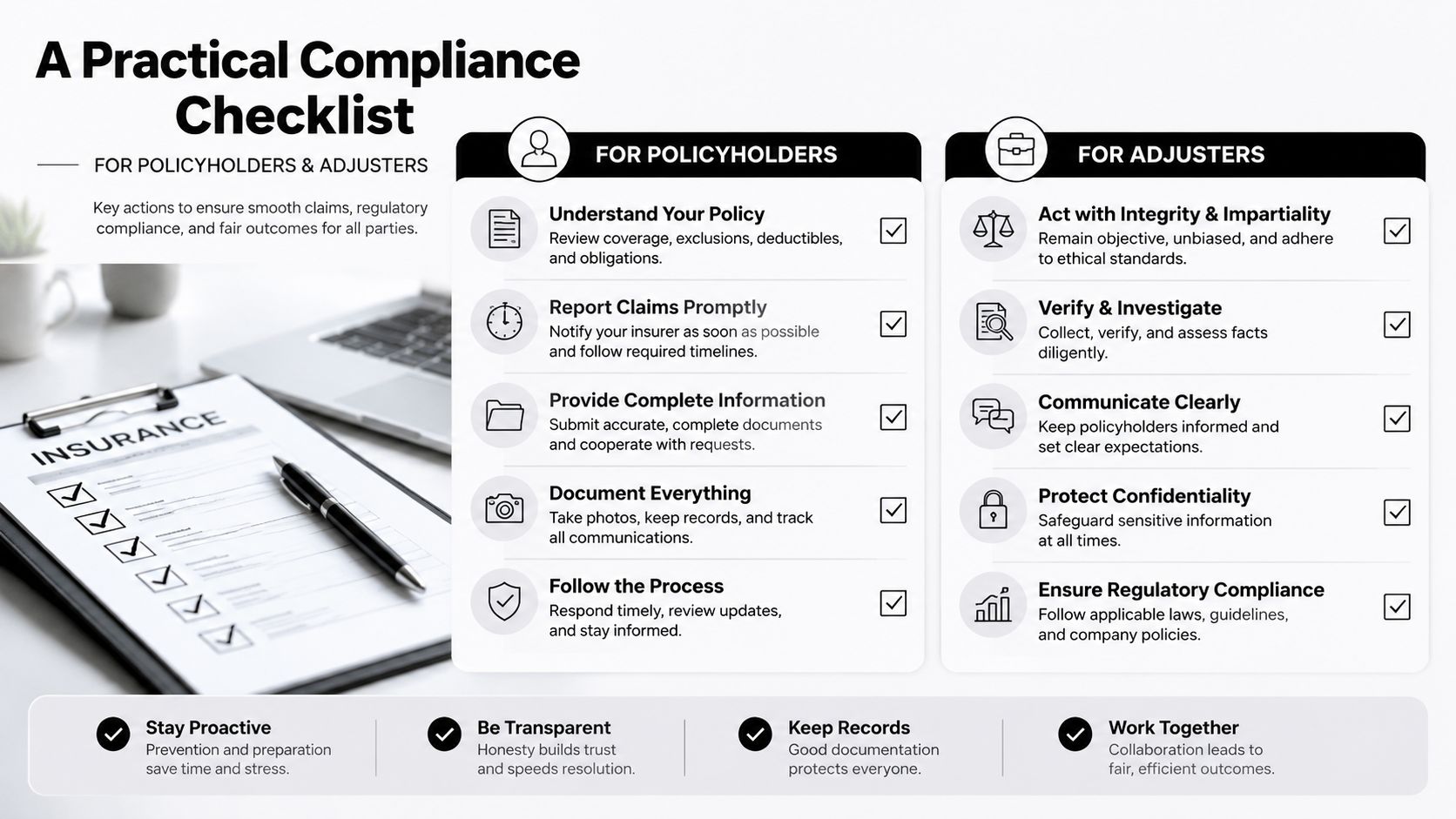
A Practical Compliance Checklist for Policyholders and Adjusters
A compliant claim file follows the loss in sequence. It doesn't begin with a spreadsheet assembled months later. It begins with the first notice and preserves each decision as the property moves from emergency mitigation to final payment.
Follow the file from notice to settlement
Open the loss record immediately. Confirm the policy was in force, record the date and time of discovery, identify the suspected cause, and notify the insurer using the method required by the policy. Save the claim number and every confirmation.
Photograph before changing the scene. Capture wide views, close-ups, water lines, damaged contents, and the source of damage when safe. Don't rely on a contractor's photographs alone. A policyholder's original-condition record may be the clearest evidence of what existed before drying or demolition.
Mitigate without erasing evidence. Stop ongoing damage, use qualified vendors where appropriate, and retain invoices, moisture readings, equipment logs, and disposal records. Emergency work should protect the property, not expand into a full rebuild before the carrier can inspect.
Build the scope around observed damage. Require room-by-room descriptions, measurements, photographs, material identification, and line-item pricing. Separate emergency services, repair, replacement, code work, ordinance-or-law issues, and disputed items.
Prepare proof of loss carefully. Read the policy form for its signature, content, and timing requirements. For an NFIP claim, the federal 60-day proof-of-loss deadline identified earlier is a critical filing date. Send the completed form and supporting package through a trackable method, then preserve the receipt and delivery record.
Track the carrier's response clock. Record the date the insurer received the proof of loss, every request for clarification, every inspection, and each payment or denial. The prompt-pay benchmark described for Oregon starts with receipt of proof of loss, so an argument about the date of receipt can become central.
Submit supplements as discrete packages. Identify the new damage, explain why it wasn't included earlier, attach the supporting estimate, and tie the request to photographs or inspection findings. Avoid sending a stream of unlabelled attachments that forces the adjuster to reconstruct the claim history.
Escalate with a record, not a complaint alone. First request a written explanation from the carrier. If the issue remains unresolved, use the appropriate Oregon or Washington regulator pathway and attach the chronology, policy excerpts, proof of loss, estimates, and communications.
Check representative compliance. Verify a public adjuster's license, review the written fee agreement, confirm required disclosures, and keep a detailed claim diary. An adjuster should record who made each decision and why, especially when coverage, causation, or scope is disputed.
The photographic documentation process for insurance claims works best when photographs are indexed by room, date, viewpoint, and subject. That organization gives the file evidentiary value instead of leaving it as a camera roll no one can efficiently review.
What Happens When Compliance Breaks Down
Noncompliance creates direct problems at the point where the file loses credibility or a deadline expires. The damage itself may be covered, but the claim can become harder to investigate, price, and pay.
For the insurer, a missed Oregon payment obligation can create exposure beyond the original delay. The plan for this article identifies actual damages and attorney fees as consequences of late payment, which can include additional living expenses that continue while the policyholder waits for funds. Washington bad-faith litigation can carry enhanced consequences under RCW 48.30.015, including treble damages where the statutory standard is met.
For the policyholder, the most dangerous failure is often a missed proof-of-loss deadline. A valid event doesn't guarantee a valid submission. If the required form arrives late, lacks a signature, omits claimed items, or conflicts with the evidence, the carrier has an opening to challenge the claim before the dispute reaches the value of the damage.
The failure chain
- Late notice: The insurer may argue that delayed notice impaired its investigation, especially when water migration, mold, or temporary repairs obscure the original condition.
- Poor mitigation records: Without invoices, moisture logs, and photographs, the carrier may dispute whether emergency work was reasonable or whether later damage could have been prevented.
- Unsigned or incomplete proof of loss: The carrier may treat the submission as deficient, delaying the evaluation or challenging compliance with the policy.
- Unreasonable denial or delay: In Oregon or Washington, the insurer's conduct may become the subject of a regulatory complaint or litigation, with the applicable statutory consequences depending on the facts.
- Unlicensed claim handling: In Oregon, ORS 744.800 provides a civil-penalty framework for unauthorized conduct. Washington can impose restitution and license consequences in appropriate cases.
Comparative-fault arguments can also arise when a policyholder's conduct allegedly contributed to the loss or its progression. That doesn't mean every mitigation mistake defeats coverage. It means the file should show what the owner knew, what advice was received, what action was taken, and why the response was reasonable under emergency conditions.
A missed deadline is not merely an administrative defect. It can change who controls the evidence, the payment timetable, and the cost of proving the claim.
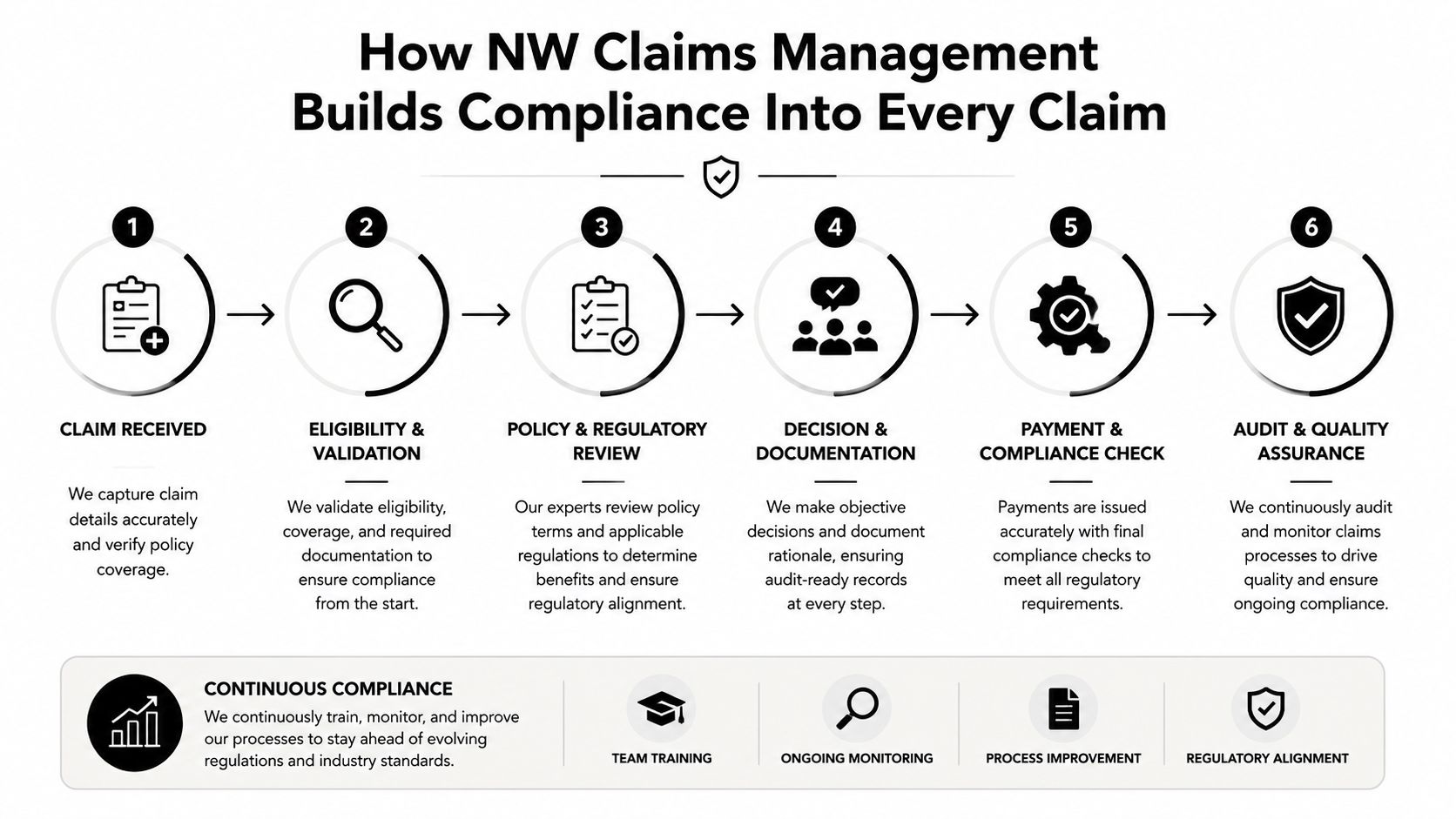
How NW Claims Management Builds Compliance Into Every Claim
A managed claim file turns regulatory compliance requirements into checkpoints. The first-day response addresses emergency mitigation and the policyholder's post-loss responsibilities without treating speed as permission to destroy evidence. The intake record captures the reported date, cause, property location, policy information, claim number, and immediate hazards.
Written acknowledgment and communication tracking create a reliable chronology. That chronology matters when Oregon or Washington timing rules become relevant, when the insurer requests additional documentation, or when a policyholder needs to show that a proof-of-loss package was delivered and received.
Evidence becomes a controlled process
Time-stamped photographs, measured sketches, moisture information, room inventories, and itemized estimates give the adjuster a consistent basis for evaluating scope. The point isn't to generate paperwork for its own sake. It's to connect each claimed item to a location, condition, cause, valuation method, and supporting record.
A proof-of-loss review catches common problems before submission. Names, dates, signatures, policy references, claimed amounts, ownership details, and supporting schedules should agree. If the claim involves flood, the federal filing requirements receive separate review rather than being mixed into an ordinary water-loss workflow.
One file, multiple checkpoints
The workflow should also identify when outside requirements enter the claim:
- Federal trigger: Flood, lead, asbestos, federal contracting, or safety conditions prompt a specialized review.
- State trigger: Oregon or Washington handling rules govern the carrier relationship and any representative's licensing obligations.
- Local trigger: Permits and building-code requirements affect the repair scope and construction sequence.
- Payment trigger: Proof-of-loss receipt, settlement, partial payment, denial, and supplemental submissions receive separate dates.
- Escalation trigger: A missed response, unexplained reduction, or unreasonable delay is documented before regulatory or legal escalation.
Operational discipline outperforms a generic compliance checklist. A claim diary, document index, and communication log give the policyholder a usable audit trail. They also reduce the chance that a contractor's estimate, an adjuster's photograph, and a carrier's position sit in separate systems with no clear connection.
Turning Compliance Into Your Strongest Negotiating Tool
Many policyholders assume compliance belongs to the insurance company. The carrier does have regulatory duties, but the policyholder controls much of the evidence that determines whether those duties can be enforced effectively.
Every delivery receipt establishes a date. Every acknowledgment letter shows what the carrier knew. Every inspection record, estimate revision, and written request reveals how the claim moved through the system. If the insurer misses an applicable deadline, that record can support a complaint, a payment demand, or a bad-faith analysis.
The same principle applies to the policyholder's obligations. A complete proof of loss, documented mitigation, and lawful repair scope make it harder to reduce the claim through ambiguity. Building-code records can support the need for covered repairs when the policy includes relevant ordinance-or-law protection. Licensing records can show whether the person negotiating on the owner's behalf was authorized to do so.
Compliance literacy changes the conversation from “the adjuster said” to “the file shows.”
That shift matters during settlement. A low offer based on an incomplete scope can be challenged with measurements, line items, photographs, and code documentation. A delayed response can be evaluated against the applicable rule and the documented receipt date. A disputed mitigation bill can be tested against the emergency conditions, work performed, and records retained.
Policyholders don't need to become lawyers to use regulatory compliance requirements effectively. They need a disciplined file, accurate dates, written communications, and a clear understanding of which rule applies to which event.
If your Oregon or Washington property claim is already delayed, under-scoped, or buried in unanswered correspondence, NW Claims Management can organize the evidence, review the proof-of-loss package, and manage the claim through negotiation. Request a claim evaluation before another deadline passes and let an experienced public adjusting team put the compliance record to work for you.