After filing a property insurance claim, you might get a call from someone at Sedgwick claims management and wonder, "Who are these people?" It can be jarring, but it’s a common scenario. Sedgwick is a third-party administrator, or TPA, which is just a formal way of saying they’re an outside firm your insurance company hires to handle claims on their behalf.
The most important thing to understand right from the start is that Sedgwick’s primary loyalty is to the insurer that pays their bills, not to you.
What Is Sedgwick Claims Management?
When you’re trying to pick up the pieces after a fire or major water damage, the last thing you need is more confusion. Think of Sedgwick as a hired project manager for your insurance company. They step in to manage the entire claims process—from the first inspection of your damaged property to the final settlement check.
But here’s where things get tricky. While they are managing your claim, they are working for the insurance company. Their main job is to process claims efficiently and, critically, to control costs for their client. This sets up an immediate conflict of interest. You need a full and fair settlement to make yourself whole again, but their objective is to close the file for the lowest amount that is contractually possible.
The Scale of Sedgwick's Operations
To appreciate their role, it helps to understand just how big Sedgwick is. The company has over 33,000 employees in 80 countries and handles work for 59% of the Fortune 500. This isn't some small, local firm; it's a global giant managing hundreds of billions of dollars in claims value every year.
With catastrophic events like the wildfires we’ve seen in the Pacific Northwest pushing annual U.S. property claims over $50 billion, Sedgwick’s influence is enormous. Despite their central role in your recovery process, their allegiance is always with the insurance companies and large corporations that hire them, a fact you can see reflected in their own company insights.
To put it simply, Sedgwick is an administrator hired to minimize claim payouts. Their adjusters are highly trained to protect their client's bottom line—not to ensure you receive a fair shake.
This relationship creates a clear distinction between the adjuster sent by your insurer (or by Sedgwick) and a public adjuster who works only for you. This is a fundamental difference in loyalty and objective, which you can explore further in our detailed comparison of a public adjuster vs an insurance adjuster.
For property owners here in Oregon and Washington, this means you should approach every conversation with a Sedgwick adjuster with a healthy dose of caution. They are skilled negotiators, and their focus is on closing your claim for as little as possible. Recognizing this from day one is the single most important step you can take to protect your own financial interests after a loss.
How to Navigate the Sedgwick Claim Process
When your insurance company tells you Sedgwick will be handling your property claim, it can feel like you've been thrown into a maze. But once you understand how their process works, you can take back control. The whole thing kicks off the moment you report the damage.
This first step is what the industry calls a First Notice of Loss (FNOL). It’s simply your initial report to your insurer. From there, your file is handed off to a Sedgwick adjuster who will be your main point of contact.
Expect a call from that adjuster pretty quickly. They’ll introduce themselves, confirm they've received your claim, and ask for a quick rundown of what happened. This is just the beginning of their investigation, which will also involve a property inspection and likely a request for a recorded statement. Always remember: their job is to gather facts that protect their client—the insurance company.
The Initial Call and Document Collection
During that first phone call, the Sedgwick adjuster should give you a claim number and their direct contact information. Write it down. They’ll ask for the basic who, what, and when of the loss. Stick to the facts. Don't guess about the full extent of the damage or admit any fault.
Next, you’ll shift into documentation mode. The adjuster will ask for photos, a list of damaged items, and any receipts for emergency repairs you've already made, like boarding up a broken window. Getting all this information organized and sent over promptly is one of the best things you can do to support your claim right from the start.
This early back-and-forth really sets the tone for the entire claim. It’s also your first real glimpse into how Sedgwick operates as the go-between for you and the company that holds your policy.
This diagram helps show how the three parties—you, your insurer, and Sedgwick—are connected.
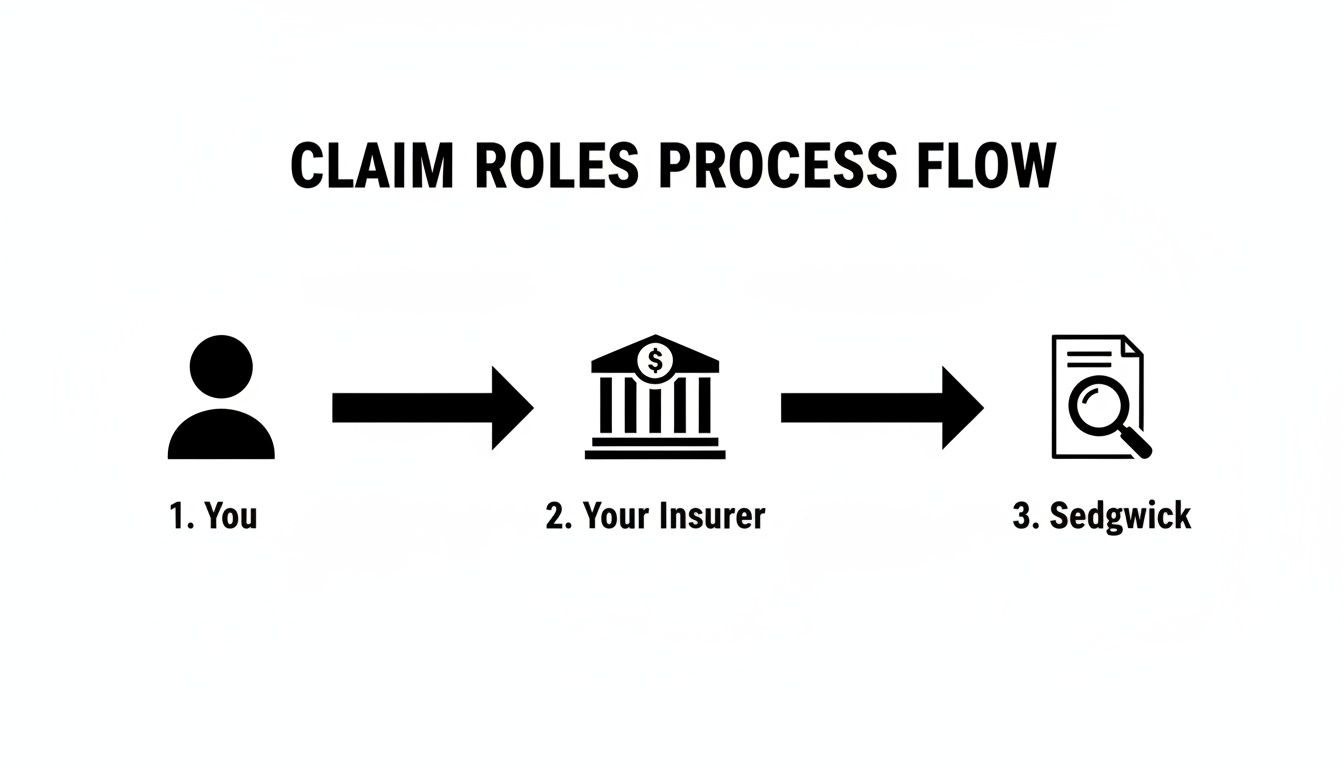
As you can see, even though your insurance policy is with your carrier, Sedgwick is the one actively managing the day-to-day work of the claim.
Damage Assessment and Settlement Negotiation
With the investigation underway, a Sedgwick adjuster will put together a repair estimate. They'll create a "scope of work" based on their inspection, sometimes bringing in one of their "preferred" contractors. This is a classic friction point. You'll often see their estimate only covers a simple repair for something you know needs to be completely replaced.
Be prepared to get your own independent repair estimates from trusted local contractors. A third-party administrator's estimate is a starting point for negotiation, not the final word on what you are owed.
Soon after, you'll receive a settlement offer. It’s critical to review this document with a fine-toothed comb. The first offer is almost always low—it's a common tactic to see if they can close the claim quickly and for less money. If the numbers don't add up, you have every right to push back with your own contractor bids and evidence. This part of the property damage claim process can be a fight, but it's essential for getting a fair result.
Keep in mind who you're dealing with. Founded in 1969, Sedgwick has grown into a global giant with over 33,000 colleagues in 80 countries. For property owners in Oregon and Washington, their name comes up a lot. Just remember that their primary goal is to control costs for the insurance companies that hire them.
Common Pitfalls to Watch For in Your Claim
When you're dealing with a property claim, it’s easy to assume everyone is on your side. But it's crucial to remember who Sedgwick works for: the insurance company. Their job is to manage the claim in a way that protects their client's bottom line. That fundamental conflict of interest can create a minefield of potential issues for you, the policyholder.
One of the first things you might encounter is a quick, lowball settlement offer. It can feel like a lifeline when you're stressed and just want to get back to normal. That’s the point. An adjuster might present an offer early on, hoping you'll take the money and run before you discover the true extent of the damage—like hidden water damage or soot that has traveled throughout your home. Accepting that first offer almost always means leaving money on the table.
Intentional Delays and Recorded Statements
Then there are the delays. An adjuster who takes days to return your calls or keeps asking for documents you’ve already sent isn't just disorganized. Intentional delays are a common tactic designed to wear you down. The longer things drag on, the more frustrated you become, and the more likely you might be to accept a lower settlement just to be done with it all.
You also need to be very careful if they ask for a recorded statement. It sounds like a routine step, but it’s a tool they can use to hurt your claim. They are listening for inconsistencies, admissions, or any way you might downplay the damage. A single misplaced word can be taken out of context and used against you later to justify paying you less or denying the claim altogether. Understanding these common insurance adjuster tricks is your best first defense.
With a dominant 59% share of the Fortune 500 client base, Sedgwick's scale is undeniable. But for policyholders, the numbers tell a different story. Recorded statements can damage credibility in 40% of disputed cases, and initial settlements often come in 25-35% below independent valuations because Sedgwick's priority is its paying client—the insurer.
Preferred Contractors and Undervaluing Repairs
You’ll likely hear about Sedgwick’s network of "preferred" contractors. This is often framed as a helpful service to get your repairs started quickly. In reality, these contractors have a business relationship with the insurer, and their estimates often reflect the insurer's goal of keeping costs low, not the actual cost of restoring your property correctly.
For example, their contractor might propose patching a roof that really needs a full replacement, or their estimate might be based on cheaper, lower-quality materials. This is why you should always get your own independent bids from contractors you trust. It gives you a realistic baseline for what the repairs should actually cost. And as you prepare for the repair phase, it’s just as important to know how to avoid contractor scams to make sure your settlement money is protected.
Know Your Policyholder Rights in Oregon and Washington

When you're dealing with a company like Sedgwick, it's easy to feel like they're calling all the shots. But here’s something they might not emphasize: you have a robust set of rights as a policyholder in Oregon and Washington. These aren't just polite suggestions; they are laws.
These consumer protection laws are enforced by the Oregon Division of Financial Regulation and the Washington Office of the Insurance Commissioner. Knowing these rules gives you the leverage you need to hold your insurer—and by extension, Sedgwick—accountable.
The Clock is Ticking: Claim Handling Deadlines
One of the most powerful protections you have involves deadlines. An adjuster can't just ghost you for weeks on end. Both Oregon and Washington have strict timeframes for how quickly insurers must act on your claim.
- Oregon: Insurers have 15 days to acknowledge your claim once they receive it. They are also required to complete their investigation within 30 days, unless they provide a good reason for needing an extension.
- Washington: The timeline is even tighter here. Insurers must acknowledge your claim within 10 working days and provide you with all the necessary claim forms and instructions within that same period.
If your adjuster is dragging their feet, these deadlines are your best friend. A simple, polite email that mentions these specific state regulations can work wonders in getting the process moving again.
Don't Accept Their First Offer: Your Right to an Independent Estimate
Here's a scenario we see all the time: Sedgwick’s adjuster provides a repair estimate that seems shockingly low. It's a common tactic—think of it as their opening bid. The critical thing to remember is that you are not required to accept it.
You have every right to get your own independent estimates from licensed contractors that you trust. This is one of the most effective tools you have. If Sedgwick’s offer won't cover the real cost of repairs, you can use your contractor's detailed bid as hard evidence to negotiate a fair settlement.
Your insurance policy is a contract. It obligates the insurance company to pay what it takes to restore your property to the way it was before the damage. State laws prevent them from acting in "bad faith" by unreasonably delaying or lowballing a valid claim.
Truly understanding your policy is the foundation for asserting these rights. It's crucial to be aware of every detail in your coverage, even secondary items like potential self-storage insurance costs that might be included. When you know the rules of the game, you can ensure the Sedgwick claims management process works for you, not against you.
Red Flags That Signal You Need an Advocate
After a property loss, all you want is for things to get back to normal. It’s natural to want to trust that your insurance company and their administrator, Sedgwick, will handle everything fairly. But sometimes, the process starts to feel less like a partnership and more like a battle.
Knowing the warning signs that your claim is going sideways is the first step in protecting yourself.
One of the most common red flags I see is the quick and suspiciously low settlement offer. This often lands in your lap before you’ve even had a chance to get a full handle on the damage. It’s a classic tactic: they’re banking on you being so eager to close this chapter that you’ll accept a fraction of what your claim is actually worth.
Another major warning sign is dealing with an adjuster who is unresponsive or dismissive. If your calls and emails go unanswered for days at a time, or your valid concerns are brushed aside with vague answers, that’s more than just bad customer service. This can be a deliberate strategy to wear you down until you give up and accept whatever they’re offering.
Disagreements Over Damage and Denials
The real trouble often starts when it’s time to assess the damage. A huge red flag is when the adjuster starts pushing to repair something that clearly needs to be replaced. For instance, they might offer a budget to patch a few shingles when any professional roofer would tell you the entire roof's integrity is compromised and requires a full replacement.
This is where you'll see major disagreements over the scope of work. The adjuster's estimate might conveniently ignore common hidden damages, especially after a fire or significant water leak. We’re talking about things like:
- Smoke and soot that has seeped into wall cavities
- The high potential for mold to grow behind drywall
- Structural damage that isn't obvious to the naked eye
When you bring these very real issues up, the adjuster might retreat behind confusing policy language to justify their lowball estimate or deny parts of your claim outright. These aren't just small differences of opinion; they are signals that your claim is being systematically undervalued. You can find more details on this in our guide about when to hire a public adjuster.
If you feel like you're in a constant fight to prove what should be obvious, that's a good sign you’re no longer on a level playing field. The Sedgwick claims management process is built to protect the insurance company’s bottom line, and these tactics are designed to save them money—at your expense.
Recognizing any of these red flags means it's time to get an expert in your corner. Trying to fight these complex disputes alone against a corporation's team of experienced adjusters is an uphill battle most homeowners are simply not equipped to win.
How a Public Adjuster Levels the Playing Field

If you feel overwhelmed and outmatched by the Sedgwick claims management process, you’re not alone. In fact, it's a common feeling, and frankly, it’s by design. Their priority is to minimize their client’s financial exposure and close your file. A licensed public adjuster is the expert you need in your corner to tip the scales back to where they belong.
Think about it this way: the insurance company has Sedgwick's team of professionals looking out for their bottom line. When you hire a public adjuster, you finally get your own dedicated expert whose only job is to protect your financial interests. At NW Claims Management, we don’t just participate in the process; we level the playing field by being your champion from day one.
Your Advocate from Start to Finish
It all starts with a simple conversation. We offer a free, no-obligation review of your claim where we just listen. We’ll look over your policy, hear what happened, and give you an honest, straightforward assessment of your situation.
The moment you hire us, the burden shifts from your shoulders to ours. We take over all communications, so you can stop worrying about calls and emails from Sedgwick.
Here’s what our team does next:
- Meticulous Documentation: We bring a fresh set of expert eyes and advanced tools to your property. We conduct our own deep-dive inspection to uncover the full extent of the damage—especially the kind that gets missed or downplayed by the carrier's adjuster.
- Policy Expertise: Insurance policies are dense, confusing documents. We comb through every line to find all the coverage you're entitled to. Nothing gets left on the table.
- Strategic Negotiation: Armed with irrefutable evidence, we build a comprehensive claim package and negotiate tenaciously with Sedgwick to get you the true value of your claim.
We work on a contingency fee basis. That means our payment is a small percentage of the final settlement we secure for you. We only get paid when you get paid.
This is a critical point. Our interests are perfectly aligned with yours, which means we are completely motivated to fight for the absolute best outcome for you and your family. You can learn more by reading our guide on the benefits of hiring a public adjuster.
We Answer Your Questions
When you're dealing with property damage, the last thing you need is more confusion. But a claim involving a third-party administrator can feel like a whole new puzzle. Here are some of the questions we hear most often from property owners about the Sedgwick claims management process and how to make sure you're being treated fairly.
Why Am I Dealing with Sedgwick and Not My Insurance Company?
It can be jarring when you call the insurance company you’ve paid for years, only to be handed off to a completely different company like Sedgwick. Insurers do this all the time, hiring outside firms called Third-Party Administrators (TPAs) to manage their claims.
For the insurance carrier, it’s a business decision—often to control costs or handle a huge number of claims at once. For you, it means the adjuster managing your file doesn't actually work for your insurer. They work for Sedgwick, and Sedgwick's client is the insurance company, not you.
Does a Third-Party Administrator Work for Me?
This is a critical point to understand: no, they don't. A Third-Party Administrator like Sedgwick is paid by your insurance company to manage the claim on their behalf.
While the adjuster might be perfectly pleasant, their job is to represent the financial interests of the insurer who hired them. This creates a built-in conflict of interest right from the start.
Their First Offer Seems Low. Do I Have to Take It?
Absolutely not. You should almost never accept the first settlement offer. Think of it as the starting bid in a negotiation, not the final word.
This initial number is often based on the adjuster's quick assessment and the use of estimating software that can miss crucial details. It is your right—and your responsibility—to get independent repair estimates from contractors you trust to see how that first offer really stacks up.
Your insurance policy is a contract. If the first offer won't fully cover the cost of bringing your property back to its original condition, you have every right to negotiate. Just make sure you have the documentation to back it up.
Is It Worth Hiring a Public Adjuster for a Sedgwick Claim?
Yes, it can make all the difference. A public adjuster works only for you, the policyholder. We step in to level the playing field.
While Sedgwick’s team is there to protect the insurer's bottom line, our role is to protect yours. We take over the stressful communications, meticulously document every detail of your loss, and negotiate from a position of strength to get you the full and fair settlement you're entitled to.
Feeling lost or worried you’re not getting a fair shake? The team at NW Claims Management is here to provide the expert advocacy you need. We offer a free claim evaluation to help you understand your options and fight for the settlement you deserve. Get started with a free claim review on our website.