Displaced From Your Home? Your Housing Guide Starts Here
After a fire, flood, or major storm damages your home, the first practical problem usually arrives before the smoke smell is gone or the cleanup crew shows up. You need somewhere to sleep tonight, somewhere your kids can function tomorrow, and somewhere your insurer will pay for without a fight later.
That’s where a good temporary housing directory helps, but only if you use it the right way. Most families don’t just need a list of rentals. They need housing that fits the claim, supports documentation, and protects Additional Living Expense coverage so they’re not left covering the gap themselves.
This guide is built for Oregon and Washington policyholders dealing with that exact problem. It moves quickly through the main housing resources, from insurer-connected placement companies to self-serve rental marketplaces for longer stays. If you’re weighing a hotel for the first few nights against a furnished home for the next few months, this is the practical comparison that matters.
The insurance piece matters just as much as the housing search. ALE is supposed to cover the reasonable increase in cost required to maintain your normal standard of living while your home is unfit to live in. In plain terms, that means the cheapest option isn’t automatically the right one.
If you need context on rental formats before choosing a platform, VerticalRent compares rental types.
1. ALE Solutions
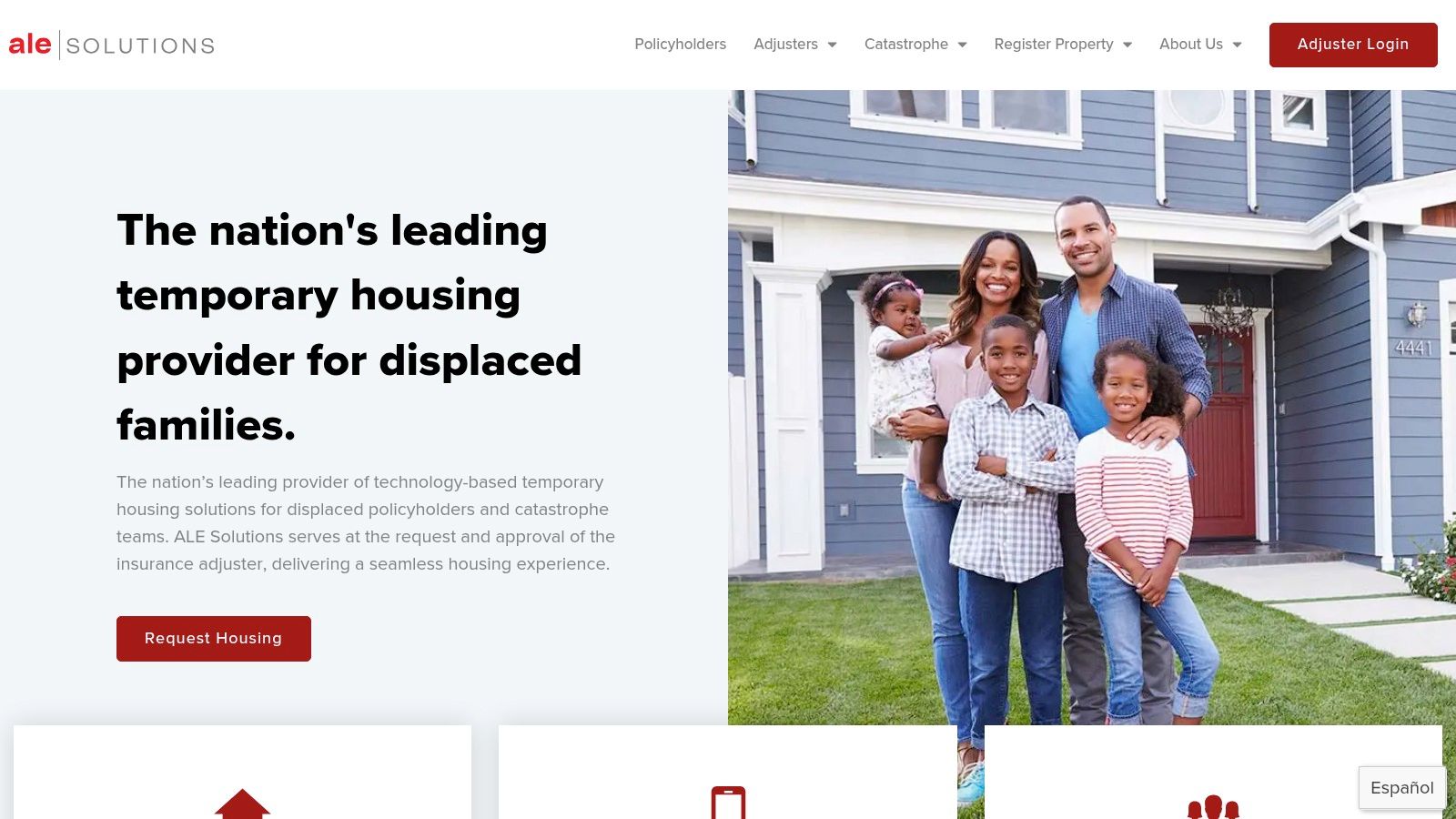
ALE Solutions is one of the first names that comes up when a carrier wants to move a policyholder fast. In practice, that means hotel placement first, then a furnished apartment, condo, or house if the repairs will take longer. For families in Oregon or Washington, the value is speed and insurance fluency, not shopping freedom.
When this kind of vendor works well, it cuts down the amount you have to front out of pocket. The placement team usually understands claim numbers, carrier approvals, direct billing, and the paperwork needed to keep housing costs tied to ALE rather than turning into a reimbursement dispute later.
Where it helps and where it frustrates people
The strength is coordination. You’re not separately chasing furniture delivery, utility setup, and hotel extensions while also answering your field adjuster. The weakness is obvious too. If the insurer sets a narrow budget or insists on a smaller radius, the options can feel more like approved inventory than true choice.
- Best use: Ask for immediate placement when the home is unsafe and your carrier has accepted the loss.
- Common problem: Families assume the first option offered is the only option. It usually isn’t.
- Smart move: Push for written details on what’s included, such as furnishings, kitchen setup, parking, pet approval, and utility handling.
Practical rule: Don’t judge an insurance housing vendor by the first-night hotel. Judge it by how well it handles the second move, because that’s where long ALE claims often go sideways.
If your loss started with a residential fire, this is also the stage where the claim decisions you make in the first days matter most. NW Claims Management’s guide on what to do after a house fire insurance loss is worth reviewing before you agree to a longer placement.
2. CRS Temporary Housing
CRS Temporary Housing is a strong fit when the claim is chaotic and the household has moving parts. That could mean kids in school, pets, mobility issues, or a business owner trying to keep one eye on property repairs and the other on operations. CRS is built around the insurance workflow, so the service feels more guided than marketplace-based.
What I like about providers in this category is that they understand the handoff from emergency shelter to a livable temporary home. That transition is where many policyholders lose time. A hotel works for a night or two. It doesn’t work well once laundry, meals, school commutes, and privacy start mattering.
Best fit for complex household needs
CRS tends to make the most sense when you need someone to manage details rather than just send listings. That includes furniture, housewares, and sometimes side issues like pet arrangements. For a flood claim, that can be a relief because flood losses often create uncertain repair timelines and repeated move dates.
When your timeline is unclear, avoid locking yourself into a housing choice that only works if repairs finish exactly on schedule. They rarely do.
A few practical trade-offs matter:
- Good for support: The process is usually easier for households that need regular updates and hand-holding.
- Less ideal for self-directed renters: If you want to browse widely and negotiate directly, this won’t feel flexible.
- Watch the budget guardrails: Carrier-approved vendors still work within ALE limits and policy terms.
If your displacement followed water damage or rising water issues, pair the housing search with a clear claim strategy. NW Claims Management’s article on how to file a flood insurance claim helps you document the loss while housing decisions are still unfolding.
3. Temporary Housing Directory an Alacrity Solutions company
Temporary Housing Directory matters because it helped shape the category. Temporary Housing Directory was founded in 2001 by Teresa Vidger in Plano, Texas, and became the first company to consolidate hotel placements and furnished housing into a single point of contact for people displaced by insurance claims or corporate relocations, according to CB Insights’ company profile on Temporary Housing Directory.
That one-stop model still matters. In a property claim, fragmentation is the enemy. If one company handles the hotel, another handles the lease, a third handles furniture, and no one handles documentation cleanly, the insured ends up doing the admin while displaced.
Why THD still deserves a place on this list
THD is now part of Alacrity’s broader claims ecosystem, which makes it especially familiar to carriers and adjusters. For policyholders, that can speed approvals and payment handling. It can also mean the process feels insurer-centered unless someone is actively advocating for your household’s actual needs.
Craft’s company profile notes that THD raised $680,000 and was later acquired by Alacrity Solutions in an undisclosed deal, after operating nationwide catastrophe services for policyholders and claims teams from its Plano headquarters at 3308 Preston Road, as summarized by Craft. Those facts don’t tell you whether a given placement is good. They do show the company has deep roots in claims housing.
- What works: Familiar claims workflows, direct-payment coordination, and housing plus furnishings under one umbrella.
- What doesn’t: It’s not a consumer-style search portal where you browse everything yourself.
- What to ask: Who controls the final housing approval, what non-covered charges fall back on you, and how extensions are handled.
For policyholders who are still trying to understand where housing fits in the bigger claim, NW Claims Management explains the home insurance claim process clearly.
4. CorporateHousing.com
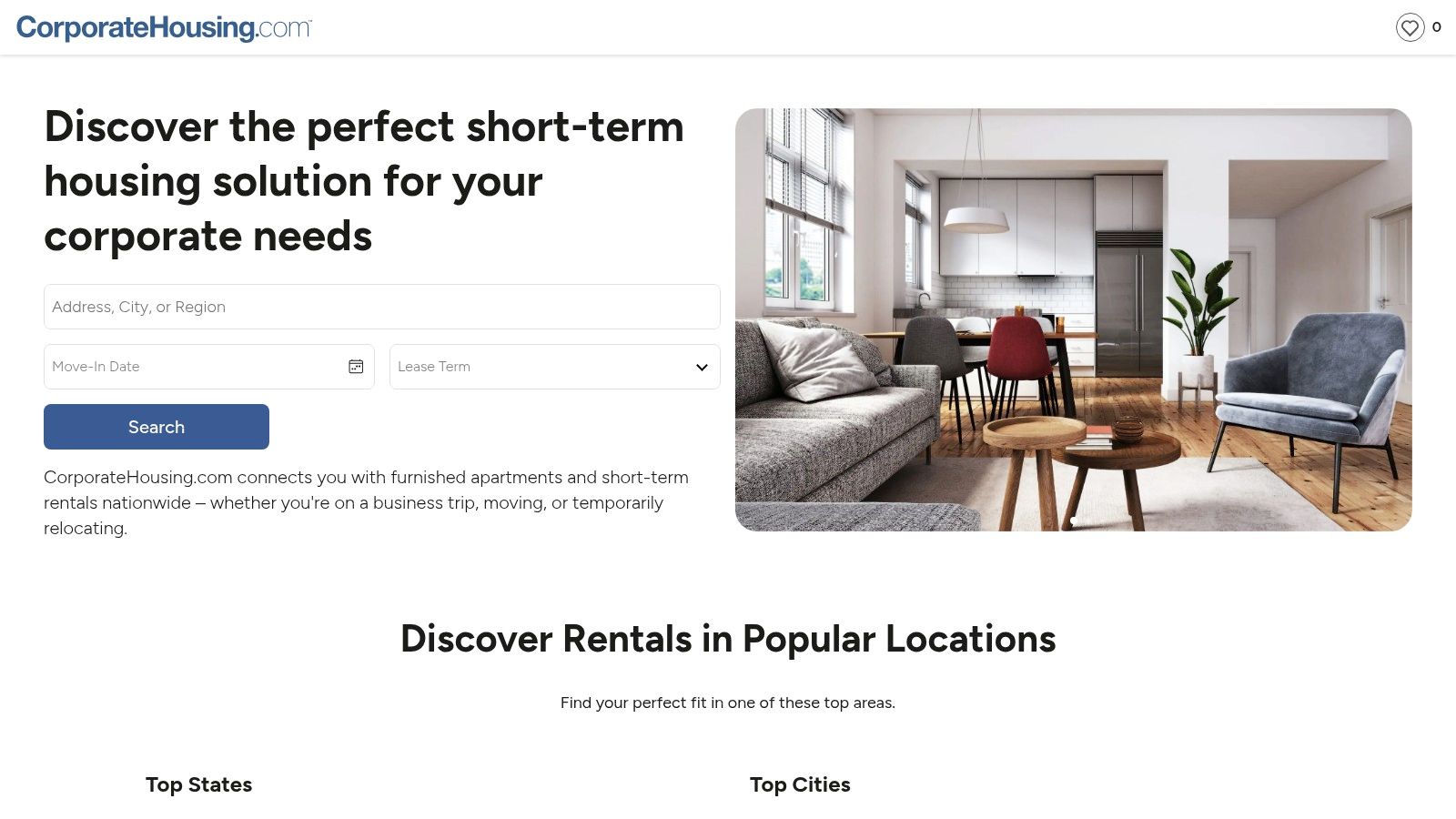
CorporateHousing.com is the tool I’d check when the hotel stage is over and the claim has moved into the “we need a real place for at least a month” phase. It isn’t insurance-specific. That’s the point. It opens up inventory that may fit your family better than carrier-vendor stock.
This kind of temporary housing directory is especially useful in the Pacific Northwest when you need a furnished apartment near work, school, medical care, or your damaged property. Search filters help, but remember what this platform is really doing. It’s a lead-generation directory connecting you to providers, not a finished booking experience.
Best for month-plus transitions
The strongest use case is the policyholder who needs a clean, professional month-to-month setup and is willing to follow up with providers. In the U.S. corporate housing market, the serviced apartment segment was valued at $13.8 billion in 2024 and is projected to reach $44.0 billion by 2033, with a projected 14.5% CAGR, according to corporate housing market statistics summarized by CHS Oilfield. That doesn’t guarantee a perfect listing in Portland, Bend, Eugene, Seattle, or Tacoma. It does show why this category has become a meaningful part of insurance displacement planning.
A polished listing isn’t enough. Ask whether the provider can produce the lease, invoices, and occupancy dates your insurer will want when ALE review gets stricter.
Use it well by focusing on lease length, included utilities, pet terms, parking, and whether the provider can hold a unit while carrier approval catches up. If you’re still mapping the claim timeline itself, NW Claims Management’s guide to the property damage claim process pairs well with this search.
5. Furnished Finder
Furnished Finder is one of the better marketplaces for policyholders who need a furnished stay of at least a month and want access to more houses, duplexes, and neighborhood-based options. It’s popular outside the insurance world, which is exactly why it can uncover housing an insurer’s default vendor may never show you.
That said, many policyholders make expensive mistakes. A broader marketplace means broader quality differences. You’ll find excellent owner-managed homes and weak listings sitting side by side. The platform can help you find inventory, but it won’t protect your ALE position unless you do the legwork.
Strong option when you need a house, not a hotel replacement
Furnished Finder is often more practical than nightly-rental platforms when you need a kitchen, laundry, and normal living space for a true displacement. It’s also useful when a family wants to stay near a school boundary or close to a damaged home so they can monitor repairs.
The trade-off is negotiation. Pricing, deposits, lease wording, and move-in timing often happen directly with the owner or manager.
- Good choice for families: Single-family homes are easier to find than on many corporate apartment platforms.
- Risk to manage: Owner communication and documentation quality can vary a lot.
- Claim strategy: Get every term in writing before move-in, including utilities, pet fees, cleaning obligations, and end-date flexibility.
The broader market for short-term rentals is also changing. Research Nester reports that Airbnb listings grew 5.1% to 8.1 million and bookings rose 9.5% to 491 million from 2023 to 2024, while multi-platform listings fell to 28.8% in late 2024, as outlined in its short-term rental market report. For displaced policyholders, that kind of consolidation can make off-mainstream listings more valuable when mainstream inventory tightens.
If you’re trying to recover every covered dollar, housing choices should support that effort rather than weaken it. NW Claims Management explains how to maximize insurance claim payout.
6. Corporate Housing by Owner CHBO
Corporate Housing by Owner sits in a useful middle ground. It’s not as insurer-driven as the major claims vendors, and it’s often more oriented to real furnished monthly living than nightly platforms. For Oregon and Washington households that need space, pets, parking, or a home office, that matters.
The biggest advantage is housing type. CHBO tends to surface the kind of full-home inventory families want during a longer displacement. If your home loss has turned into a multi-month rebuild, an executive-style furnished house can be more realistic than trying to live out of a compact apartment.
What to watch before signing
Owner-listed inventory always requires more diligence. Some listings are excellent and professionally managed. Others look better online than they do in person. Lease terms, utility caps, and furniture quality can differ substantially from one property to the next.
I’d use CHBO when the family’s needs are specific and the insurer’s vendor list is too narrow. I’d be cautious if the household is exhausted and doesn’t have the bandwidth to vet landlords carefully.
The right temporary home is the one you can defend to the carrier on paper and actually live in day to day. If either part fails, it’s the wrong placement.
Ask for a full written breakdown before committing. That includes furnishings, internet, yard care, parking, pet charges, guest rules, cleaning terms, and whether the owner will revise paperwork so it matches claim documentation needs.
7. ShortTermHousing.com
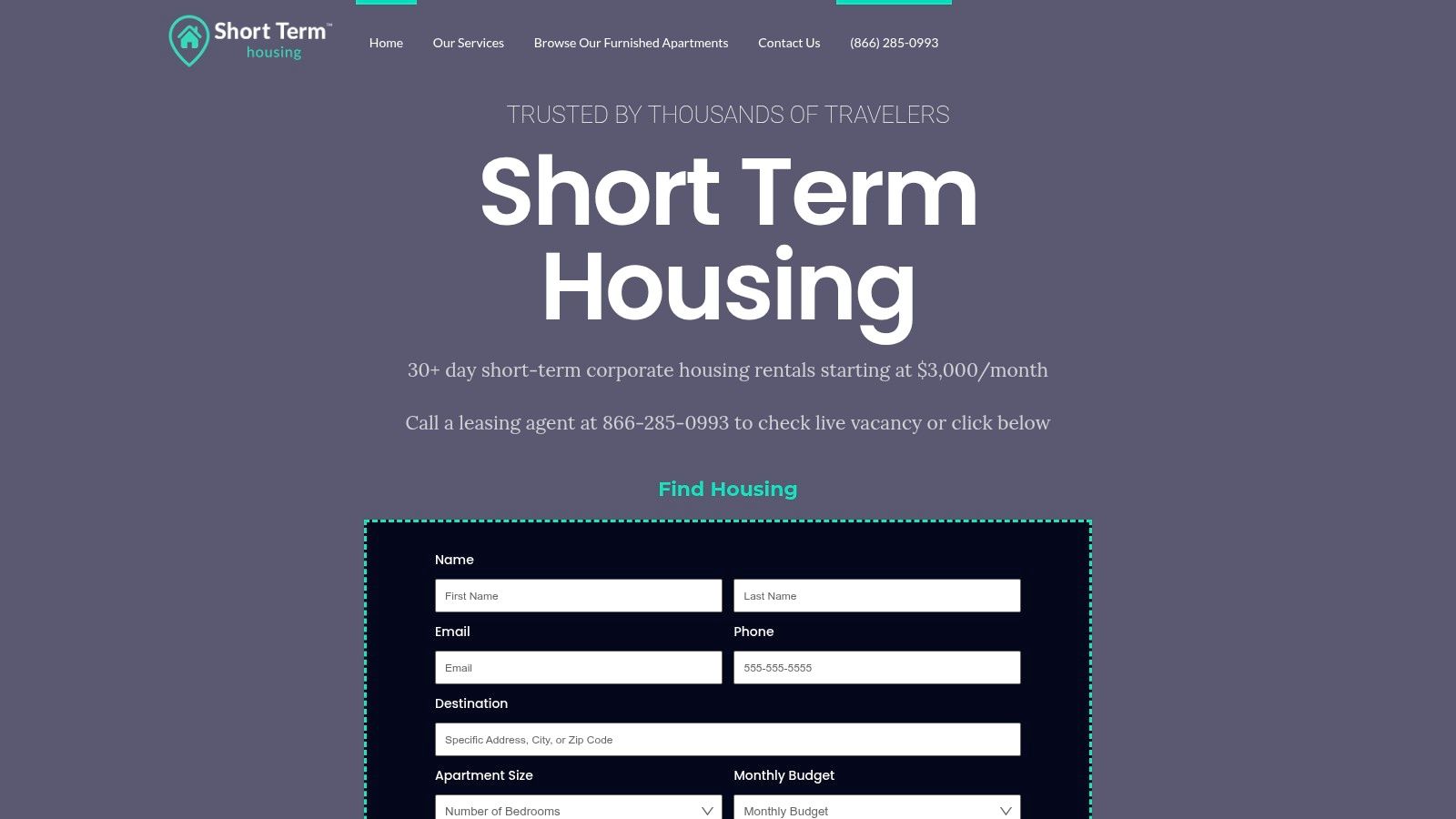
ShortTermHousing.com is a practical choice when you want concierge help without relying entirely on an insurer-selected vendor. It generally fits the policyholder who knows a hotel won’t work, doesn’t want to scroll dozens of consumer listings, and needs someone to quote options for a month-plus stay.
That quote-based model is both the benefit and the inconvenience. It can save time because someone else narrows the options. It can also slow you down if you’re expecting instant, self-serve booking.
Best use in an ALE claim
This platform makes sense when your carrier has approved temporary housing in principle, but the exact placement still needs to be sourced. It can also help when your household needs a furnished apartment or home with utilities arranged and you’d rather have one point of contact.
The caution is pricing expectations. A “starting at” figure is only a rough signal until the provider confirms dates, neighborhood, unit type, pets, parking, and utility structure. Don’t submit an option to your insurer as if it’s final unless the quote is final.
A few ways to use it better:
- Lead with your claim facts: Give the target area, household size, pets, and expected repair timeline up front.
- Request paperwork early: Ask whether they can provide lease terms and billing documents in insurer-friendly format.
- Build in extension language: Repairs slip. Your temporary lease should be able to survive that.
For policyholders who feel stuck between carrier vendor options and fully DIY searching, ShortTermHousing.com can be a workable middle lane.
8. Blueground
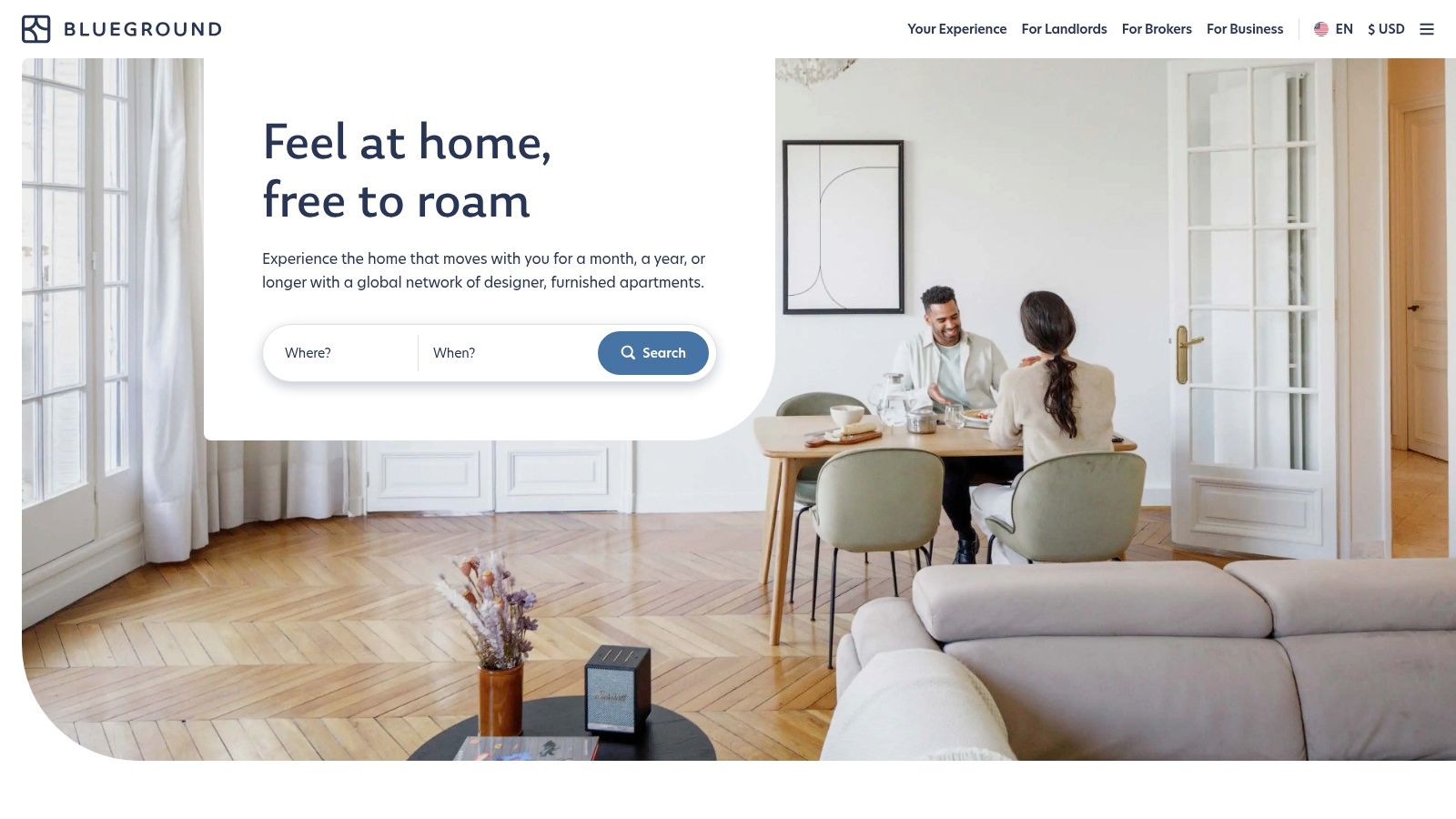
Blueground is the polished option on this list. The apartments are professionally managed, standardized, and generally easier to predict than owner-listed homes. If your family needs a stable multi-month apartment in a major metro and you want fewer surprises, that consistency has real value.
It’s not built around insurance claims. That’s the trade-off. Blueground works best when your ALE approval is already clear and you’re choosing housing based on quality, convenience, and straightforward living rather than custom claims support.
When the premium is worth it
For some policyholders, especially professionals working remotely during displacement, a turnkey setup is worth paying for. Standardized furnishings, Wi-Fi, utilities, and app-based support can reduce friction when everything else in life is already chaotic.
For others, Blueground will be too expensive relative to what the carrier thinks is reasonable. That doesn’t automatically mean the option is off the table. It means you need a defensible explanation tied to your pre-loss standard of living, location needs, and household realities.
This isn’t where I’d start for a family seeking the broadest value. It is where I’d look if the need is predictable quality in a city market and the claim can support it.
- Best fit: Stable urban placement for a longer repair window.
- Weak fit: Rural or small-market displacement, or claims needing heavy insurer coordination.
- Key question: Can you document why this choice is comparable to your normal living situation?
9. Landing
Landing works best for people who need flexibility across cities or expect housing plans to change more than once. Its membership model and standardized setup can help if work, school, or repair logistics might force another move during the claim.
That flexibility is useful, but it comes with limits. Landing is not designed for insurance housing workflows, and the inventory is concentrated in larger metro areas. If you’re displaced in a smaller Oregon or Washington market, availability may be the deciding factor before anything else.
Useful, but not claim-centered
I don’t usually put Landing at the top of the list for a traditional homeowners claim. I do keep it in mind for complex situations, especially where the insured is managing business responsibilities, family travel, or a temporary relocation between regions.
The membership aspect also means policyholders should slow down before committing. Understand the cancellation terms, transfer rules, included items, and the exact paper trail you’ll have for reimbursement or direct payment requests.
A platform like this can solve a moving-target housing problem. It won’t solve a coverage dispute. Keep those separate in your mind. Housing flexibility is one issue. ALE entitlement and claim negotiation are another.
If your insurer is already resisting extensions or pushing a cheaper placement that doesn’t fit the household, a flexible platform doesn’t replace advocacy. It just gives you another housing path.
10. Airbnb
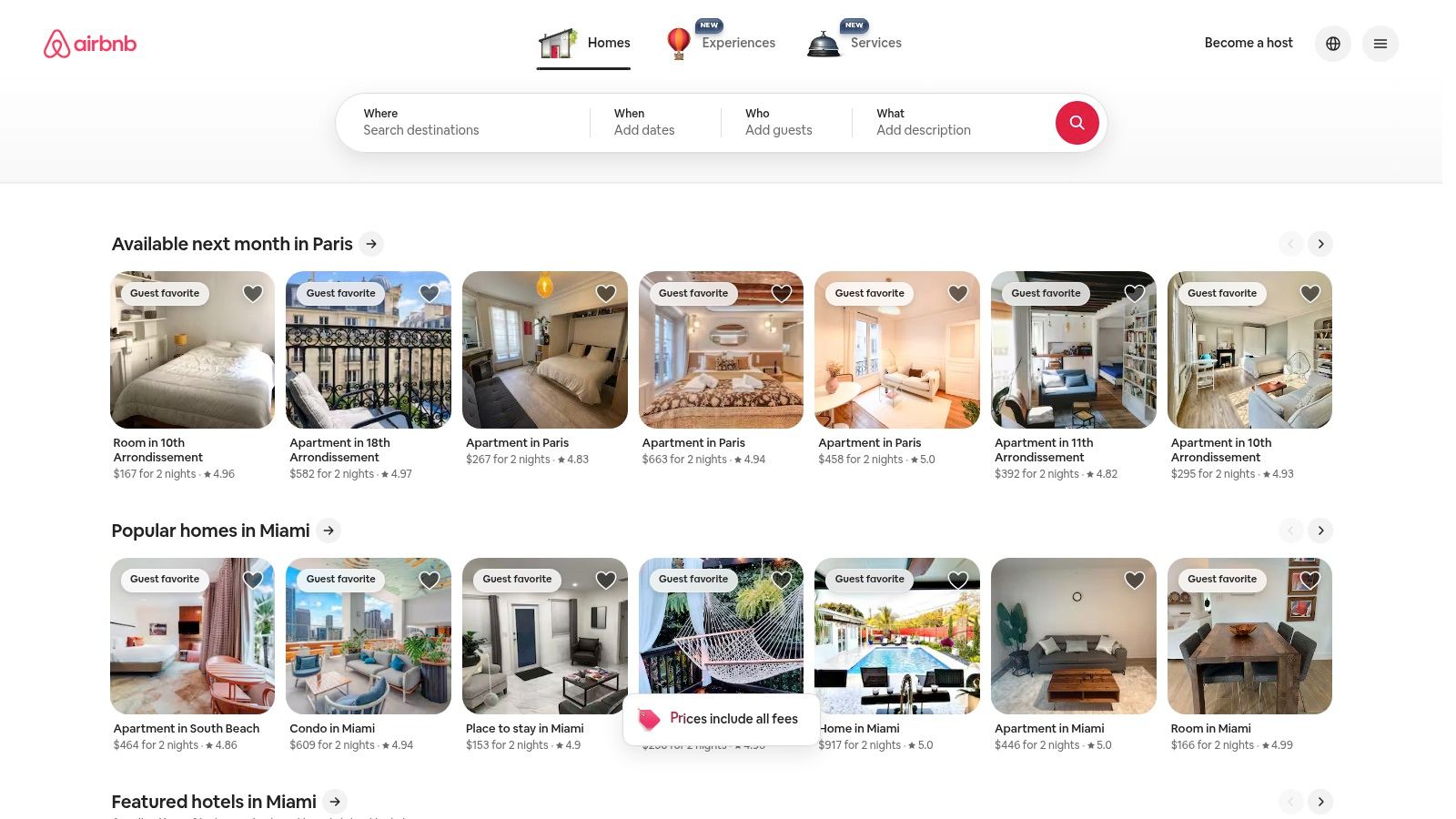
Airbnb is often the fastest way to get options on screen, especially right after a loss or when local furnished housing is tight. For a temporary housing directory approach, it’s less curated than the other tools on this list, but its reach makes it hard to ignore.
The platform’s scale is obvious. That’s useful when a family needs to compare neighborhoods, school access, parking, or pet-friendliness quickly. It’s less useful when the insurer wants formal lease terms, direct billing support, and clean documentation from a host who may never have handled an ALE claim before.
Strong for speed, weaker for claim administration
Airbnb is often a good bridge solution. It can get you out of the hotel cycle and into a home-like setting while longer-term housing is still being negotiated. It can also work for a full temporary stay if you verify every documentation issue in advance.
The weak spots are predictable. Cleaning fees, host-specific rules, and inconsistent professionalism can complicate reimbursement. If you’re using Airbnb for a longer displacement, message the host before booking and confirm what documents they’ll provide.
Existing insurer-driven temporary housing systems also leave a gap for policyholders. A review of the issue tied to insurer-managed directories states that 42% of residential fire and flood claims in Oregon and Washington involved disputes over additional living expenses, including housing, across more than 15,000 cases in 2024 and 2025, with average underpayments of $8,200 per claim, as described in this analysis of temporary housing directory gaps and ALE disputes. Even if you never use an insurer vendor, that’s the backdrop you’re operating in.
For households using Airbnb, I’d keep the search practical:
- Filter for monthly stays: Longer-stay discounts can help, but review the total before assuming the rate is reasonable.
- Confirm claim paperwork: Ask for invoices, occupancy dates, and any host identification your carrier may request.
- Check turnover burdens: If you’ll need professional cleaning support during the stay, services like short-term rental cleaning may help, but confirm whether those costs are covered before assuming they belong in ALE.
Top 10 Temporary Housing Directory Comparison
| Provider | Core offerings | Insurance workflow fit | Target audience | Unique strengths | Price / Value |
|---|---|---|---|---|---|
| ALE Solutions | Hotel → furnished apt/home placement; furniture/housewares; direct carrier billing ✨ | ★★★★, Carrier-integrated; rapid CAT-scale placements | 👥 Policyholders via carriers/adjusters | ✨ Direct billing; single point of contact; scalable 🏆 | 💰 Minimal OOP when ALE approved; insurer budgets apply |
| CRS Temporary Housing | 24/7 support; rapid hotel placement → furnished homes; furniture delivery | ★★★★★, Deep carrier relations; fast policyholder intake | 👥 Policyholders referred by insurers | ✨ Hourly rapid placement; pet boarding option; long history 🏆 | 💰 Typically billed to insurer; ALE limits constrain choices |
| Temporary Housing Directory (THD) | Placement + Alacrity claims integration; direct payment & docs | ★★★★, Alacrity ecosystem alignment for claims workflows | 👥 Carriers, adjusters, insureds | ✨ Claims-system integration; legacy market presence | 💰 Direct-bill capable; card may be required for non-covered items |
| CorporateHousing.com | Directory of furnished apartments/condos; robust filters | ★★★, Useful for 30+ day needs; not insurance-specific | 👥 Relocating professionals; insurers seeking month+ options | ✨ Strong search & Apartments.com backing | 💰 Varies by provider; lead-gen model (price follow-up needed) |
| Furnished Finder | 30+ day marketplace; landlord tools & screening | ★★★, Popular for longer stays; owner-negotiated terms | 👥 Travel nurses, insurance-displaced families | ✨ More single-family options; no guest booking fees | 💰 Direct negotiation; quality and protections vary |
| CHBO (Corporate Housing by Owner) | Owner-listed furnished homes & resources | ★★★, Good for family-sized homes; not insurance-tailored | 👥 Families, executives needing full homes | ✨ Executive-grade full homes; pet-friendly options | 💰 Owner-negotiated; pricing varies widely |
| ShortTermHousing.com | Concierge + directory for 30+ day furnished rentals; quotes | ★★★★, Concierge assists insurance & corporate placements | 👥 Insurers, relocations, property owners | ✨ Single contact sourcing & setup; quote-based service | 💰 Quote-based; “starting at” may differ from final price |
| Blueground | Professionally managed turnkey furnished apartments; app | ★★★★, Predictable multi-month solution for claims | 👥 Relocating professionals; long repair timelines | ✨ Standardized quality; utilities & transfers via app 🏆 | 💰 Premium pricing vs owner-led marketplaces |
| Landing | Membership network for furnished units; app management | ★★★, Flexible stays; membership model (not claims-specific) | 👥 Multi-city movers; month-to-month renters | ✨ Consistent standards across cities; Flex program | 💰 Membership fee + rental rates; metro-focused inventory |
| Airbnb | Massive short-term marketplace; supports mid/long stays | ★★★, Fast options but not insurance-native; host-dependent | 👥 Immediate alternatives; diverse budgets & neighborhoods | ✨ Huge inventory & speed; flexible host interactions | 💰 Wide range; host fees/cleaning can add up |
| CorporateHousing by Owner (CHBO) | Owner-to-renter marketplace for 30+ day furnished homes | ★★★, Owner-vetted; negotiation required for insurance needs | 👥 Families, executives, insurers needing full homes | ✨ Good for full-house rentals and executive stays | 💰 Owner-set pricing; direct negotiation required |
Take Control of Your Housing and Your Claim
Temporary housing after a property loss is never just about finding an empty place with a bed. It’s about restoring enough normal life that your family, business, or organization can function while repairs and claim negotiations drag on. In Oregon and Washington, that often means balancing three pressures at once. You need speed, documentation, and a housing option you can live with.
The tools above fall into two broad groups. Insurer-connected providers like ALE Solutions, CRS Temporary Housing, and THD usually handle the claims process better. They’re more likely to understand direct billing, furniture coordination, and what the carrier expects to see. Marketplace and corporate-housing platforms like CorporateHousing.com, Furnished Finder, CHBO, ShortTermHousing.com, Blueground, Landing, and Airbnb usually offer more freedom and sometimes a better fit for the household. They also require more work from you.
That distinction matters because policyholders often confuse housing access with claim protection. They aren’t the same thing. You can find a beautiful rental and still lose ground on ALE if the paperwork is weak, the lease terms are wrong, or the insurer later argues the choice exceeded what it considers reasonable. On the other hand, you can accept a carrier-vendor placement and still end up in housing that doesn’t match your family’s needs if no one pushes back.
What works best is a deliberate approach. Secure safe short-term housing first. Then evaluate what the displacement is likely to look like in real life. School commute, work access, pet needs, medical issues, cooking, laundry, parking, privacy, and proximity to the damaged property all matter. So does the ability to explain why the replacement housing is consistent with your normal standard of living.
Don’t let the claim turn into a false choice between “take what they offer” and “pay for everything yourself.” There’s often room to negotiate a better placement if the request is documented well.
Policyholders benefit from experienced representation. A public adjuster works for you, not the carrier or its housing vendor. That matters when the insurer pushes the cheapest option, questions a lease extension, or tries to frame your housing request as excessive instead of necessary.
NW Claims Management serves policyholders across Oregon and Washington and focuses on exactly these problems. The firm helps document displacement needs, support ALE requests, challenge low housing allowances, and tie temporary housing decisions back to the policy language that governs the claim. If you’re overwhelmed, that isn’t a personal failure. It’s the reality of trying to manage a major loss while uprooted from home.
The goal is simple. Get housed quickly, keep the paperwork clean, and don’t give away benefits your policy may owe.
If your home, business, or nonprofit property in Oregon or Washington has been damaged and temporary housing is becoming another fight with the insurer, NW Claims Management can help you evaluate the claim, protect your ALE position, and pursue a housing solution that fits your actual needs.