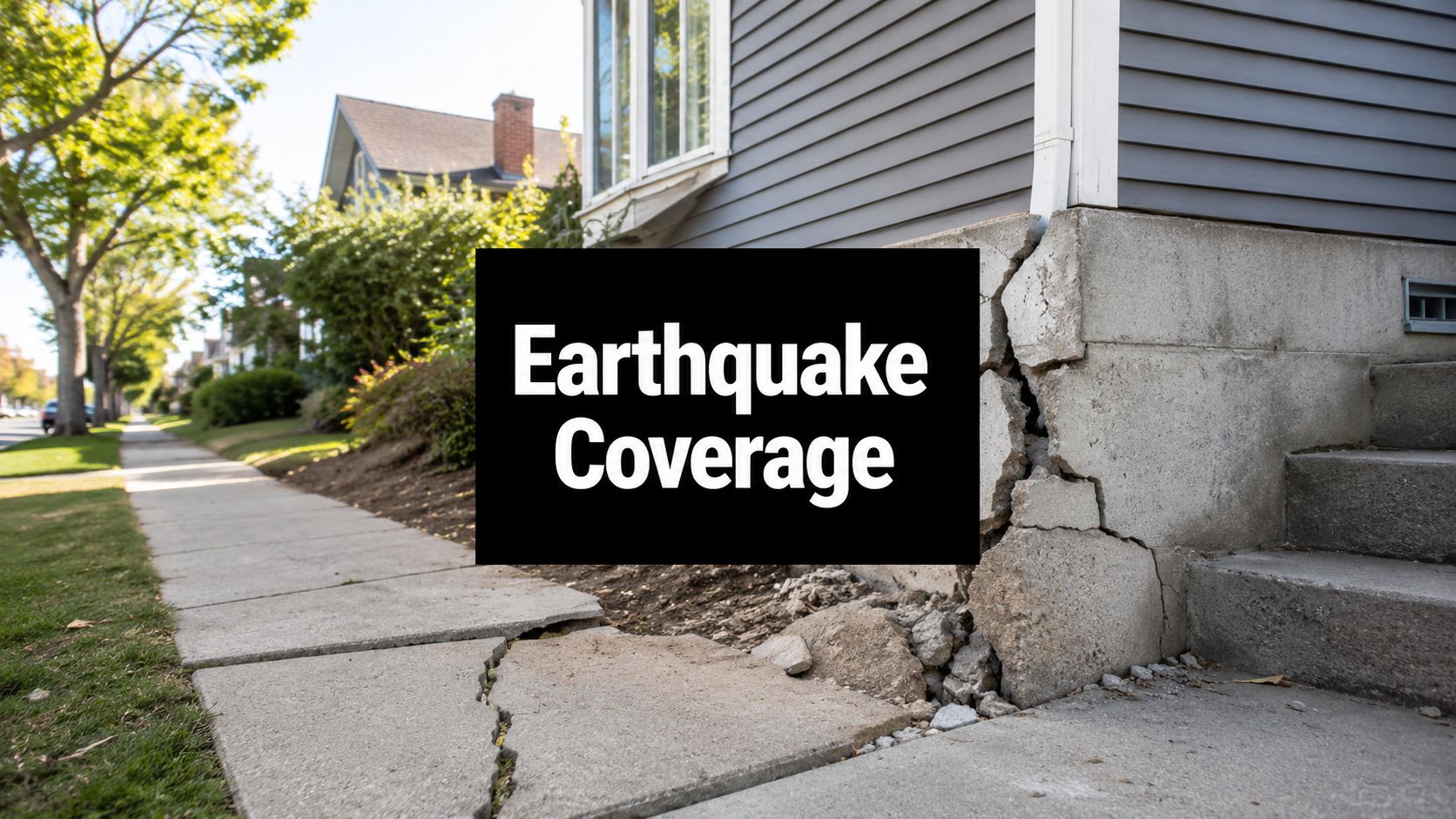
Standard homeowners insurance covers foundation cracks only when a sudden, covered peril caused them, like a burst pipe, fire, tornado, or fallen tree. It does not cover cracks from settling, soil movement, poor drainage, or wear and tear.
That's the answer most homeowners need, but it's not the whole fight. The problem is that foundation cracks show up at the worst possible time, after water intrusion, after a winter storm, or after a scary floor shift that makes you wonder if the whole house is moving.
You're probably standing in the garage or basement right now, looking at a crack that wasn't there before, trying to decide whether to call your insurer, call a contractor, or just keep quiet and hope it doesn't get worse. Don't guess your way through it. Foundation claims get won or lost on cause, timing, and documentation, not on how bad the crack looks to the naked eye. A structural engineer's report can be decisive when the insurance company tries to blame settling or earth movement, and that's why detailed proof matters early, before anyone starts offering a convenient explanation. structural engineer report guidance
When a Foundation Crack Means More Than a Cosmetic Problem
A homeowner in Portland or Vancouver usually spots the crack the same way, by accident. They're walking through the garage, notice a line in the slab or a stair-step split along a block wall, and suddenly the house feels less solid than it did five minutes ago. That reaction is rational. The foundation is the part of the home that carries everything else, so even a small crack can feel like a structural warning, not just a cosmetic flaw.
The mistake is to treat the first phone call as the first move. It usually isn't. The first move is to slow down, look for a cause, and preserve what you can before anyone starts narrating the loss for you.
What the crack is really telling you
A visible crack is only the symptom. The insurer wants to know what started it, whether the event was sudden, and whether the damage fits a covered peril or a maintenance problem. Homeowners often talk about the crack itself, but adjusters think in terms of initiating cause, timing, moisture, movement, and resulting damage.
If you can't tie the crack to a sudden event, you're already behind.
That's why frantic guesses help the insurer more than they help you. If the issue came from a burst pipe, fire, vehicle impact, or a fallen tree, the policy conversation is very different than it is for gradual settling or soil movement. The claim file needs facts, not drama.
The first hour matters more than the first opinion
Before you call in a repair crew, take clean photos, note when you found the damage, and look for water, fresh movement, or anything unusual nearby. If a leak or impact happened, document it immediately. If you need a reason to get organized before the claim gets messy, use a structure that a real adjuster can follow, not a stack of random photos and texts. One useful starting point is a proof-oriented claim packet framework.
The right response is calm, not passive. If the crack is active, widening, or paired with sloping floors or sticking doors, treat it as a structural issue first and a coverage question second. The insurer will.
Why Coverage Hinges on Cause and Not the Crack
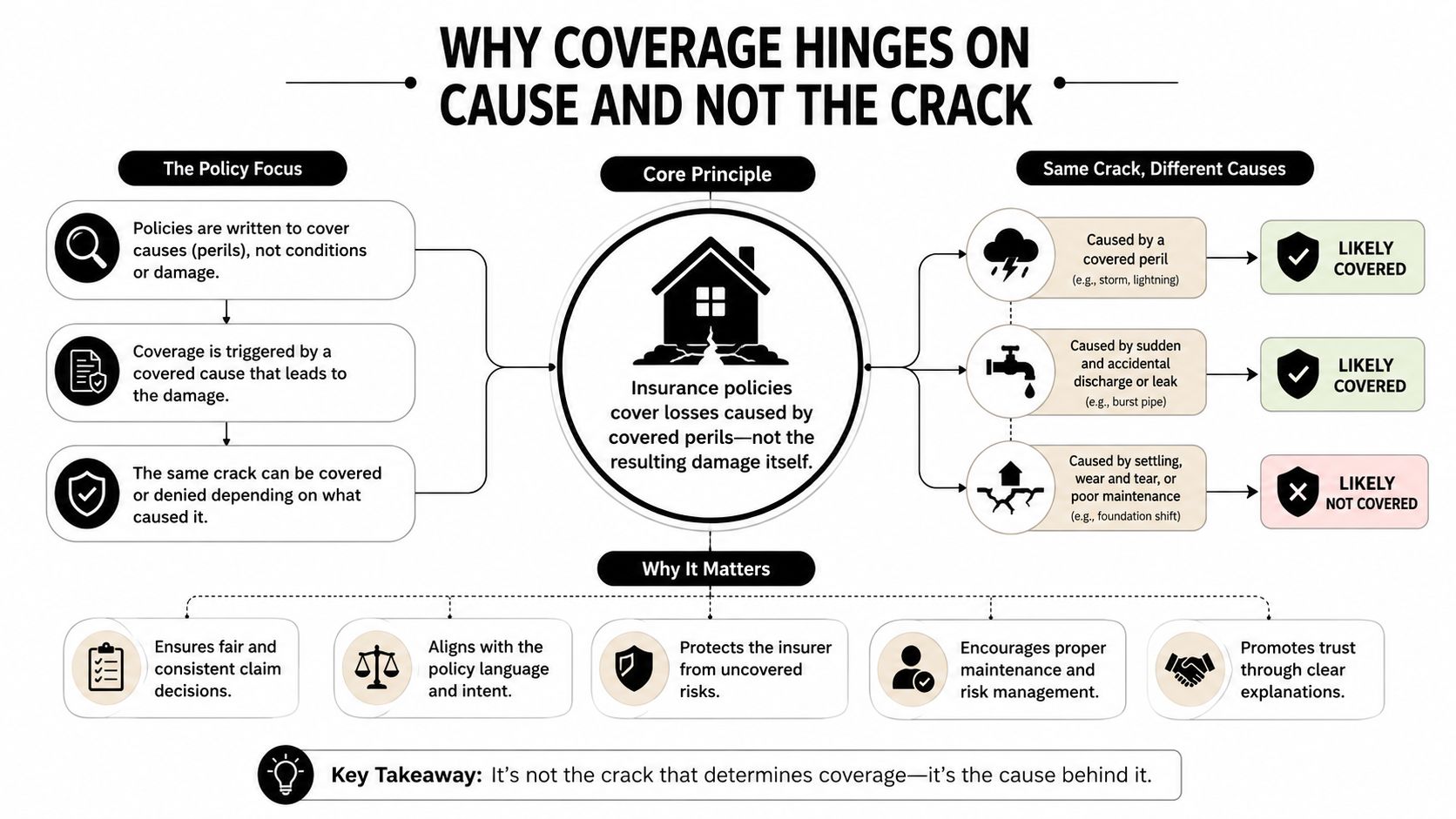
Insurance doesn't pay for damage just because the damage exists. It pays when the loss fits the policy trigger. That's the core rule in foundation claims, and it's where most homeowners get trapped by the way they describe the problem. A crack can look identical on two different houses and still produce opposite claim outcomes because one was caused by a covered event and the other was caused by excluded movement.
A kitchen spill illustrates the point. If a guest knocks over a glass and ruins the hardwood, that's a sudden accident. If the floor has been slowly cupping because of months of moisture, the insurer sees a maintenance problem. The visible damage may look similar from a distance, but the cause changes everything.
The claim file lives or dies on the initiating event
In standard homeowners policies, the decision turns on whether a sudden, accidental peril caused the crack. That can include a burst plumbing line under the slab, fire, explosion, vehicle impact, or a fallen tree. If the damage instead came from shrinkage, settlement, soil movement, or routine wear, the insurer usually denies it because those are not fortuitous losses.
That's why documentation matters at a technical level. Adjusters look for timing, moisture source, crack propagation, differential movement, and signs that something sudden happened first. A crack by itself is just an ending. Insurance cares about the beginning.
Drainage problems are where many claims go sideways
A lot of foundation disputes start with water, but not every water problem is a covered loss. Poor drainage around the home can create a long, ugly repair history that never fits the policy language cleanly. If you're trying to understand how drainage failures show up in real claims, the discussion from Lawn & Leaf Solutions drainage experts is worth reading because it puts the drainage side of the problem into practical terms homeowners can use.
For Pacific Northwest homeowners, this distinction is brutal. Water is common, soil moves, and the insurer still wants a specific triggering event. A slow, rainy-season deterioration story usually loses to a clean, sudden-loss story. That's the rule. The crack doesn't get covered. The cause might.
If you're dealing with an act-of-nature style loss, the coverage analysis gets even tighter because insurers still want proof that the event was sudden and covered. This broader explanation of act-of-nature claims is useful background when the loss started with weather, trees, or impact.
Which Foundation Cracks Insurers Cover and Which They Reject
A crack alone does not get a claim paid. The carrier wants the cause, the timing, and the policy trigger, and that is where most homeowners lose ground. Vertical shrinkage cracks, horizontal pressure cracks, stair-step cracks, and heave can point to very different problems, but the insurer still asks the same question, was this sudden and covered, or gradual and excluded?
Coverage Verdict by Crack Type and Cause
| Crack Pattern | Common Cause | Typical Coverage Verdict |
|---|---|---|
| Vertical hairline or shrinkage crack | Drying, settling, normal movement | Usually excluded |
| Horizontal wall crack | Soil pressure, hydrostatic pressure, earth movement | Usually excluded |
| Stair-step crack in block foundation | Settlement, soil movement, construction issues | Usually excluded |
| Heaving or uplift | Expansive soils, moisture fluctuation | Usually excluded |
| Sudden crack after burst pipe, fire, tree impact, or vehicle strike | Covered peril causing abrupt structural damage | Often covered if documented well |
This table provides a clear reality check. If the crack came from expansive soils, poor grading, or slow settlement, most carriers treat it as earth movement or maintenance, not a covered loss. If the crack followed a burst pipe under the slab or a tree falling onto the structure, you have a real shot, but only if the file shows the event clearly.
Borderline cracks are where engineers matter
A weak explanation gets denied fast. An adjuster sees a crack and writes settlement. The homeowner says it happened overnight. Those stories collide, and the company usually trusts the version that comes with better documentation.
A structural engineer can change the file because the report speaks in causation, not emotion. It can separate gradual movement from abrupt damage, identify differential movement, and show whether the pattern fits an impact, leak, or soil issue. That is the kind of evidence that pushes a claim from denial to reconsideration, especially when the carrier is trying to force the loss into an earth movement exclusion. If the insurer still digs in, the dispute usually belongs in a formal coverage challenge, like the process described at coverage dispute insurance.
For a broader comparison of how carriers read property losses after storms, the logic used in roof coverage after a Colorado storm is a useful parallel. Different part of the house, same insurer habit, cause first, damage second.
The blunt truth is simple. A pretty estimate from a repair contractor will not beat a weak causation story. If the loss is borderline, the engineering opinion usually matters more than the patch price.
Building a Documentation Packet That Adjusters Cannot Ignore
Coverage decisions are made on paper long before they're made in person. If your file is sloppy, the insurer will use that sloppiness against you. If your file is clean, time-stamped, and technically organized, you force the claim to be judged on evidence instead of assumptions.
Start with photos that prove sequence, not just damage
Take wide shots, then close-ups. Photograph the entire wall, floor, or slab area, then move in on the crack itself. Include moisture staining, nearby plumbing, visible drainage issues, and anything that suggests a sudden event. If the crack is changing, capture measurements or use a consistent object for scale.
Do this before repairs begin. Once someone mudjacks, caulks, or covers the area, you've lost original-condition proof. Adjusters love repaired evidence because it becomes easier to argue the cause was never clear.
Use the right expert first
A contractor can give you a repair number, but a structural engineer can tell you what caused the damage. Those are not the same thing. In a contested claim, the cause opinion usually carries more weight than the repair estimate because the policy question is about trigger, not just price.
Get the cause documented before you get the fix priced.
Keep your first call to the insurer simple. Say what you saw, when you noticed it, and what changed. Don't speculate about settlement, earth movement, or “maybe it was the storm.” If you guess wrong, that guess can live in the claim file for months.
If you want a cleaner way to think about photo capture and evidence control on active jobsites, the framework used in AI photo documentation for construction is a smart model. The point is the same in insurance, create a record that shows chronology, context, and change.
Organize the packet like someone will challenge it
A serious foundation claim file should include:
- Discovery notes, with the date and what first showed up.
- Photo sets, wide and close, taken before any repair.
- Moisture or leak evidence, if water was involved.
- Expert observations, especially if a structural engineer identified differential movement or a sudden initiating event.
- Communication notes, including who you spoke to and what you said.
- Repair proposals, kept separate from the causation opinion.
That's the kind of record that helps when the insurer starts asking for a proof package. If you need a clean way to organize that submission, the proof of loss process matters more than most homeowners realize.
Going Solo Versus Hiring a Public Adjuster for a Foundation Claim
You can handle a simple, clean claim yourself. If there's a burst pipe, obvious impact, or clear covered event, a homeowner with strong records can get through the process without outside help. The problem is that foundation claims are rarely simple, and once the carrier starts talking about settlement, soil movement, or excluded earth pressure, the fight changes shape.
What you can do alone, and where it usually breaks down
Homeowners can document damage, keep receipts, preserve photos, and file the initial claim. That part is manageable. What's harder is pushing back when the insurer redefines the loss, minimizes the damage, or says the crack came from excluded movement instead of the event you reported.
That is where a licensed public adjuster earns attention. A public adjuster reads the policy against the denial, handles the evidence, and negotiates from the policyholder's side instead of the insurer's side. In Oregon and Washington, that licensing framework matters because it separates legitimate representation from random advice.
Why the fee model matters less than the outcome
Public adjusters generally work on contingency, so the fee is tied to the claim result rather than an hourly bill. That structure makes the cost easy to understand, but the better question is whether the claim is big, disputed, or technically messy enough to justify the help. A weak file with an unchallenged denial costs far more than a clean contingency arrangement.
If the insurer is already blaming settlement, hire help before the file hardens.
The core value is using a skilled public adjuster who can press the cause argument, push back on earth movement language, and make sure the loss is documented like a structural claim, not a routine repair. That's especially important when the carrier wants to pretend the crack was old, harmless, or unrelated to the event you reported.
A useful starting point for that comparison is how public adjuster representation changes claim handling. Homeowners should be clear-eyed here, if the claim is borderline, professional representation often changes the tone of the negotiation immediately.
Pacific Northwest Risks Most Foundation Articles Skip
Oregon and Washington are not generic housing markets. Rain cycles, drainage patterns, hillside lots, clay-rich soils, and seismic realities change how cracks form and how insurers defend denials. That matters because the same crack that looks sudden to a homeowner can look like predictable soil movement to a carrier trained to point at earth movement exclusions.
Regional soil and water patterns change the argument
In much of the Pacific Northwest, water doesn't just fall on a house, it sits in the ground, redirects around slopes, and works through poorly drained lots. That gives insurers an easy denial story, especially when the foundation shows long-term movement instead of a single-event break. If the home has chronic moisture, the company will often frame the loss as progressive deterioration.
That's where local experience helps. A homeowner in Seattle or Portland needs to show how the site behaves, not just how the crack looks. Drainage paths, roof runoff, downspout placement, and slope conditions all matter because they help distinguish a weather-driven episode from a long-term soil problem.
Earth movement exclusions are a serious obstacle
Standard policies commonly carve out gradual ground movement, and that language hits Pacific Northwest claims hard. Seismic awareness also changes carrier expectations, because insurers know the region has movement risk built into the ground conditions. If you don't prove a sudden covered trigger, they'll happily blame earth movement and stop there.
A local adjuster who knows Oregon and Washington claim disputes can push back with the right proof, especially when the damage followed a specific event and not just seasonal soil change. That's the difference between a vague story and a claim with structural logic.
Local knowledge is not marketing fluff
Homeowners often think local expertise means faster service. It usually means better causation arguments. A claim on a hillside lot with saturated soil is not the same as a claim after a burst line under a slab, and the insurer knows that. You should too.
If your foundation crack sits in that gray zone, don't let the carrier reduce it to “normal movement” without a fight. In this region, the denial letter often arrives fast, and the rebuttal has to be just as specific.
Your Action Plan From Discovery Through Settlement
The first 24 hours decide a lot. Photograph the damage, note the date you found it, and stop anything that might worsen the loss if you can do so safely. Don't start with a sales pitch from a repair company and don't speculate to the insurer about the cause. Give facts, not theories.
The first week should be about proof
Get a structural engineer involved if the crack looks active, if water was involved, or if the cause isn't obvious. File the claim only after you have the cleanest evidence you can assemble. That includes photos, timeline notes, a leak or impact record if there is one, and a technical opinion that points toward a covered or excluded cause with reasons.
Once the claim is in motion, keep every communication in writing when possible. Ask for the adjuster's observations, ask what policy language they're relying on, and compare their explanation against the facts you documented. If they start leaning on settlement or earth movement without a solid basis, the claim needs pushback, not patience.
Settlement should match the real loss
A fair settlement should reflect repair work that restores the structure, not just cosmetic patching. If code upgrades are required to do the job correctly, those issues belong in the discussion too. If the damage forced you out or made part of the home unlivable, ask whether additional living expenses apply under your policy terms.
A low offer usually shows up as a repair plan that ignores cause, omits structural work, or pretends the damage is smaller than it is.
Do not accept the first number just because it arrives quickly. Fast is not the same as fair. If the insurer's offer leaves out structural correction, doesn't address the initiating event, or treats a serious crack like a patch job, you're probably looking at a low settlement.
If the claim is disputed, overcomplicated, or already denied, get a proper evaluation before the file calcifies. NW Claims Management offers free claim evaluations and handles foundation losses for homeowners in Oregon and Washington who need a sharper causation fight and a cleaner settlement strategy.
If your foundation crack showed up after a storm, a burst pipe, or a sudden shift and the insurer is already hinting at settlement or earth movement, don't go into the next conversation blind. Get a claim evaluation, get the evidence organized, and make the carrier deal with the facts. Visit NW Claims Management and ask for a free evaluation before you let a denial harden into the final word.