When a disaster strikes, claims adjusters are on the ground, navigating the chaos to help people start putting their lives back together. You’re the first responder of the insurance world, assessing property damage firsthand and helping policyholders begin their recovery. It’s a demanding field, for sure, but an incredibly rewarding path for those who thrive under pressure.
What a Disaster Claims Adjuster Actually Does
A disaster claims adjuster is the person sent by an insurance company to figure out how much the company owes for losses after a major event like a hurricane, wildfire, or tornado. Your main job is to investigate, evaluate, and ultimately settle property claims. You become the critical link between the insurance carrier and a policyholder who is going through a terrible time.
But this job is so much more than just crunching numbers. It’s a hands-on role that demands a unique mix of technical skill, emotional resilience, and genuine empathy.
Day-to-Day Realities of the Job
The life of a disaster adjuster is anything but predictable. One day you might be carefully walking across a roof checking for hail damage, and the next you’re set up in a hotel room, pushing through dozens of claims files.
Your core responsibilities will always circle back to a few key tasks:
- Inspecting Damaged Properties: This means getting your boots on the ground. You'll visit homes and businesses to document every detail of the damage with photos, measurements, and extensive notes.
- Interpreting Insurance Policies: You have to become an expert in policy language, able to clearly determine what’s covered, what isn’t, and why.
- Estimating Repair Costs: Using industry-standard software, you'll build detailed estimates for what it will cost to repair or replace the damaged property. Learning how experts conduct a thorough https://nwclaimsmanagement.com/property-damage-assessment/ is key to building accurate and fair estimates.
- Communicating with Policyholders: This is a huge part of the job. You’ll be guiding distraught homeowners and business owners through the entire process, explaining their coverage and setting clear expectations for what comes next.
It's so important to remember the homeowner's perspective. A great way to build empathy and improve your communication is by understanding the insurance claims process from their point of view.
A lot of people think this job is purely analytical. The truth is, your ability to connect with someone who has just lost everything is just as critical as your skill in writing a perfect estimate. Empathy is what really drives success in this field.
Different Types of Adjuster Roles
The world of disaster adjusting isn't a one-size-fits-all career. There are really three main paths you can take, and each one operates a bit differently.
-
Staff Adjusters: These are direct employees of an insurance company, like Allstate or Travelers. You'd handle claims exclusively for that one carrier and, in return, get a steady salary and company benefits.
-
Independent Adjusters (IAs): IAs are the industry's storm troopers. They work as contractors for independent adjusting firms, which then deploy them to disaster zones on behalf of multiple insurance carriers. This is where the vast majority of disaster claims adjuster jobs are, especially after a major catastrophe.
-
Public Adjusters: Unlike the other two roles, a public adjuster works directly for the policyholder, not the insurance company. Property owners hire them as advocates to manage their claim and negotiate with the insurance carrier for the best possible settlement.
Getting Licensed and Certified for Disaster Work
Before you can even think about setting foot in a storm-damaged area, your first stop is getting licensed. This isn't just a suggestion; it's the absolute foundation of your career. You simply cannot legally adjust a claim without the right credentials from a state's Department of Insurance.
Think of your license as your ticket to the field. The entire process might feel a little overwhelming at first, but it’s a well-worn path. Your goal is to become a licensed independent adjuster, which gives you the authority to work on behalf of insurance carriers when a catastrophe hits.
The Smartest First Move: The Designated Home State License
For anyone serious about catastrophe adjusting, the most strategic first step is securing a Designated Home State (DHS) license. This is a specific type of license designed for residents of states that don't require their own adjuster licensing.
Why is this so important? A DHS license from a state like Florida or Texas acts as your "home base" credential, allowing you to apply for reciprocal licenses in other states. This gives you the speed and flexibility you need to get to work quickly when a hurricane, wildfire, or hailstorm strikes.
A DHS license is your passport. It doesn't just let you work in the state that issued it; it unlocks the ability to get licensed almost anywhere a major disaster requires a rapid response from adjusters.
Getting your DHS license typically involves a few key steps:
- Completing a state-approved pre-licensing course and passing the exam.
- Undergoing a background check and getting fingerprinted.
- Submitting a formal application to the state's Department of Insurance.
Once you’re licensed and on the ground, your work follows a straightforward, if intense, process.
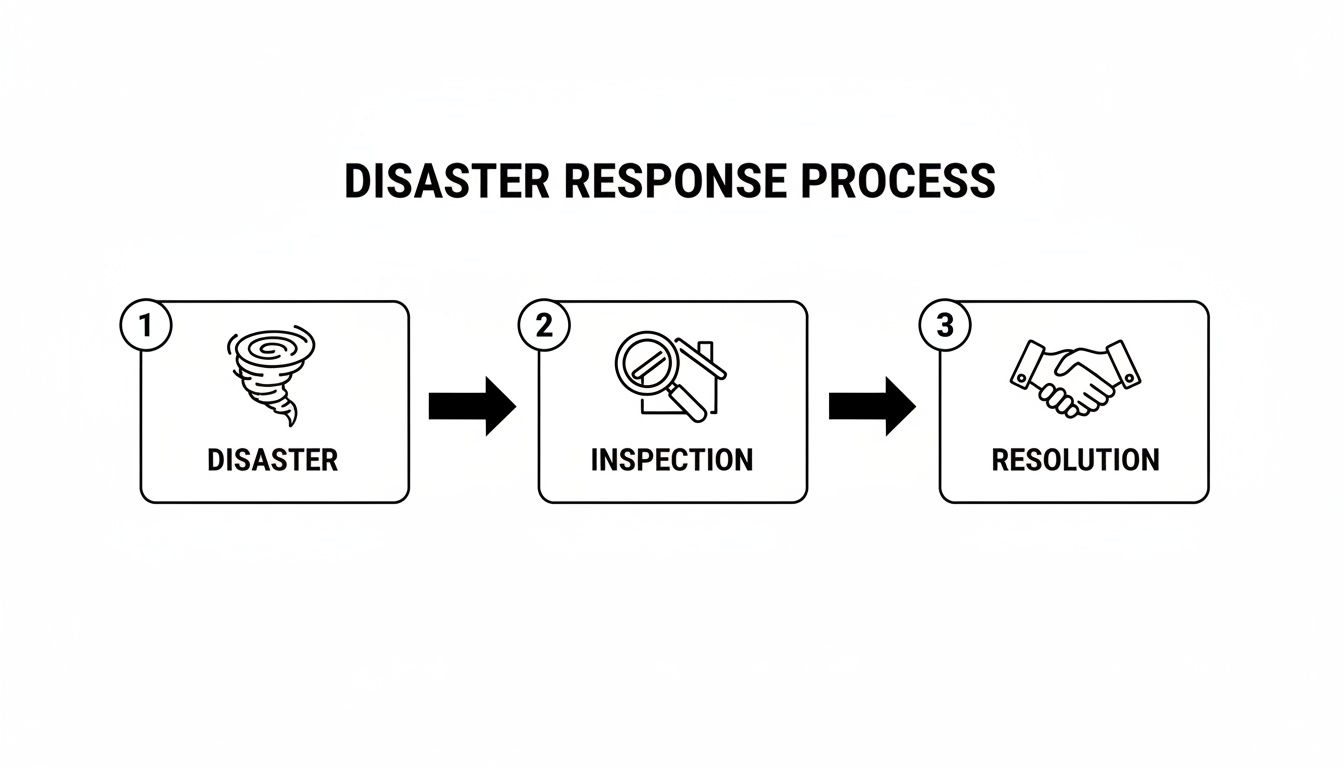
This is the core workflow you’ll manage for every claim: guiding a policyholder from the initial chaos of the event through the inspection and, finally, to a resolution.
What About States Like Oregon and Washington?
If you live in a state that does have its own licensing requirements, like Oregon or Washington, you'll simply get your home state license there. The process is very similar—you’ll still need to pass an exam and meet state-specific criteria.
Once you have your Oregon or Washington resident license, it serves the exact same purpose as a DHS license. You’ll use it to apply for reciprocity in other states whenever a catastrophe deployment comes up.
Going Beyond the Basics: Essential Certifications
A license gets you in the door, but it's the bare minimum. The adjusters who get the best assignments and earn top dollar are the ones who invest in specialized certifications. These credentials tell firms that you're a serious professional who can hit the ground running.
If you want to stand out, focus on these:
- Xactimate Certification: Xactimate is the software of the insurance restoration industry, used for writing nearly every property damage estimate. Being certified at Levels 1, 2, or 3 is a non-negotiable for many top-tier IA firms.
- NFIP Certification: To handle any claim related to the National Flood Insurance Program, you must be NFIP-certified. Since flooding is one of the most common and widespread disasters, this certification immediately makes you a more valuable asset.
- CPCU Designation: The Chartered Property Casualty Underwriter (CPCU) is one of the most prestigious designations in the entire insurance world. It’s a major commitment, but it proves you have a deep, expert-level understanding of insurance principles. A solid grasp of policy is critical, as you can see in our guide on insurance policy limits explained.
Earning these certifications is an investment in your career. It shows adjusting firms you’re ready to handle complex claims with the accuracy and efficiency they demand, which directly translates to more opportunities and higher income.
What It Really Takes to Be a Top-Tier Disaster Adjuster
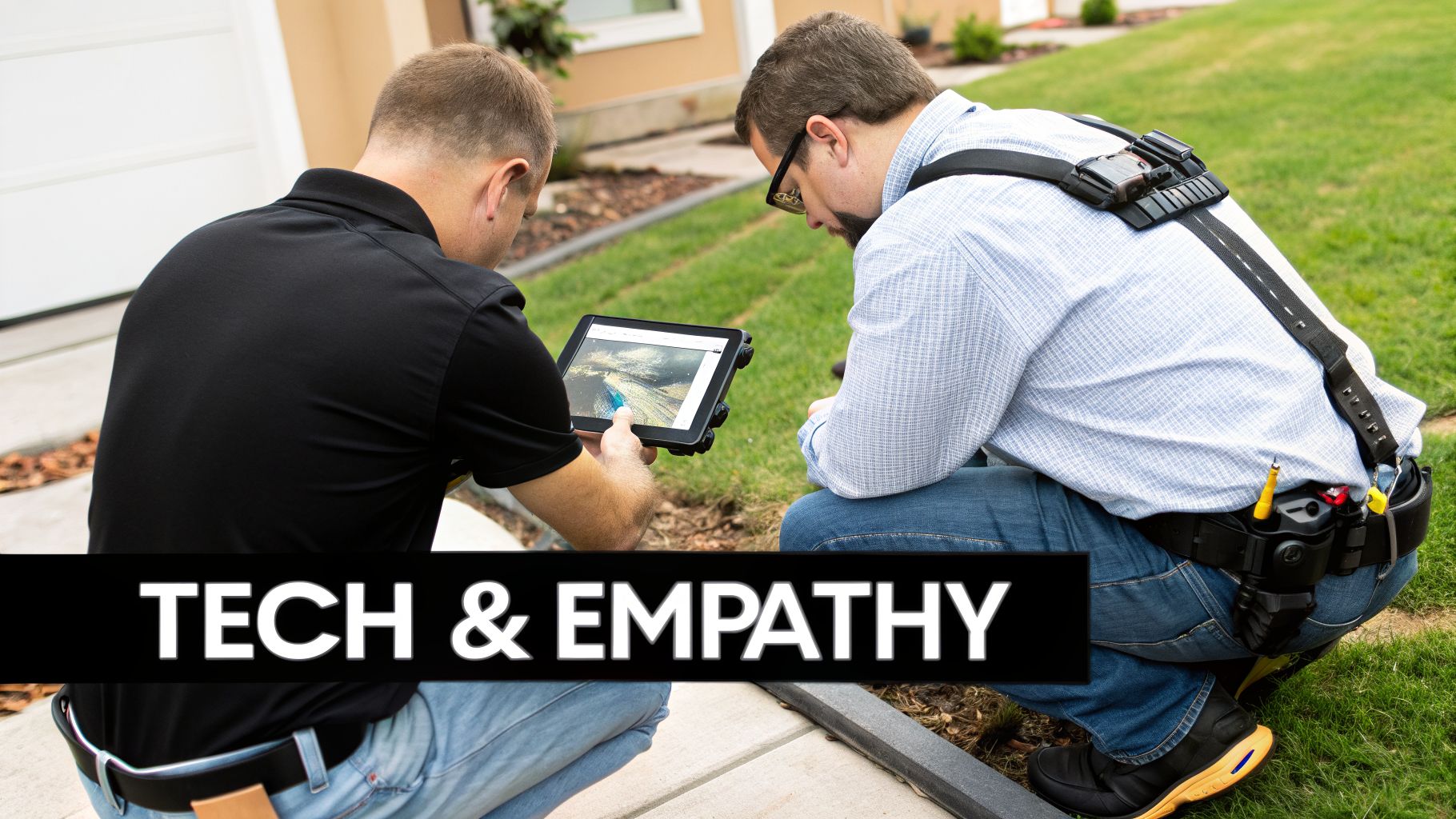
If you picture a disaster adjuster as someone with just a clipboard and a tape measure, you’re only seeing half the picture. The reality of a disaster claims adjuster job in 2026 is far more dynamic. The best adjusters out there are a potent mix of tech wizard and compassionate advisor.
Let's be clear: technology isn't here to replace adjusters. It's here to supercharge the great ones, making them faster, more precise, and ultimately, more helpful to people in crisis. At the same time, the core human skills—empathy, clear communication, and solid negotiation—have never been more important.
Getting Fluent with the Modern Adjuster’s Toolbox
Long gone are the days of manual everything. Today, being comfortable with a specific set of digital tools is a baseline expectation. This isn't about being a coder; it's about using the right tech to do your job with absolute precision.
Here’s what the pros are using every day:
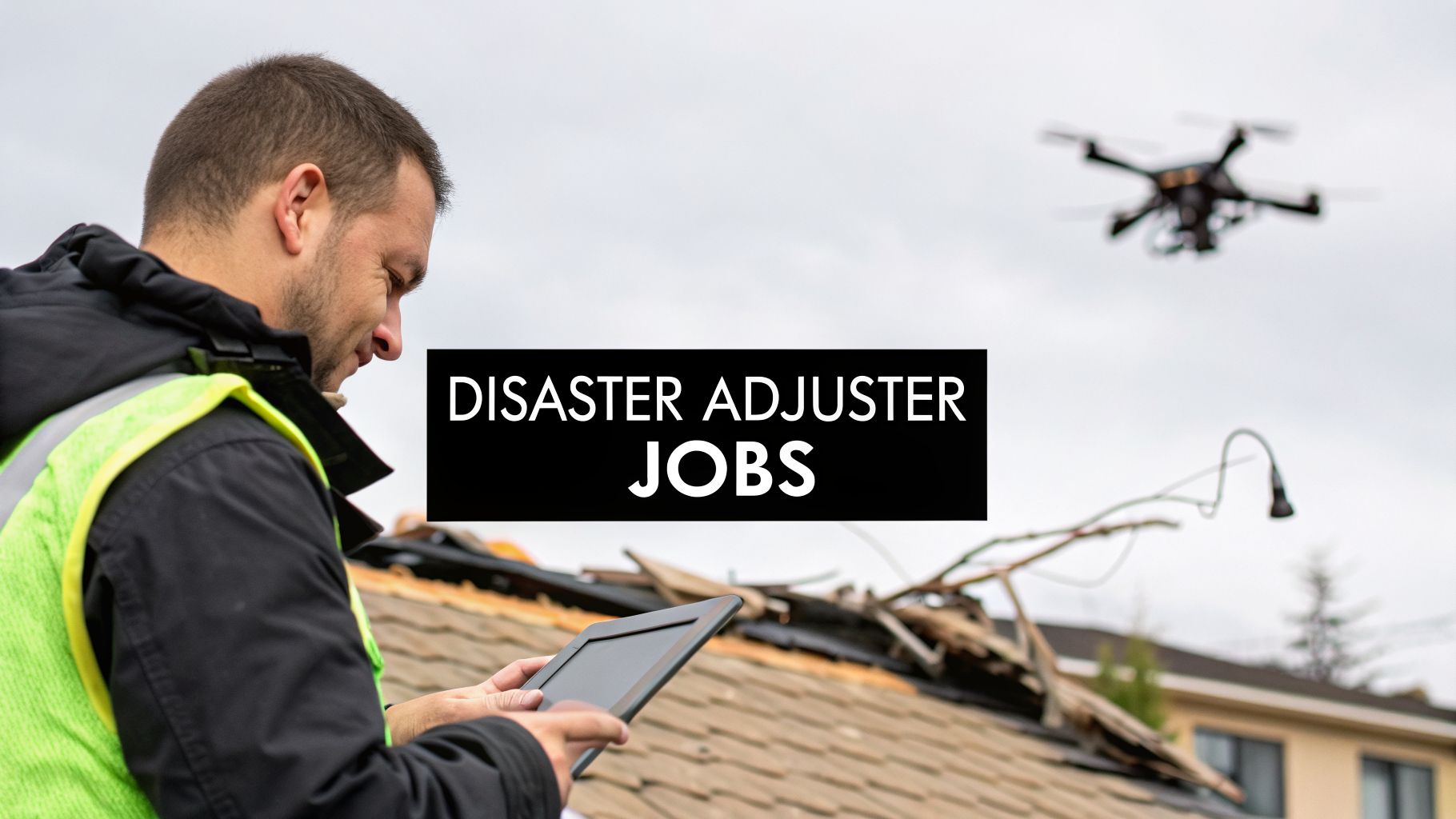
- Drone Piloting: Forget climbing every steep or dangerous roof. Drones are your eye in the sky. Getting your FAA Part 107 license to fly commercially isn’t just a nice-to-have; it's a major leg up that lets you capture high-def images safely and quickly.
- Estimating Software: Knowing a platform like Xactimate is non-negotiable. It’s the industry standard for writing detailed, itemized repair estimates, and firms will expect you to be fluent.
- Virtual Inspection Tools: Specialized apps and video platforms let you walk a homeowner through an inspection from miles away. This is a game-changer for getting a quick first look at the damage or handling smaller claims without a site visit.
The industry is definitely leaning into automation. Some carriers have seen 80% faster processing times on simple claims by using AI, but its use is still carefully managed. You can get a deeper look at this trend in a report on the future of AI in insurance from Insurance Journal. For complex disaster claims, the technology still needs a sharp human mind to oversee and validate its findings. Your job is evolving from just gathering data to providing expert interpretation.
The Human Skills Technology Can’t Touch
For all the incredible efficiency tech provides, it can't sit down with a family who just lost their home. When you step onto a disaster site, you’re often meeting people on the worst day of their lives. Your ability to connect is what separates a good adjuster from a truly great one.
These are the skills that will define your career:
- Real Empathy: You have to genuinely listen and understand the chaos and fear a policyholder is going through. This is how you build trust and make an awful situation a little more manageable.
- Clear, Simple Communication: Your job is to translate complicated policy jargon into plain English. Policyholders need answers and a clear path forward, not more confusion.
- Unshakeable Integrity: Your work must be fair, ethical, and transparent, every single time. A reputation for honesty is the single most valuable asset you can build in this industry.
Technology is brilliant at figuring out the 'what'—the scope of damage, the cost to repair. But you handle the 'who'—the human being whose world just got turned upside down. Never lose sight of that.
Becoming a Master of Advocacy and Negotiation
Whether you end up working for an insurance carrier or directly for homeowners, your skill in negotiation is critical. This isn't about arguing; it's about presenting a case built on undeniable facts and a deep understanding of the policy.
A strong negotiation doesn't start at a table—it starts the moment you arrive on site. Every photo you take, every measurement you record, and every note you make builds the foundation for your claim file. This meticulous documentation is your leverage.
For those drawn to public adjusting, these skills are the very core of your work. You are the policyholder's advocate, fighting to make sure they get the fair and just settlement they're entitled to. Developing this skill takes practice, and understanding the right tactics can dramatically change the outcome for your client. If that's a path you're considering, our guide on negotiating with an insurance company is a great starting point for sharpening your approach.
In the end, the most successful adjusters in 2026 are the ones who live in both worlds. They’re tech-forward pros who use every tool at their disposal to work smarter, and they are empathetic advocates who remember the human cost of every disaster.
Finding Work and Getting That First Deployment
So, you’ve earned your adjuster license. That’s the first major hurdle, but now comes the real challenge: landing that first deployment. Having a license in hand doesn't automatically get you into a disaster zone. You need a solid game plan to get noticed when the call goes out.
Your entire focus should be on getting added to the rosters of major Independent Adjusting (IA) firms. These are the companies that insurance carriers hire to handle the massive surge of claims after a catastrophe. If you're not on their approved lists, you're practically invisible.
Get on the Rosters: Your Ticket to the Show
Think of IA firm rosters as the official list of go-to adjusters. To get on them, you need to show you’re not just licensed, but prepared, professional, and ready to roll at a moment's notice.
Start by targeting the industry's heavy hitters. Firms like Pilot Catastrophe Services, Eberl Claims Service, and Alacrity Solutions are constantly looking for qualified adjusters. Head to their websites, find the "careers" or "roster" page, and start applying.
Your application is your first audition, so make it count. Be meticulous. They'll want to see:
- Your Licenses: Every single state you're licensed in, making sure to specify your Designated Home State (DHS).
- Your Certifications: Make your Xactimate level, NFIP certification, and any other credentials impossible to miss.
- Relevant Background: Don't discount past work. Experience in construction, roofing, or even high-stakes customer service proves you have transferable skills.
A bit of hard-won advice: don't just apply to one or two firms and wait. Carpet-bomb the industry. The more rosters you're on, the higher the odds your phone will ring when a storm makes landfall.
Follow the Rhythm of the Storms
Disaster adjusting work follows a predictable, seasonal calendar. If you know the rhythm, you can anticipate where the work will be and when, which helps you focus your efforts.
- Hurricane Season (June-November): This is the big one. All eyes are on the Atlantic and the Gulf. Adjusters know that states like Florida, Louisiana, and the Carolinas are where the action will likely be.
- Tornado & Hail Season (March-June): Spring brings violent, localized storms to the Midwest and Plains states. Tornadoes and hail can create a sudden, massive need for adjusters in a concentrated area.
- Wildfire Season (Summer/Fall): Out West, especially in California, Oregon, and Washington, wildfires are the major threat. These claims are incredibly complex and often involve total-loss properties.
This seasonal demand is only getting more intense. We're seeing more catastrophic events year after year, which is putting a huge strain on the industry and creating a massive need for skilled disaster claims adjuster jobs. In fact, the J.D. Power 2025 U.S. Property Claims Satisfaction Study highlighted that the rise in severe weather has stretched the average claim cycle to 32.4 days. Even more telling, the time from the first notice of loss to final payment has ballooned to 44 days—the longest it's been since 2008. Anyone following the 2026 claims market outlook on insurancebusinessmag.com knows this trend is creating immense opportunity for qualified professionals.
Build a Resume That Screams "Deploy Me!"
Your resume is a marketing tool, not just a work history. It needs to be tailored to show an IA firm recruiter that you are an asset who is ready to go now.
Here’s what your resume needs to communicate loud and clear:
1. A Powerful Summary: Ditch the generic objective. Lead with a summary that gets straight to the point. For example: "Licensed independent adjuster with a Texas DHS license, Xactimate Level 2 certification, and FAA Part 107 drone license. Seeking immediate catastrophe deployment."
2. Licenses & Certifications Front and Center: Create a dedicated section right at the top. This is the first thing a recruiter scans for.
3. Skills That Matter: List practical, on-the-ground skills. Think "Roof Inspection," "Property Damage Assessment," "Policy Interpretation," and "Customer De-escalation." Construction experience is gold. If you’ve managed complex documentation, like the kind detailed in our guide on how to file a flood insurance claim, that's a valuable skill to highlight.
Don't just wait for a call. Actively search for current disaster adjuster job openings and other opportunities. Get involved in online industry groups, attend conferences, and network. Let everyone know you're licensed, geared up, and hungry for your first deployment.
Becoming a Public Adjuster to Advocate for Policyholders
If you've spent years working claims, you've probably had that moment. You're on-site, assessing damage, and you feel a pull—a sense that you could do more for the person whose life was just turned upside down. If you're tired of corporate red tape and want to put your expertise to work directly for property owners, then becoming a public adjuster isn't just a career change. It's a calling.
This move flips the script entirely. You stop working for the insurance carrier and start working exclusively for the policyholder. You're no longer just an evaluator; you become their advocate, their strategist, and their champion. Your only goal is to make sure they get the full, fair settlement they're entitled to under their policy.
The Mindset and Licensing Shift to Public Adjusting
Making this switch is about more than just who signs your paycheck. It’s a total overhaul of your professional mindset. As a staff or independent adjuster, you operate within the carrier's framework. As a public adjuster, you are the framework—you're a business owner and the client's most trusted guide.
This new path also comes with its own set of rules. You can't just hang out a shingle; you need to be specifically licensed for this role.
- State-Specific Licensing: Most states, including Oregon and Washington, require a distinct public adjuster license, which is separate from your standard independent adjuster license. This usually means more coursework, a different exam, and posting a higher bond.
- Ethical Responsibilities: Your fiduciary duty is to the policyholder, period. This demands an unshakable commitment to ethics and transparency, especially since you’re guiding people through one of the most stressful financial events of their lives.
As a public adjuster, your value is measured by the results you deliver for your client. You become their professional guide through the complex, and often adversarial, claims process, ensuring their voice is heard and their rights are protected.
Building Your Business as a Public Adjuster
Here’s one of the biggest practical differences: you're no longer waiting for an IA firm to deploy you. As a public adjuster, you’re in charge of finding your own clients. This is where your network, reputation, and business savvy truly come into play. The most successful public adjusters generate business through referrals from attorneys, trusted contractors, and most importantly, from happy clients.
Right now, the industry is grappling with huge backlogs. An increase in catastrophic events means claim volumes are overwhelming traditional systems. This creates a real opportunity for public adjusters in Oregon and Washington. With claims getting more complex, homeowners are actively seeking out expert advocates they can trust. For a closer look at these market dynamics, you can review some eye-opening claims adjusting workforce trends on AnythingResearch.com.
Contrasting Pay Structures
Perhaps the biggest change you'll notice is in how you get paid. You'll be moving from the familiar fee schedule to a contingency fee model.
Independent Adjuster Pay:
- Typically based on a fee schedule dictated by the carrier or IA firm.
- The pay is a percentage of the claim value, but that percentage often shrinks as the claim gets larger.
- Income depends on closing a high volume of assigned claims.
Public Adjuster Pay:
- Based on a contingency fee, which is a small, pre-agreed percentage of the total settlement you secure for the policyholder.
- You’re paid by your client directly from their settlement funds.
- Your income is directly linked to the value you create—a better, more thorough settlement for your client also means a higher fee for you.
This payment structure perfectly aligns your financial interests with your client's. For a deeper dive into the fundamental differences between these roles, check out our guide on a public adjuster vs. an insurance adjuster. This career path is a powerful way to use your hard-won claims experience to build your own business while truly fighting for those who need it most.
Common Questions About Disaster Adjusting Careers
If you're thinking about becoming a catastrophe adjuster, you probably have a ton of questions. It's a field unlike any other, where you're part first responder, part investigator, and part construction expert. It's only natural to want to know what you're really getting into.
Let's cut through the noise and get to the real-world answers for the questions I hear most often from folks just starting out.
What Are the Real Physical and Emotional Demands?
When people say this job is demanding, that's an understatement. On a CAT deployment, you're looking at 10-12 hour days, seven days a week, often for weeks or even months. You'll be working in the aftermath of a disaster, which means dealing with everything from blistering heat and humidity to mud, rain, and debris.
Physically, you have to be up for the challenge. This isn't an office job. On any given day, you might be:
- Climbing several steep roofs.
- Wriggling through tight, dusty attics and damp crawlspaces.
- Hauling heavy ladders and gear in and out of your truck all day long.
The emotional side of things can be just as tough, if not tougher. You're meeting people on one of the worst days of their lives. They've lost their homes, their sense of security, and they're looking to you for answers. It takes a huge amount of empathy and patience to be that calm, steady presence they need.
Honestly, the emotional burnout is something we don't talk about enough. It’s not just the long hours; it's the weight of carrying so much of other people's trauma. To make it long-term, you have to find your 'why'—that deep satisfaction you get from genuinely helping people put their lives back together.
What Essential Gear Should I Own From Day One?
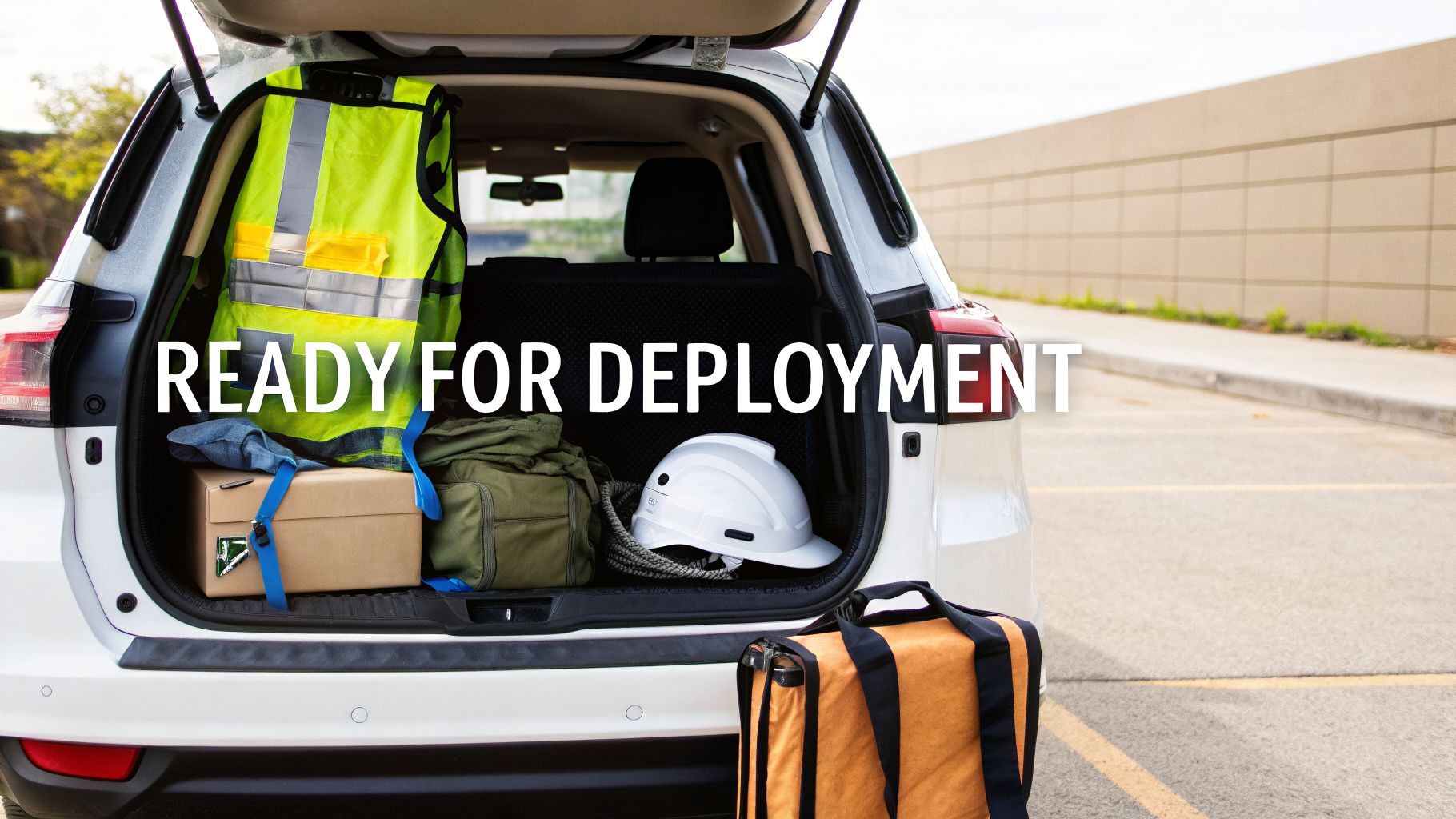
Rolling up to your first deployment with your own professional gear tells the IA firm you mean business. While they might have some loaner equipment, being self-sufficient shows you're prepared and ready to work.
Here’s a look at your essential starter kit:
Core Tool & Equipment List:
- A reliable vehicle: A truck or a large SUV is pretty much a necessity for hauling your ladder and gear.
- A sturdy extension ladder: Go for a 28-foot or 32-foot ladder. This is standard for safely accessing two-story homes.
- Safety gear: This is non-negotiable. You need a hard hat, steel-toed boots, safety glasses, and a high-vis vest.
- Inspection tools: A high-quality digital camera (a new smartphone works great), a powerful flashlight, and a 100-foot tape measure are your daily workhorses.
- Your mobile office: A durable laptop, a portable printer/scanner, and a mobile hotspot are crucial for filing reports from the field, where internet can be spotty.
Pro Tip: Don’t cheap out on your boots. You’ll be living in them. A comfortable, waterproof, and protective pair is one of the best investments you can make in your own health and safety. Trust me.
Having your own kit means you can hit the ground running the moment you arrive. That kind of initiative gets noticed.
How Long Does a Typical Deployment Last?
There's no single answer to this, as it completely depends on the scale of the disaster. For a more localized event like a hail storm or a tornado outbreak, you might be deployed for three to six weeks.
But for a major hurricane that causes widespread devastation, you need to be prepared for a much longer haul. It’s not unusual for adjusters to be on-site for three to six months, sometimes even longer, to handle the sheer volume of claims. Being away from home for extended periods is a fundamental part of life as a disaster claims adjuster.
Can I Gain Experience Before a Major Storm?
Absolutely, and you should. Waiting for a hurricane to make landfall is a terrible strategy for breaking into this industry. The best way to get noticed by IA firms is to build your skills before the storm season kicks into high gear.
Here’s how you can get your foot in the door:
- Work Daily Claims: Call independent adjusting firms in your area and ask to be added to their roster for daily claims. These are your everyday losses—a pipe burst, a kitchen fire, a tree on a roof. It’s the perfect training ground to learn estimating software and inspection techniques without the chaos of a catastrophe.
- Get a Construction Job: Seriously. Go work for a roofer or a general contractor for a few months. Nothing beats hands-on knowledge of how a house is actually put together. It will make you a much better adjuster.
- Ride Along with a Veteran: Find an experienced adjuster through networking and ask to shadow them. Buying them lunch in exchange for a day of seeing the job firsthand is an incredible way to learn what the work is really like.
This kind of proactive experience proves you're committed and will dramatically shorten your learning curve when you finally get that first CAT call.
Navigating the complexities of property damage claims can be overwhelming, especially when you’re trying to rebuild. As a licensed public adjusting firm in Oregon and Washington, NW Claims Management is here to advocate for you, not the insurance company. We ensure your claim is documented thoroughly and negotiated expertly to secure the full and fair settlement you deserve. Contact us for a free claim evaluation and let our expertise guide you.