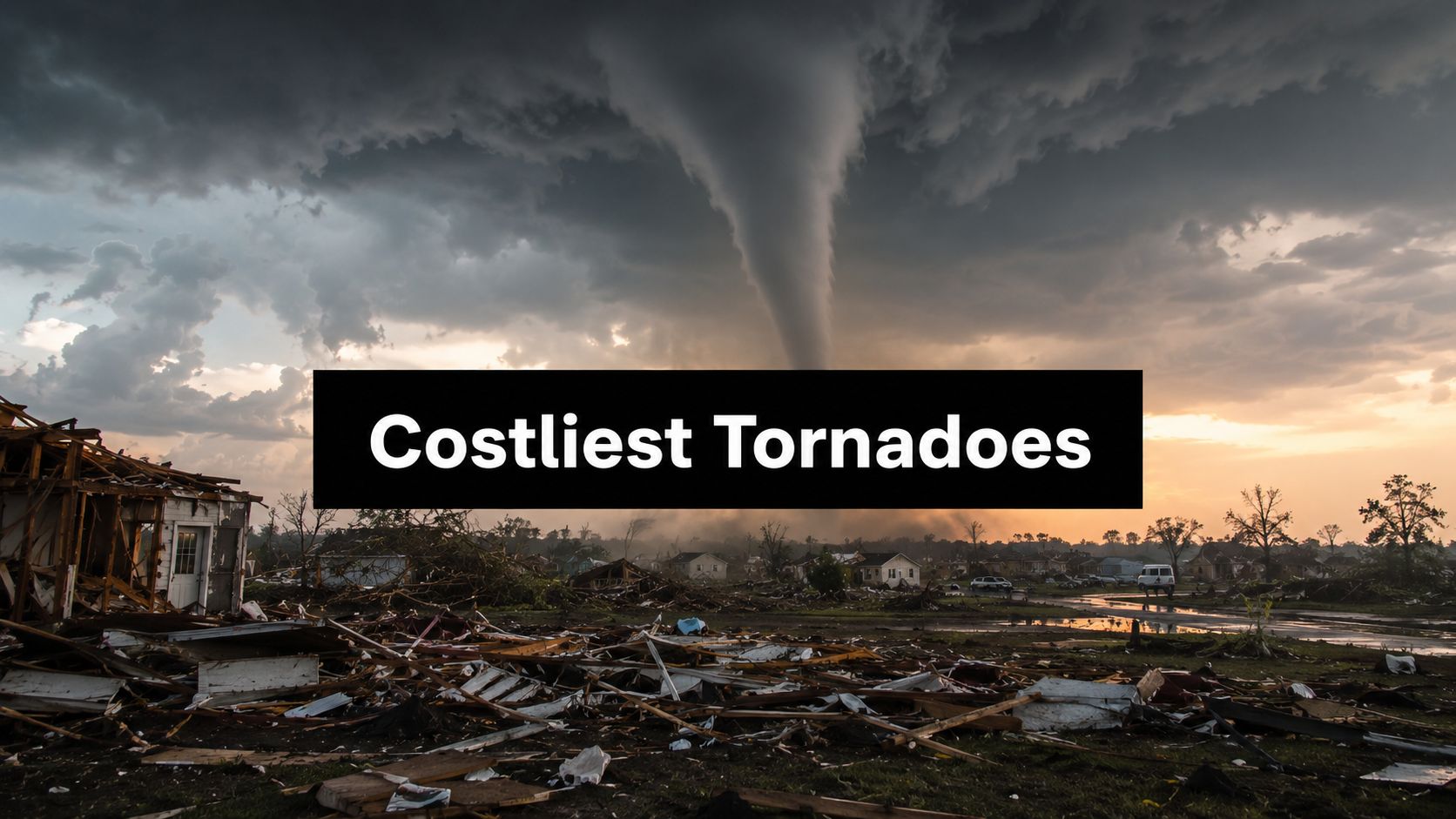
In a major tornado loss, the hardest number to pin down is often not wind speed. It is the final value of the claim.
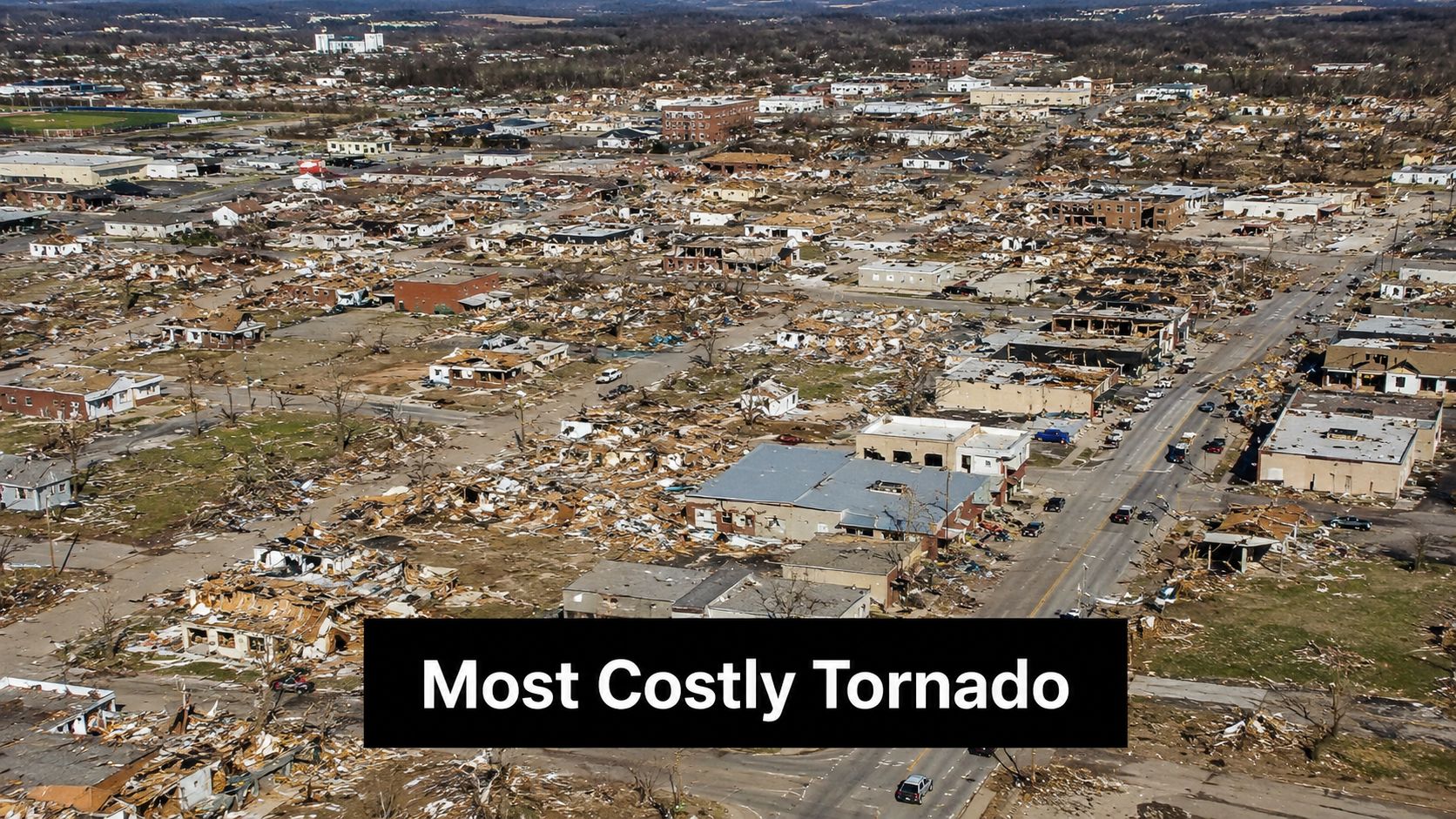
Joplin is widely recognized as the costliest tornado event in U.S. history, but the lesson for property owners is not the ranking itself. It is how fast a disaster can turn from a repair problem into a documentation problem, a valuation dispute, and a timing fight with the carrier.
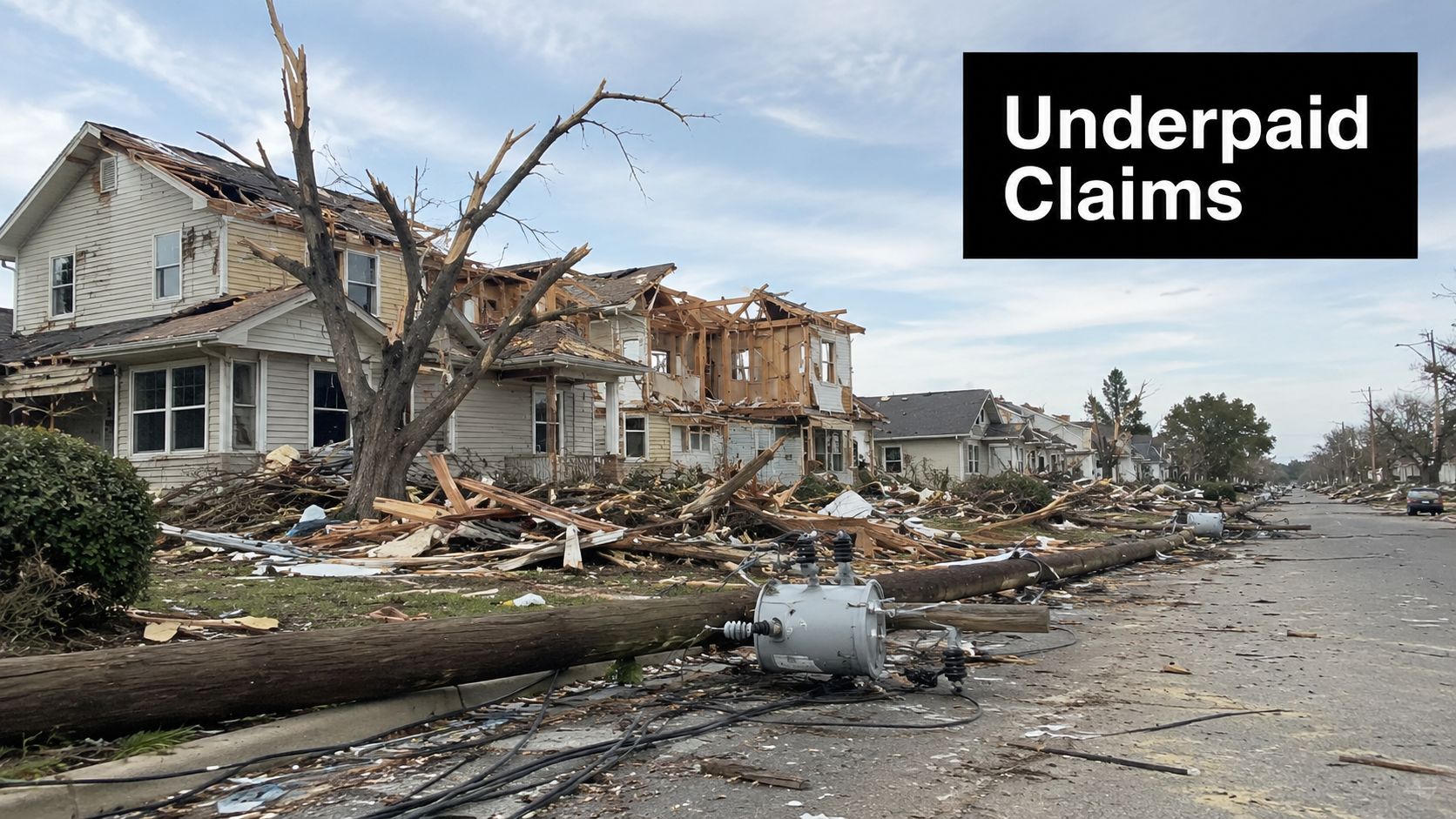
Owners usually see the obvious damage first: roof failure, broken windows, collapsed walls, soaked interiors. The larger financial exposure sits inside the details that get missed early. Structural shift, code-required upgrades, debris removal, smoke and water contamination, lost business income, and partial estimates all change what the policy may owe. If those items are not documented at the start, they are harder to recover later.
That is why these storms matter well beyond the Midwest and South. For owners in Oregon and Washington, each event on this list works as a claim file you can learn from in advance. A tornado in Missouri or Alabama may look different from a severe wind loss in the Pacific Northwest, but the insurance process is familiar: the carrier writes its scope, sets its numbers, and moves the claim toward closure. Property owners need their own record, their own valuation support, and a clear strategy for act of nature insurance claims in Oregon and Washington.
I have seen the same pattern after large and small wind events. Emergency work gets approved quickly. Final pricing, hidden damage, and code compliance get questioned later.
History helps because it shows where claims stall and where money gets left on the table. The storm causes the physical loss. The claim process decides how much of that loss the owner recovers.
1. Joplin, Missouri Tornado (May 22, 2011)
Joplin produced one of the largest insured tornado losses ever recorded in the United States, according to the Insurance Information Institute's historical catastrophe loss summaries. For property owners, that scale matters because large-dollar events expose the same problem I see in everyday wind claims. A carrier can accept coverage and still dispute scope, pricing, code work, and how far the damage extends.
Joplin is a useful case study for owners in Oregon and Washington because it shows what happens when a claim gets defined too early. Roof failure, shattered openings, and collapsed sections are easy to spot. The money often turns on what gets missed at the start: structural movement, wet insulation inside closed cavities, damaged mechanical systems, code-triggered upgrades, debris handling, and business interruption items that do not appear in a quick field estimate.
What Joplin still teaches property owners
The first estimate is rarely the final measure of the loss.
Owners who did best after storms like Joplin treated emergency response and claim valuation as two separate jobs. Secure the property. Stop further damage. Then build the claim file with dated photos, contractor findings, repair invoices, pre-loss records, and a written damage narrative that ties each item back to the storm. That is the same approach I recommend for a property damage claim in Oregon or Washington, where wind-driven rain and partial structural damage can create the same scope disputes even without a Midwest tornado.
The practical trade-off is speed versus accuracy. Fast cleanup protects the site and can reduce later disagreement about neglect. Fast demolition without documentation can erase proof. Once finishes are removed and debris is hauled off, it becomes harder to show whether cracking, framing distortion, saturation, and system damage came from the covered event or from later conditions.
Practical rule: Approve mitigation quickly, but do not let mitigation invoices or a carrier's first scope set the value of the entire claim.
Commercial losses after Joplin also highlight a point many owners miss. The building claim is only part of the file. Tenant improvements, equipment, inventory, signage, extra expense, and lost income can each require separate support and separate analysis. Owners who rely on a single top-line estimate usually leave money unclaimed. Owners who document each category, and press for line-item review, put themselves in a much stronger position to recover what the policy owes.
2. Tuscaloosa-Birmingham, Alabama Tornado (April 27, 2011)
The Tuscaloosa-Birmingham tornado shows why mixed property losses are so difficult to adjust correctly. It struck densely developed areas and forced adjusters, contractors, and owners to deal with very different buildings under the same disaster conditions.
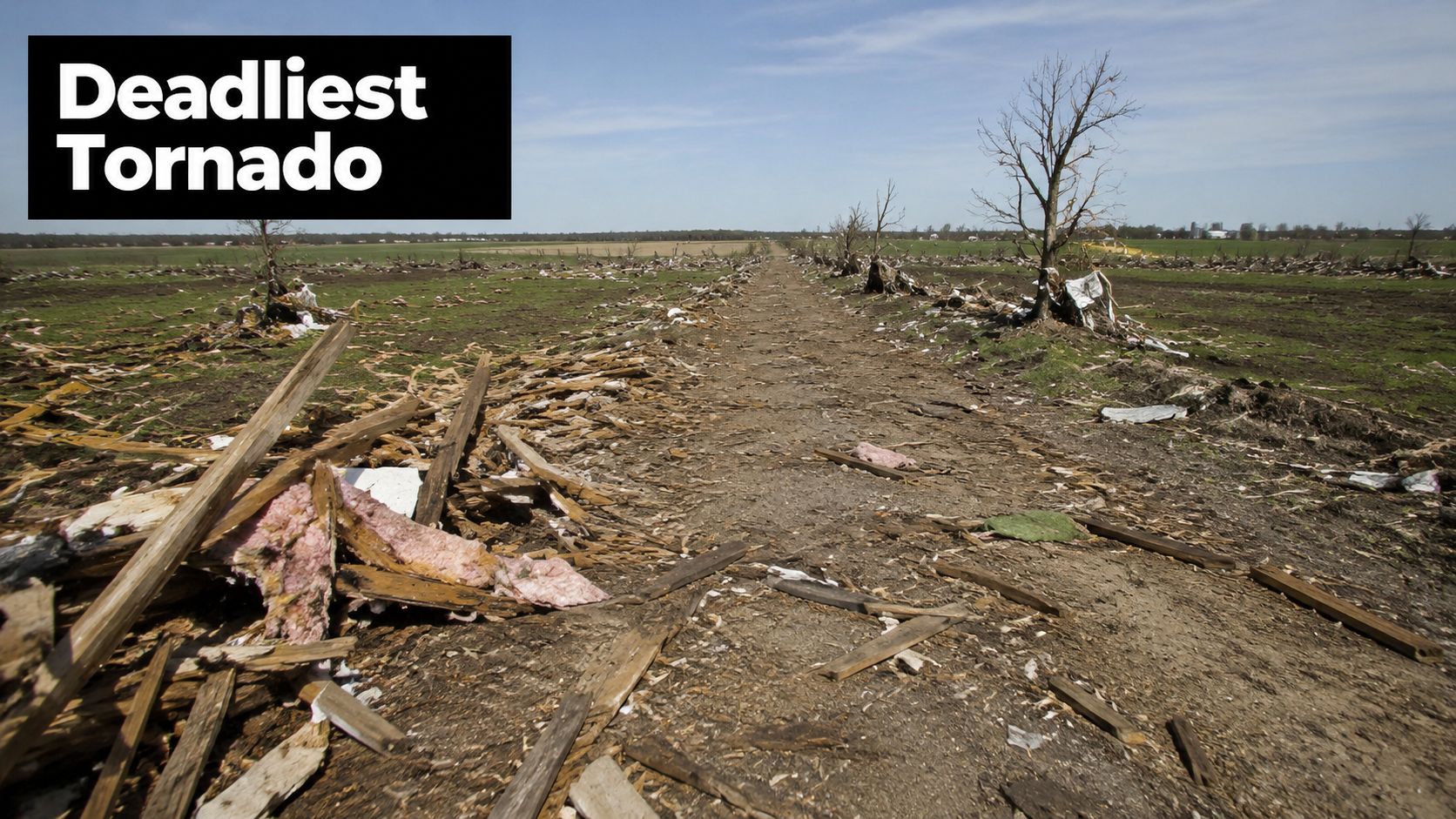
What matters in practice is that residential, retail, office, warehouse, school, and nonprofit claims don't fail in the same place. A homeowner may lose money on finish materials and code items. A business may lose money on buildout, extra expense, and income calculations. A church or school may struggle to price specialty spaces or aging structures fairly.
One estimating template won't fit every loss
Owners encounter trouble, as the insurance company often uses a standardized workflow. Standardized workflows are efficient, but they can flatten the differences between a tract home, a custom residence, and a commercial structure with specialized systems.
A better approach is disciplined claim intake from the start. When people ask me what works, it's this:
- Match the scope to the property type: A custom home needs finish-level detail. A commercial building needs system-level detail, lease review, and interruption analysis.
- Collect records before memory fades: Floor plans, maintenance files, invoices, and photos are far easier to organize in the first days than weeks later.
- File with structure, not emotion: This is why a documented property damage claim process matters. A clean package moves better than a stack of disconnected receipts and photos.
Tuscaloosa-Birmingham is a reminder that claim quality depends on who builds the file. If the file starts generic, the offer usually ends generic too.
3. Moore, Oklahoma Tornado (May 20, 2013)
In a total-loss tornado claim, the largest dispute often starts before the storm date. It starts with how the building was insured.
Moore made that problem plain. Whole neighborhoods were flattened, and many owners learned too late that their coverage assumptions did not match real rebuilding costs. From a claims standpoint, this is one of the clearest case studies on underinsurance. Once the structure is gone, the file stops being about minor scope disagreements and turns into a hard limit problem.
Coverage review decides how much room you have to recover
Owners often treat the declarations page like the full policy. It is only the summary. The actual outcome depends on replacement cost terms, endorsements, debris removal language, ordinance and law coverage, detached structure limits, and whether recent upgrades were ever reflected in the insured value.
If your building would cost more to rebuild today than your policy can support, the claim process cannot fill that gap afterward.
That is the lesson Moore still carries for property owners in Oregon and Washington. A custom home in Bend, an older house in Portland, a mixed-use building in Seattle, or a rental in Spokane can all look adequately insured on paper and still come up short after a major wind loss. Labor rates change. Material pricing changes. Code requirements change. Policies do not correct themselves.
I see owners lose ground here because they review premium, not coverage mechanics. A better pre-loss habit is to compare the policy against the property as it exists today. Check square footage, finish level, outbuildings, tenant improvements, and code-sensitive components. If you are sorting out who advocates for you once a loss happens, the difference between a public adjuster and an insurance adjuster matters most when the numbers are tight and the policy wording controls the result.
Moore is a practical warning. Large tornado losses expose every shortcut taken during policy setup, and they leave very little room to fix those shortcuts after the claim is filed.
4. Nashville, Tennessee Tornado (March 3, 2020)
Recent tornado losses prove that better inspection technology hasn't ended claim disputes. Carriers now use more tools, more remote review, and more digital documentation than they did in earlier disasters. Yet owners still receive first offers that miss damage categories or price them too narrowly.
That gap happens because tools don't make decisions. People do. A drone can capture roof damage. It won't automatically include every interior consequence, every wet insulation cavity, every code-triggered repair, or every cost created by phased reconstruction.
Technology helps, but scope wins the claim
Nashville is the modern warning against overconfidence in quick inspections. A fast site visit can identify obvious exterior loss. It often won't build a complete claim narrative for interior finishes, hidden moisture migration, detached structures, accessibility features, or business-use portions of the property.
For owners comparing representation, this is the practical dividing line in the public adjuster vs. insurance adjuster question. The carrier adjuster works for the insurer. A public adjuster works to expand, document, and support the full covered scope for the policyholder.
Advanced imaging is useful. A written, defensible scope tied to policy language is what changes settlement value.
What doesn't work is assuming every omitted item can be added easily later. Supplements are possible, but they become harder once the insurer treats the first estimate as the baseline. Nashville reinforces a lesson I give clients often: inspect early, inspect thoroughly, and don't confuse a polished report with a complete one.
5. St. Louis, Missouri Tornado (May 27, 1896)
If you normalize for inflation, wealth growth, and modern building costs, the 1896 St. Louis-East St. Louis tornado is estimated at $2.9 billion to $5.36 billion in 2022 dollars. That's why some analysts treat it as the most damaging tornado in U.S. history under a different adjustment method.
For today's owner, that isn't just historical trivia. It explains why raw damage totals don't always tell the whole insurance story. A storm striking older urban neighborhoods, denser development, or higher-value building stock can create a very different claim environment than a storm with a similar footprint elsewhere.
Why older properties need deeper documentation
Older buildings create adjustment problems fast. Original materials may be unavailable. Structural conditions may be harder to interpret. Repairs can trigger code upgrades the owner never expected. Insurers may also question whether some conditions were pre-existing unless the loss file is built carefully.
This is why serious property damage assessment matters. A surface inspection may be enough for a simple shingle claim. It won't be enough for a historic structure, a mixed-use building, or an older school, church, or civic property.
A few recurring trouble spots show up in older-building tornado claims:
- Hidden structural issues: Wind can rack walls, shift framing, and affect load paths that don't show clearly in a walk-through.
- Material matching problems: Plaster, masonry details, custom millwork, and discontinued finishes can turn a modest estimate into an unrealistic one.
- Code triggers: Once repairs begin, local requirements can expand the scope beyond simple replacement in kind.
St. Louis is the long-view lesson. Damage valuation isn't only about what broke. It's also about where the property sits, what it was built with, and what current rebuilding rules require.
6. Hackensack, New Jersey Tornado (July 14, 1995)
Not every expensive tornado loss comes from broad regional destruction. Some become costly because they strike areas where property values, customization, and landscaping make valuation far more complex than a standard residential estimate can handle.
That's the lesson from a high-value market. A carrier may send out an experienced field adjuster and still miss what matters most: imported finishes, custom cabinetry profiles, slate or tile roofing details, specialty glazing, built-in systems, stone hardscape, mature grounds design, and high-end detached structures. None of that prices well under a generic approach.
Luxury claims fail in predictable ways
The first problem is substitution. The insurer prices a "similar" material that is not similar. The second problem is bundling. Multiple distinct features get collapsed into broad line items. The third is undervaluing site work, which often includes gates, retaining walls, drainage features, and outdoor amenities.
Owners of higher-end homes should be especially careful with these steps:
- Build a finish schedule: List brands, grades, custom details, and installation methods room by room.
- Photograph non-structural features: Outdoor kitchens, garden lighting, irrigation controls, and specialty fencing often disappear from early estimates.
- Track consultant input: Architects, designers, and specialty contractors can identify replacement requirements that a general estimate won't capture.
What doesn't work is relying on "close enough" pricing for a custom property. In my experience, high-value claims need the same discipline as commercial claims. You need documentation, vendor support, and a clear explanation for why replacement requires more than commodity materials. That's true whether the loss came from a tornado, a major windstorm, or tree impact during a Pacific Northwest storm event.
7. Bridge Creek-Moore, Oklahoma Tornado (May 3, 1999)
Bridge Creek-Moore remained one of the benchmark tornado loss events for years, and it still earns a place on this list because it exposed a hard truth about insurance. A property can be gone almost entirely and still produce a long, expensive dispute.
That surprises owners in Oregon and Washington, especially after a severe wind or tornado loss. They assume a flattened structure creates a simple claim. In practice, total-loss files often turn into documentation fights over what stood there before the storm, what it would cost to rebuild now, and which parts of the property the carrier is willing to recognize.
A wiped-out structure still leaves valuation questions
Once the house is off the foundation, the debate usually shifts to scope and value. Carriers may agree the main dwelling is a total loss while still pressing on quality of construction, additions, detached garages, shops, fences, retaining walls, driveways, landscaping features, and debris removal allowances. If the policyholder cannot prove those items clearly, they tend to get reduced, grouped into broad allowances, or missed entirely.
I have seen the same pattern in major wind claims outside tornado territory. The less that remains on site, the more the claim depends on records created before anyone expected a loss.
Useful proof includes appraisal files, inspection reports, remodeling contracts, permit history, listing photographs, contractor proposals, and everyday photos that catch rooms or exterior features in the background. For commercial properties, add equipment schedules, purchase records, depreciation logs, and year-end fixed asset reports. Those documents were not created for a claim, but they often become the strongest support in one.
The practical lesson is simple. Rebuild the property on paper before you argue about rebuilding it in the field. Owners in the Pacific Northwest should keep digital copies of improvement records, store photo inventories off-site, and review whether detached structures and site improvements are described clearly enough in the policy. In a total loss, undocumented features do not get valued generously. They get challenged.
8. Omaha, Nebraska Tornado (May 6, 1975)
Omaha offers a different lesson. Some tornado claims hinge less on obvious destruction and more on proving the extent of damage that isn't immediately visible from the curb.
A roof can stay on and still fail. Exterior walls can remain standing and still shift. Mechanical systems can keep running and still suffer impact, vibration, or water-related damage that surfaces later. When owners accept a visual-only evaluation, they often accept a partial claim.
Engineering support changes difficult claims
Outside experts play a vital role. Engineers, roofing consultants, envelope specialists, and restoration professionals can establish causation and scope in a way that a quick field estimate can't. Insurers often respond more seriously when the claim file includes technical support instead of general disagreement.
For complicated losses, I tell owners to think in layers:
- Visible damage: Missing roofing, broken glazing, displaced siding, interior collapse.
- Concealed damage: Wet insulation, framing movement, compromised connections, trapped moisture.
- Functional damage: HVAC, electrical, fire protection, security, and access systems that no longer perform as intended.
Omaha's real takeaway isn't meteorological. It's evidentiary. The owner who can show how the building changed after the event is in a much stronger position than the owner who says, "It wasn't like this before." Tornado and wind claims become easier to underpay when the file doesn't include technical proof.
9. Xenia, Ohio Tornado (April 3, 1974)
Xenia is one of the best historical reminders that tornado recovery isn't only a building claim. For businesses, schools, nonprofits, and mixed-use properties, lost operations can hurt just as much as physical damage.
Owners often make the same mistake after a major storm. They focus entirely on repairs and treat the income side as secondary. That approach can leave a large part of the claim undeveloped. Business interruption, extra expense, temporary relocation, and operational slowdown require their own documentation path.
The income loss file needs its own strategy
A strong business claim usually needs financial records, lease information, payroll context, sales history, vendor issues, and a timeline that ties operational disruption to the covered property damage. That's more than a contractor estimate. It's a second claim living inside the first one.
Common failure points include:
- Weak causation timelines: The owner knows the tornado caused the shutdown, but the records don't show when and how operations were interrupted.
- Missing extra expense support: Temporary space, expedited shipping, rented equipment, and overtime may be covered, but only if they're tracked clearly.
- No coordination between repair and finance teams: If the reconstruction timeline and the accounting file don't match, disputes get harder to resolve.
Xenia's lesson applies directly to Oregon and Washington commercial owners. A severe wind event, collapse risk, or debris-heavy loss can interrupt operations even when the building isn't destroyed. If the property earns income or supports a mission, the financial side of the claim has to be built with the same care as the structural side.
10. Aumsville and Turner, Oregon Tornadoes (December 14, 2010)
This is the regional lesson that matters most for Pacific Northwest owners. You don't need to live in Oklahoma or Missouri for tornado-related claim problems to show up. Oregon has seen tornadic damage, and local owners can run into another challenge on top of the property loss itself: the people handling the file may have limited tornado-claim experience.
That changes how damage gets described. Wind-created openings may be disputed. Uplift and pressure damage may be priced too narrowly. Detached structures, fencing, trees, and debris can be treated like secondary issues when they're central to the owner's actual recovery.
Why regional owners need a disciplined file
In Oregon and Washington, tornado losses may be less familiar than fire or water claims. That unfamiliarity can lead to oversimplified estimates. The carrier may classify the event broadly as wind damage and miss the full pattern of structural and water-related consequences.
For local owners, the best response is practical:
- Preserve the scene before cleanup goes too far: Take wide shots, close-ups, interior photos, and exterior elevation photos before debris removal changes the evidence.
- Separate tree impact from building envelope damage: Both matter, but they should be documented distinctly so one issue doesn't obscure the other.
- Create a repair logic, not just a repair list: Show why one damaged component led to the next. Missing roof covering can lead to wet insulation, damaged drywall, electrical issues, and mold prevention work.
Aumsville and Turner are a useful reminder that the costliest tornadoes in U.S. history aren't only a Midwestern story. They show Pacific Northwest owners how quickly uncommon storm events can turn into uncommon claim disputes.
Top 10 Costliest U.S. Tornadoes
| Event | Implementation complexity 🔄 | Resource requirements ⚡ | Expected outcomes ⭐📊 | Ideal use cases & tips 💡 |
|---|---|---|---|---|
| Joplin, MO Tornado (May 22, 2011), $2.8+B | Very high, large EF5 single-event, complex debris field 🔄🔄🔄🔄 | Extensive, aerial/satellite surveys, forensic teams, long-term claims staff ⚡⚡⚡⚡ | Major recovery potential, >$400M recovered by advocates; settlements often +25–40% vs initial offers ⭐📊 | Best for catastrophic single-event claims and total-loss cases; use aerial evidence and engage public adjuster immediately 💡 |
| Tuscaloosa–Birmingham, AL (Apr 27, 2011), $2.45B | Very high, long path, mixed urban/rural property types 🔄🔄🔄🔄 | High, detailed inventories, commercial/BI specialists, ordinance coverage review ⚡⚡⚡ | Complex negotiated settlements; improved outcomes when contents and BI are itemized ⭐📊 | Ideal for large outbreak scenarios; prepare itemized contents and prioritize ordinance & business-interruption documentation 💡 |
| Moore, OK (May 20, 2013), $2B | High, intense EF5 damage, many total losses 🔄🔄🔄 | High, replacement-cost analysis, ALE documentation, code-upgrade assessments ⚡⚡⚡ | Highlights underinsurance risk; public adjusters often secure full replacement and ALE entitlement ⭐📊 | Use for policy-limit reviews and rebuilding claims; perform annual policy/end., document full replacement needs 💡 |
| Nashville, TN (Mar 3, 2020), $1.6B | High, dense urban/mixed‑use impacts, historic structures 🔄🔄🔄 | High, modern forensics (drones, thermal), structural and BI experts ⚡⚡⚡⚡ | Significant uplifts possible, reported >$200M recovered; avg settlement increases ~31% with representation ⭐📊 | Best for urban mixed-use and historic property claims; employ tech to find hidden damage and challenge lowball offers early 💡 |
| St. Louis, MO (May 27, 1896), $4.5B+ adj. | High (historical), catastrophic impact with no modern systems 🔄🔄🔄 | Minimal at the time; retrospective analyses require historical/actuarial study ⚡ | Historical catalyst, demonstrates need for insurance and professional claim advocacy; large systemic impact ⭐📊 | Use as a precedent for risk awareness and the necessity of coverage and organized claims management 💡 |
| Hackensack, NJ (Jul 14, 1995), $1.5B+ | High, high-value/custom residential complexity 🔄🔄🔄 | Specialized, appraisals for custom finishes, specialty contractors, contents experts ⚡⚡⚡ | Standard estimating tools often undervalue claims; better outcomes with specialist valuation ⭐📊 | Ideal for luxury/custom-home claims; document unique materials, landscaping, and obtain specialist appraisals early 💡 |
| Bridge Creek–Moore, OK (May 3, 1999), $1.5B | Very high, extreme winds and numerous total-loss determinations 🔄🔄🔄🔄 | Extensive, exhaustive inventories, legal/forensic support, contractor line items ⚡⚡⚡⚡ | Frequent underpayment (20–40%); strong gains when advocates assemble complete inventories and valuations ⭐📊 | Use for total-loss and catastrophic-damage cases; prioritize comprehensive inventories and insist on full replacement valuations 💡 |
| Omaha, NE (May 6, 1975), $1.1B | Medium–high, evening event with varied structural issues 🔄🔄🔄 | Moderate, structural engineers, meteorological correlation, reputable contractor estimates ⚡⚡⚡ | Improved claim outcomes when engineering and meteorological evidence used to rebut cosmetic-only assessments ⭐📊 | Engage engineers and local contractors to document underlying structural damage; challenge superficial inspections early 💡 |
| Xenia, OH (Apr 3, 1974), $1B | High, massive community and business interruption impact 🔄🔄🔄 | High, financial analysts, historical income records, BI documentation ⚡⚡⚡ | BI outcomes hinge on meticulous documentation; insurers commonly dispute restoration period and extra expenses ⭐📊 | Essential for business-interruption claims; track income, extra expenses, and restoration timelines closely with public adjuster support 💡 |
| Aumsville & Turner, OR (Dec 14, 2010), regional lesson | Medium, regional rarity leads to misclassification risk 🔄🔄 | Moderate, local cost knowledge, PNW construction expertise, insurer education ⚡⚡ | Local claims often undervalued or misclassified as generic “wind”; better results with regional expertise ⭐📊 | Best for rare-regional events; use a regionally-focused public adjuster familiar with local codes, roofing types, and contractor pricing 💡 |
From History's Lessons to Your Claim Strategy
The history of America's costliest tornadoes points to one consistent truth. The storm is only the first part of the loss. The second part is the claim, and that's where many owners lose control of the outcome.
Joplin showed the sheer scale a single tornado can reach. St. Louis showed that normalized damage can be even more severe when wealth, density, and building stock are factored in. Moore showed how fast inadequate limits get exposed. Nashville showed that modern inspection tools don't guarantee a complete scope. Xenia showed that business losses need their own documentation strategy. The Oregon example showed that even regions outside the national spotlight can face the same under-scoping and underpayment problems.
Across all of these events, the same trade-off appears. Owners who move quickly to protect the property do better. Owners who move too quickly to settle usually don't. Emergency mitigation is urgent. Final valuation should be deliberate. That's the balance that protects a claim.
If you're in Oregon or Washington, the practical steps are straightforward. Secure the property. Photograph everything before cleanup changes the evidence. Save receipts. Pull prior photos, remodel invoices, plans, and maintenance records. Track every conversation with the carrier. Don't assume the insurer's estimate is the full story just because it arrived first.
Another pattern shows up in nearly every major disaster. The insurance company has a process, preferred vendors, estimating systems, and experienced adjusters working from the start. Most policyholders are entering that process for the first time, under stress, while trying to protect their family, tenants, staff, or customers. That's not a level playing field.
A licensed public adjuster changes that. The right adjuster reads the policy, documents the loss independently, values the damage in a way that matches the property, and pushes back when the carrier narrows scope or omits covered costs. That work matters on homes, commercial buildings, nonprofits, schools, and municipal properties alike.
The past doesn't just tell us which tornadoes were the most expensive. It shows where claims break down and how owners can respond better today. If a storm damages your property, don't leave the financial recovery to chance, speed, or the insurer's first number. Build the file correctly from the beginning, and get experienced representation before the claim takes shape without you.
If your home, business, nonprofit, or public property in Oregon or Washington has storm damage, NW Claims Management can review the loss, explain what your policy may cover, and help you pursue a fair settlement. The firm represents policyholders, not insurers, and offers a free, no-obligation claim evaluation so you can understand your options before accepting an inadequate offer.